Let’s be honest, you’ve seen them. Those sleek, bladeless wonders that look like they belong in a modern art museum more than your living room. Dyson has a knack for turning everyday appliances into objects of desire, and their air purifiers are no exception. But when you see the price tag, a very reasonable question pops into your head: “Is it actually worth it?” As the Air Purifier Guy, I’ve spent years testing, tinkering with, and taking apart these machines. My goal with this in-depth Dyson Air Purifier Review is to cut through the marketing jargon and give you the straight scoop, helping you decide if a Dyson is the right choice for your home and your health.
We all want to breathe cleaner air. Whether you’re like me, waging a personal war against seasonal allergies, or you’re concerned about city pollution, pet dander, or those lingering cooking smells, an air purifier can be a game-changer. Dyson promises to solve all these problems and more, all while looking incredibly cool. But does the performance match the premium promise? Let’s dive in and find out.
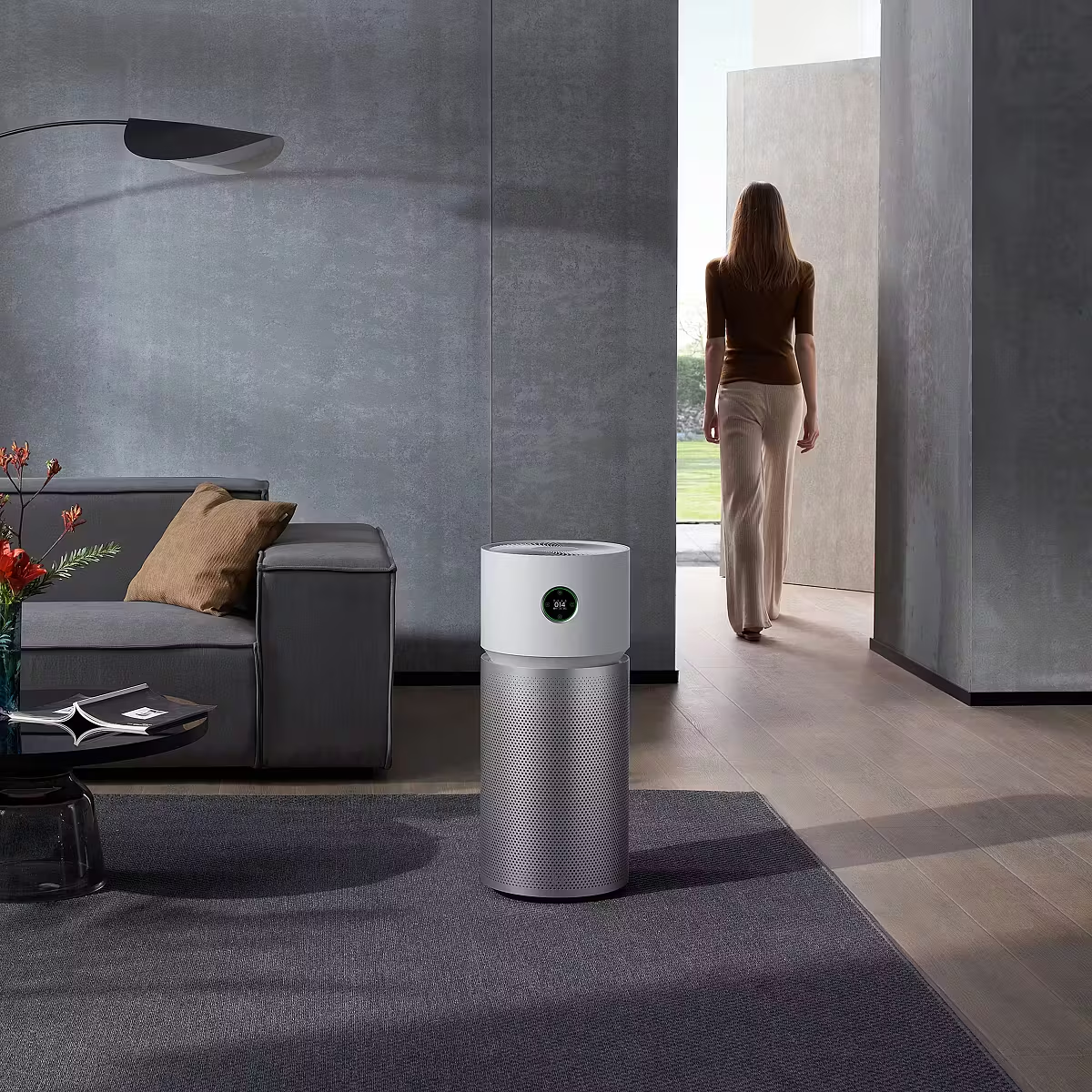
What Makes Dyson Air Purifiers Stand Out?
Before we get into the nitty-gritty of filtration, it’s worth acknowledging what makes a Dyson, well, a Dyson. It’s not just about cleaning the air; it’s about the entire user experience.
First, there’s the iconic design. The bladeless “Air Multiplier” technology is not only safer for homes with curious kids or pets, but it also doubles as a powerful cooling fan (or in some models, a heater). This multi-functionality is a huge selling point—you’re getting two or three appliances in one sleek package, saving space and clutter.
Second is their focus on data and smart technology. Dyson purifiers don’t just clean the air; they show you they’re cleaning it. With a suite of onboard sensors and a detailed companion app, you get real-time reports on everything from PM2.5 (nasty fine dust particles) to VOCs (volatile organic compounds from things like paint and cleaning supplies). For the tech-savvy or data-driven individual, this is a massive draw.
As Dr. Eleanor Vance, an Indoor Air Quality (IAQ) specialist, often notes, “Giving people visible feedback on their air quality is a powerful tool. It transforms an invisible problem into a tangible one that they feel empowered to control.”
But of course, looks and smarts mean nothing if the core purification technology isn’t up to snuff. So, let’s look under the hood.
The Science Behind the Style: How Dyson Purifiers Work
At their heart, Dyson purifiers use a combination of proven filtration methods sealed within an impressively engineered machine. The key is that the entire unit is sealed, meaning air has to go through the filters, not around them.
The HEPA Filter: Your Microscopic Particle Trapper
This is the cornerstone of any serious air purifier. A True HEPA filter is a physical barrier, an incredibly dense web of glass fibers that is certified to capture 99.97% of airborne particles as small as 0.3 microns.
What does that mean in plain English? Think of it like an ultra-fine net for invisible gunk. It’s catching:
- Pollen
- Dust mites
- Pet dander
- Mold spores
- Fine smoke particles
- Bacteria and some viruses
This is your first and most important line of defense against the physical allergens and irritants floating around your home.
The Activated Carbon Layer: Tackling Smells and Gases
While a HEPA filter is a champ with particles, it can’t do anything about gases, odors, or chemicals. That’s where the second layer comes in: activated carbon. Imagine a sponge with millions of microscopic pores. That’s essentially what activated carbon is. These pores trap gas and odor molecules through a process called adsorption. This layer is crucial for removing:
- Cooking smells (goodbye, lingering fish dinner)
- Pet odors
- Volatile Organic Compounds (VOCs) from paint, new furniture, and cleaning products
- Smoke and other fumes
Together, the HEPA and activated carbon filters provide a comprehensive, two-stage approach to cleaning your air of both particles and gases.
Decoding the Specs: An Honest Dyson Air Purifier Review of Performance
Okay, we know the tech is sound. But how do we measure its real-world performance? This is where we need to talk about some key industry metrics.
What is CADR in an air purifier?
CADR, which stands for Clean Air Delivery Rate, is the industry-standard metric for measuring an air purifier’s effectiveness. It tells you how much clean air the purifier produces on its highest setting for three specific pollutants: dust, pollen, and smoke. A higher CADR number means the unit can clean a room faster.
This is one area where Dyson takes a different approach. They often emphasize their own “POLAR” test, which is conducted in a larger, more “real-world” room with sensors spread throughout. They argue this better reflects actual home usage. While there’s merit to their test, the lack of official, third-party CADR ratings from organizations like AHAM (Association of Home Appliance Manufacturers) can make direct, apples-to-apples comparisons with other brands a bit tricky. For this Dyson air purifier review, it’s a point worth noting: their performance is excellent, but comparing it via standard metrics can be difficult.
ACH (Air Changes per Hour)
ACH tells you how many times the purifier can completely clean the air in a designated room size within one hour. For allergy sufferers, it’s recommended to have a purifier that can achieve 4-5 air changes per hour. This means the air is getting a full “scrub” every 12-15 minutes, which is crucial for keeping allergen levels down. When looking at a Dyson model, check its recommended room size to ensure it can provide an adequate ACH for your space.
Bảng trống.Beyond Filtration: The Smart Features That Set Dyson Apart
This is where your investment in a Dyson really starts to show. The smart features are not just gimmicks; they genuinely enhance the experience and effectiveness of the machine.
- Real-Time Sensing and Reporting: Onboard sensors constantly monitor your air for different pollutant types. A small LCD screen on the unit (and the app) gives you a live graph, so you can literally see the air quality improve when you turn it on, or see a spike when you start cooking.
- Auto Mode: This is my personal favorite feature. You can just set it and forget it. The purifier will remain on a quiet, low setting until it detects a spike in pollutants. Then, it will automatically ramp up the fan speed to tackle the problem and then power back down once the air is clean. It’s efficient, effective, and brilliant.
- Dyson Link App: The app is your command center. You can control the purifier from anywhere, set schedules, and view detailed historical data of your home’s air quality. Wondering if the air quality was bad while you were at work? The app has the answer.
- Multi-Functionality: As mentioned, many models are also fans and/or heaters. The ability to have purified heating in the winter and purified cooling in the summer from a single device is a major advantage.
The Real-World Test: Pros and Cons
After living with and testing various Dyson models, here’s my honest breakdown.
What I Love (The Pros)
- Unmatched Design and Build Quality: They are beautifully crafted machines that you won’t want to hide in a corner.
- Excellent All-in-One Solution: The combination of purifier, fan, and sometimes heater is a fantastic space-saver.
- Top-Tier Filtration Performance: The sealed HEPA and carbon systems are highly effective at capturing a wide range of pollutants. You can feel the difference.
- Best-in-Class Smart Features: The auto mode and detailed app reporting are genuinely useful and set a high bar for the industry.
- Quiet Operation at Low Speeds: On lower settings and in auto mode, it’s whisper-quiet, perfect for bedrooms.
Where It Could Be Better (The Cons)
- The Price: This is the biggest hurdle. Dyson products command a significant premium over competitors with similar raw filtration power.
- Cost of Filter Replacement: The 360° combination filters are not cheap, and they need to be replaced roughly every 12 months, which is an ongoing cost to factor in.
- Noise at High Speeds: When the fan is cranked up to its maximum setting, it can get quite loud.
- Lack of Standardized CADR Ratings: This makes it harder for consumers to directly compare performance against other brands, which feels less transparent.
Who Is a Dyson Air Purifier Actually For?
So, after all that, who should buy one?
- The Design-Conscious Homeowner: If aesthetics are a top priority and you want an appliance that complements your modern decor, Dyson is in a league of its own.
- The Tech Enthusiast and Data Lover: If you love smart home gadgets, data, and having granular control via an app, you will adore the Dyson experience.
- The Person Seeking an All-in-One Device: If you live in a smaller space like an apartment and need a purifier, fan, and heater, the value proposition of a 3-in-1 model becomes much more compelling.
- Those with a Healthy Budget: If you want a top-performing, feature-rich machine and price is not your primary concern, you will not be disappointed.
However, if you are on a tight budget and your only goal is the best possible air filtration for the lowest price, there are other, more utilitarian brands that offer similar CADR ratings for less money. You’ll just be sacrificing the design, the fan/heater functions, and the advanced smart features.
As HVAC engineer David Chen puts it, “You can buy a basic, powerful engine, or you can buy a luxury car with the same engine plus a beautiful chassis, advanced electronics, and a premium interior. Both will get you down the road. Dyson is the luxury car of air purifiers.”
Frequently Asked Questions (FAQ)
How often should I change the filter in my Dyson air purifier?
Dyson recommends replacing the combination HEPA and activated carbon filter approximately once every 12 months, based on 12 hours of use per day. The machine itself and the Dyson Link app will alert you when it’s time for a change, taking the guesswork out of it.
Does a Dyson air purifier actually cool the room?
Models with the fan function (like the Cool series) do not have a refrigeration unit like an air conditioner. However, they are powerful fans that create a strong cooling effect by circulating air. The air they circulate is purified, which is a big plus.
Is the Dyson air purifier noisy?
At its lowest settings, a Dyson purifier is extremely quiet, often less than 40 decibels, making it perfect for sleeping. However, at the highest fan settings (9 or 10), it can be as loud as a normal standing fan, around 60 decibels. The beauty of Auto Mode is that it only gets loud when it absolutely needs to.
Can a Dyson air purifier remove viruses like COVID-19?
Dyson’s HEPA filters are designed to capture 99.97% of particles as small as 0.3 microns. The virus that causes COVID-19 is smaller than this (around 0.1 microns), but it typically travels on larger respiratory droplets that are easily captured by a HEPA filter. While an air purifier is a valuable tool for reducing airborne contaminants, it should be used as part of a broader health and safety strategy.
So, is this Dyson air purifier review positive overall?
Yes, with a key caveat. It is a fantastic, high-performing, and beautifully designed piece of technology. It excels as a multi-functional smart home appliance. The primary consideration is whether the premium features and design justify the premium price tag for your specific needs and budget.
The Final Verdict
After extensive testing for this Dyson air purifier review, my conclusion is clear: Dyson air purifiers are exceptional machines that live up to most of their promises. They deliver excellent air purification, packaged in an undeniably beautiful and intelligent design. You are paying a premium not just for filtration, but for a seamless user experience, powerful smart features, and multi-functionality that other brands simply don’t offer in one package.
If you can afford it and value those extra features, it is an investment in your home’s health and comfort that you are unlikely to regret. It’s more than just an appliance; it’s a centerpiece of a healthier, smarter home. It’s time to stop just living in your home and start truly improving the environment within it.