Let’s talk about the air in your home. We spend so much time obsessing over the food we eat and the water we drink, but what about the air we breathe nearly 20,000 times a day? It’s often an afterthought, an invisible guest in our own living rooms. You might have bought an air purifier to tackle dust, seasonal allergies, or that lingering pet smell. But then a nagging question pops into your head: Can Air Purifiers Make You Sick? It’s a valid concern. You’re bringing a machine into your home to improve your health, not make it worse.
The short answer is: a properly chosen, used, and maintained air purifier is one of the best things you can do for your respiratory health. However, the long answer is a bit more nuanced. In certain situations, using the wrong type of purifier or neglecting its maintenance can indeed lead to unintended negative consequences.
Think of it like this: a sharp kitchen knife is an essential tool for any chef. But in the wrong hands, or if it’s dull and poorly cared for, it can be ineffective and even dangerous. Your air purifier is the same. It’s a powerful tool for a healthier home, but you need to know how to wield it correctly. As the Air Purifier Guy, I’ve spent years demystifying these machines, and my goal is to give you the confidence to make your indoor air as clean and healthy as possible. Let’s clear the air on this topic, once and for all.
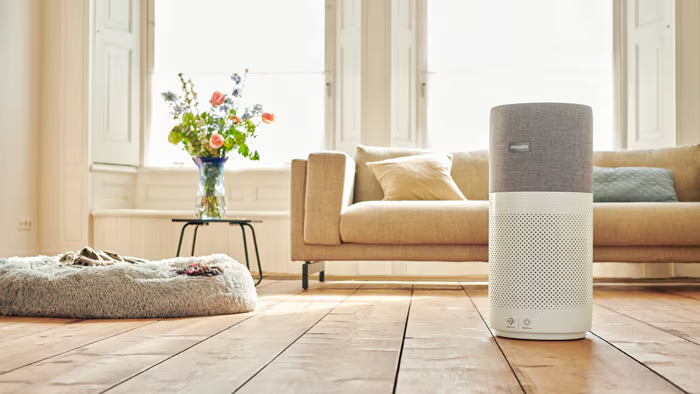
The Core Question: So, Can Air Purifiers Make You Sick?
Generally, no. A high-quality air purifier using proven technology like a True HEPA filter is designed to remove harmful particles from your air, reducing the triggers for sickness and allergies. However, there are a few specific scenarios where an air purifier could contribute to negative symptoms:
- Ozone-Generating Purifiers: This is the biggest culprit. Some older or disreputable models, often marketed as “ionizers” or “PCO” purifiers, can produce ozone as a byproduct. Ozone is a lung irritant that can cause coughing, chest pain, shortness of breath, and throat irritation, and can worsen conditions like asthma. Always choose an ozone-free air purifier.
- Neglected, Dirty Filters: A filter is like a trap. It captures dust, pollen, mold spores, and other gunk. If you don’t change it, that trap becomes full. Air struggles to get through, and the collected pollutants can potentially become a breeding ground for mold or bacteria, which could then be circulated back into your room.
- Stirring Up Dust: When you first turn on a powerful air purifier in a dusty room, it can kick up settled particles before it has a chance to capture them. This is usually a temporary effect but can cause a brief flare-up for sensitive individuals.
- Off-Gassing from New Filters: Occasionally, a brand-new activated carbon filter might have a slight chemical smell for the first few hours of use. This is usually harmless and dissipates quickly, but it can be irritating to those with Multiple Chemical Sensitivities (MCS).
The takeaway is that the machine itself isn’t the problem; it’s almost always an issue of using the wrong technology (ozone) or improper maintenance (dirty filters).
How Do Air Purifiers Work? Core Technologies Explained
To understand how to use a purifier correctly, you first need to know what’s going on inside the box. It’s not magic, it’s science! Most quality purifiers use a multi-stage filtration system, with two main heroes doing the heavy lifting.
True HEPA Filters: The Gold Standard for Particles
A True HEPA filter is the heart of any serious air purifier. HEPA stands for High-Efficiency Particulate Air. To earn this designation, a filter must be independently tested and certified to capture at least 99.97% of airborne particles down to 0.3 microns in size.
What’s a micron? It’s tiny. A human hair is about 50-70 microns thick. A HEPA filter is trapping things you can’t even see:
- Dust mites
- Pollen
- Pet dander
- Mold spores
- Bacteria and some viruses
Imagine a super-fine net that catches even the smallest gnats while letting the fresh air breeze through. That’s essentially what a HEPA filter does for your air. It’s a physical barrier, which means it doesn’t produce any harmful byproducts.
Activated Carbon: The Odor & Gas Specialist
While HEPA filters are champs at capturing particles, they can’t do anything about gases, chemicals, and odors. That’s where activated carbon comes in. This is a form of charcoal that has been treated to have millions of tiny, absorbent pores.
Think of it like a sponge for smells and chemicals. It traps:
- Volatile Organic Compounds (VOCs): These are gases released from things like paint, new furniture, cleaning supplies, and air fresheners.
- Odors: Cooking smells (goodbye, lingering fish smell!), pet odors, and smoke.
- Gases: Formaldehyde, benzene, and other common indoor chemical pollutants.
As Dr. Eleanor Vance, an Indoor Air Quality (IAQ) specialist, often reminds her clients, “A HEPA filter is your first line of defense against microscopic particles, but don’t underestimate the power of activated carbon for gaseous pollutants and odors. The two work together as a team for truly comprehensive air cleaning.”
Key Metrics to Understand When Choosing an Air Purifier
Walking into the world of air purifiers can feel like learning a new language. You’re hit with acronyms like CADR and ACH. Let’s translate them into plain English so you can shop like a pro.
What is CADR in an air purifier?
CADR stands for Clean Air Delivery Rate. In simple terms, it’s a measure of how much clean air the purifier can deliver to a room. It’s essentially the “horsepower” of the unit. A higher CADR means the purifier can clean the air in a room faster and more effectively. The rating is usually broken down into three numbers for smoke, dust, and pollen.
Why does ACH matter so much?
ACH stands for Air Changes per Hour. This tells you how many times the purifier can completely filter all the air in a specific room size within one hour. For general air quality, you want at least 2 ACH. For allergy or asthma sufferers, aiming for 4-5 ACH is the gold standard. This ensures that allergens are being removed from the air faster than they can build up.
Sizing is Everything: Matching Your Purifier to Your Room
This is where many people go wrong. Buying an undersized purifier for a large living room is like trying to cool a house with a window AC unit. It’s going to run constantly on high, be noisy, and won’t do the job properly.
Always check the manufacturer’s recommended room size, and make sure it’s based on achieving at least 4 ACH. If you’re stuck between two sizes, it’s almost always better to go with the more powerful one and run it on a lower, quieter setting.
Bảng trống.Features to Consider: Beyond the Filters
- Smart Sensors & Auto Mode: A quality-of-life feature I love. An onboard particle sensor (often a laser) constantly measures your air quality and displays it (e.g., with a color-coded light). In Auto Mode, the fan speed will adjust automatically based on these readings. It gets quiet when the air is clean and ramps up when you start cooking or the dog runs through.
- Noise Levels: Look for the decibel (dB) rating. A purifier running on its lowest setting should be whisper-quiet (around 20-30 dB). The highest setting will be louder (50-60 dB), comparable to a normal conversation.
- Wi-Fi Connectivity & App Control: This is a nice-to-have, not a need-to-have. It allows you to control your purifier, monitor air quality, and check filter life from your smartphone.
The Real Goal: Health Benefits of a Properly Used Air Purifier
My own battle with seasonal allergies is what got me into this field. For years, I’d wake up stuffy and congested every spring. A high-quality HEPA purifier in the bedroom was a game-changer. By removing pollen and dust mites from the air while I slept, it gave my immune system a much-needed break.
The benefits are real and backed by science:
- Allergy & Asthma Relief: By capturing airborne triggers, purifiers can significantly reduce symptoms.
- Protection from Wildfire Smoke: Units with a thick carbon filter and a True HEPA filter are essential for removing both the fine particles (PM2.5) and the gaseous pollutants in smoke.
- Odor and VOC Removal: Creates a fresher, healthier indoor environment, free from the lingering smells of pets, cooking, or chemical off-gassing.
- Better Sleep: Cleaner air can lead to less congestion and irritation at night, promoting more restful sleep.
According to the U.S. Environmental Protection Agency (EPA), indoor air can often be 2 to 5 times more polluted than outdoor air. An air purifier is your personal air quality control center, working 24/7 to protect you and your family.
Your Most Important Job: Maintenance and Filter Replacement Tips
This brings us back to the original question. An air purifier can only make you sick if you neglect it. A dirty filter can’t do its job. Here’s your simple maintenance checklist to ensure your unit always runs safely and effectively.
- Check the Pre-Filter Weekly/Bi-Weekly: Most purifiers have a washable or vacuum-able mesh pre-filter that catches large particles like hair and lint. Cleaning this regularly extends the life of your main filters. Simply rinse it under water or gently vacuum it. Make sure it’s completely dry before putting it back.
- Follow the HEPA & Carbon Filter Schedule: Your unit will have an indicator light, or the manual will give you a timeframe (usually 6-12 months for HEPA, 3-6 months for carbon). Do not stretch this. An old, clogged filter restricts airflow and is no longer effective.
- Use Genuine Replacement Filters: It can be tempting to buy cheap, third-party filters online. I strongly advise against this. They often don’t meet true HEPA standards, can have a poor fit that allows air to bypass the filter, and may even be made with questionable materials. Stick with the manufacturer’s brand.
- Wipe Down the Unit: Every month or so, give the exterior and the air intake/outlet grills a wipe with a damp cloth to prevent dust buildup.
Proper maintenance is non-negotiable. It’s the difference between a health-boosting appliance and a loud, dusty box in the corner of your room.
Frequently Asked Questions (FAQ)
Can my air purifier cause a sore throat or dry nose?
This is unlikely to be caused by the filtration process itself. More often, it’s due to the air movement. A purifier’s fan can lower the ambient humidity slightly and the constant airflow can feel drying to some people, especially in an already dry winter climate. Try directing the airflow away from you or using a humidifier in conjunction with your purifier.
How often should I change the filter if I have pets or live in a polluted area?
The manufacturer’s recommendation is a baseline. If you have multiple pets, live near a busy road, or experience events like wildfire smoke, you will need to change your filters more frequently. A good rule of thumb is to check them visually every month. If the HEPA filter is dark gray or the carbon filter no longer absorbs odors, it’s time for a change, even if the indicator light isn’t on yet.
Will an air purifier get rid of mold?
An air purifier with a HEPA filter is excellent at capturing airborne mold spores, preventing them from spreading and finding new places to grow. However, it cannot kill or remove existing mold growth on surfaces. You must address the source of the mold (e.g., a leak) and clean the affected area properly.
Do I need to run my air purifier 24/7?
Yes, for the best results, you should run your air purifier continuously. Indoor air pollution is a constant problem. New particles and VOCs are always being introduced from cooking, cleaning, pets, and even just breathing. Running it 24/7, ideally on Auto Mode, ensures the air stays clean. Modern purifiers are very energy-efficient, so the electricity cost is minimal.
Can air purifiers make you sick if they release ozone?
Absolutely. This is the one clear-cut case where a purifier can be directly harmful. Ozone is a lung irritant that is intentionally produced by some “air cleaner” models. Always ensure any purifier you buy is certified as ozone-free. Look for certifications from the California Air Resources Board (CARB).
Your Journey to Cleaner Air Starts Now
So, let’s circle back to our main concern: can air purifiers make you sick? The answer is a resounding no, provided you make an informed choice and commit to its simple care. By choosing a unit with a True HEPA and activated carbon filter, sizing it correctly for your space, and diligently maintaining its filters, you are not introducing a risk; you are actively removing them.
You are taking control of your indoor environment and creating a healthier sanctuary for yourself and your loved ones. An air purifier isn’t just another gadget; it’s an investment in your well-being. Armed with this knowledge, you can breathe easier—literally and figuratively—knowing you’ve made a smart, safe choice.