Hey there, it’s your friendly neighborhood Air Purifier Guy. Let’s talk about something that’s been on all our minds for the past few years. In the midst of all the advice about masks and handwashing, a big question popped up: Do Air Purifiers Help With Covid? It’s a valid question, and frankly, there’s a lot of confusing information out there. Some brands make wild claims, while others are frustratingly vague. My goal today is to cut through all that noise, break down the science in plain English, and give you an honest, no-nonsense answer so you can make the best choice for your home and your family.
We’ve all become hyper-aware of the air we breathe, and for good reason. Whether you’re battling seasonal allergies, dealing with city smog, or simply want to get rid of that lingering cooking smell from last night’s fish tacos, the idea of cleaner indoor air is more appealing than ever. But when it comes to something as serious as an airborne virus, we need to move beyond marketing hype and look at the facts. So, grab a cup of coffee, and let’s dive deep into how air purifiers work and what role they can really play in a healthier home environment.
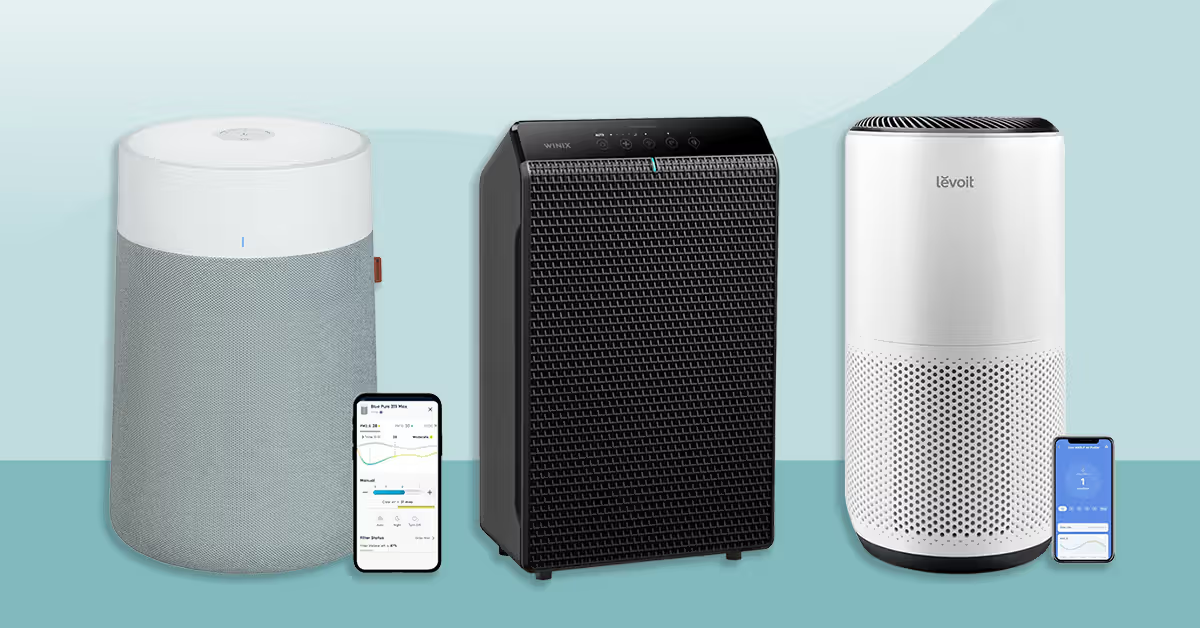
The Short Answer and The Crucial ‘How’
So, let’s get right to it. The short answer is: Yes, a high-quality air purifier can help reduce the concentration of airborne viruses, including the virus that causes COVID-19, in an indoor space.
But—and this is a big but—it’s not a magic shield. An air purifier is a powerful tool in your arsenal, not a replacement for other crucial safety measures like vaccination, masking in crowded areas, and good ventilation. Think of it as part of a layered defense strategy. You wouldn’t go into a rainstorm with just an umbrella; you’d also wear a raincoat and proper boots. Similarly, an air purifier works best when combined with other smart practices.
The effectiveness entirely depends on using the right kind of air purifier with the right technology. Not all purifiers are created equal, and understanding how they work is key to seeing real results.
How Air Purifiers Can Capture Airborne Viruses
To understand if an air purifier can help with something as small as a virus, we need to look under the hood. The COVID-19 virus is tiny, about 0.125 microns in diameter. However, it doesn’t just float around naked. It travels inside respiratory droplets and aerosols that we expel when we breathe, talk, or cough. These virus-carrying particles are larger, typically ranging from less than 1 micron to over 5 microns. This is where air purifier technology comes into play.
HEPA Filters: The Gold Standard
If there’s one term you need to know in the world of air purification, it’s HEPA. It stands for High-Efficiency Particulate Air, and a True HEPA filter is the undisputed champion of particle capture.
By definition, a True HEPA filter is certified to capture at least 99.97% of airborne particles down to 0.3 microns in size.
Now, you might be thinking, “Wait, if the virus itself is smaller than 0.3 microns, how can a HEPA filter catch it?” That’s a fantastic question, and it highlights a common misconception. The 0.3-micron rating is actually the most difficult particle size for a filter to catch. It’s the size that’s too big to easily zig-zag around filter fibers but too small to be caught by simple impact.
Particles smaller than 0.3 microns, like many virus-carrying aerosols, move in an erratic, zig-zag pattern called Brownian motion. This random movement makes it highly likely they will collide with and stick to the filter fibers. So, counterintuitively, a HEPA filter is extremely effective at capturing both very large particles (like dust and pollen) and very small particles (like viruses and smoke). It’s the ultimate microscopic net for your air.
As Dr. Eleanor Vance, an Indoor Air Quality (IAQ) specialist, often states, “A True HEPA filter is your non-negotiable first line of defense. It physically removes viral aerosols from the air you breathe, which is precisely the goal. It’s not about killing the virus mid-air; it’s about trapping it so you don’t inhale it.”
What About Other Technologies?
You’ll see other features advertised, so let’s quickly break them down.
- Activated Carbon Filters: These are fantastic, but not for viruses. Think of activated carbon as a sponge for gases, odors, and Volatile Organic Compounds (VOCs) like formaldehyde from new furniture or fumes from cleaning products. It works through a process called adsorption. A good air purifier will have both a HEPA filter for particles and an activated carbon filter for gases and odors.
- UV-C Light: In theory, UV-C light can neutralize viruses and bacteria by damaging their DNA. However, its effectiveness in a portable air purifier is highly debatable. For UV-C to work, the virus needs sufficient exposure time to the light. In many purifiers, the air flows past the bulb so quickly that the dose of UV radiation is too low to be effective. While it can help keep the filter itself clean, don’t rely on it as your primary virus-fighting feature. The HEPA filter is doing the real heavy lifting.
Do Air Purifiers Help With COVID? Key Factors to Consider
So, you’ve decided a HEPA air purifier is a smart move. But which one? To ensure your device is actually making a difference, especially when you want to know if do air purifiers help with COVID, you need to understand three critical metrics.
What is CADR in an air purifier?
CADR stands for Clean Air Delivery Rate. It’s a performance metric that measures the volume of filtered air a purifier can deliver in a specific amount of time. It’s typically measured in cubic feet per minute (CFM). In simple terms, a higher CADR means the purifier can clean the air in a room faster. Look for CADR ratings certified by the Association of Home Appliance Manufacturers (AHAM) to ensure they are third-party verified.
How do I match CADR to my room size?
A good rule of thumb is the 2/3 Rule. Your air purifier’s CADR rating for smoke (the smallest particle size tested) should be at least two-thirds of your room’s area in square feet.
- Example: For a 300-square-foot living room, you would want a purifier with a Smoke CADR of at least 200 (300 x 2/3 = 200).
What are Air Changes per Hour (ACH)?
ACH, or Air Changes per Hour, tells you how many times a purifier can clean the entire volume of air in a room in one hour. For general air quality, 2-3 ACH is good. However, for concerns like viruses or severe allergies, experts and health organizations recommend aiming for 4-5 ACH. This ensures the air is being scrubbed clean frequently, reducing the time that infectious aerosols can hang around.
Many reputable brands will list the room size their purifier is rated for based on achieving 4-5 ACH. Always check the fine print!
Bảng trống.It’s Not Just About COVID: The Everyday Benefits
While the question of whether do air purifiers help with COVID might bring you here, the benefits of cleaner indoor air extend far beyond that single concern. As someone who has battled seasonal allergies my whole life, a quality HEPA purifier in my bedroom has been a total game-changer.
A great air purifier also helps with:
- Allergies: Capturing pollen, dust mites, mold spores, and pet dander.
- Asthma: Removing airborne triggers that can cause asthma attacks.
- Pet Owners: Tackling stubborn pet dander and odors.
- Smoke: Filtering out wildfire smoke, tobacco smoke, and cooking fumes.
- General Odors: The activated carbon filter helps eliminate unpleasant smells from cooking, pets, or garbage.
- VOCs and Chemicals: Removing harmful gases off-gassing from new paint, furniture, and cleaning supplies.
According to the U.S. Environmental Protection Agency (EPA), indoor air can often be 2 to 5 times more polluted than outdoor air. An air purifier is an investment in your overall daily health, not just a pandemic precaution.
Maximizing Your Air Purifier’s Effectiveness: Maintenance Tips
Buying a great air purifier is the first step. Using it correctly is the second. Here are some pro tips to get the most out of your machine.
- Placement is Key: Don’t shove your purifier in a corner or behind the sofa. It needs space to breathe. Place it in an open area where it can create strong air circulation, pulling in dirty air and pushing out clean air.
- Run it 24/7: Air quality can change in an instant. For continuous protection, run your purifier on a low, quiet setting 24/7. The energy consumption on modern, Energy Star-rated units is surprisingly low.
- Keep Doors and Windows Closed: An air purifier is designed to clean the air in a contained space. If you have windows open, it will be fighting a losing battle against the endless supply of outdoor air.
- Filter Maintenance is Non-Negotiable: A clogged filter can’t do its job. Your purifier will become less effective and could even start to release pollutants back into the air.
- Pre-filter: Most units have a washable pre-filter that catches large debris like hair and dust. Clean this every 2-4 weeks.
- Activated Carbon and HEPA Filters: These are typically not washable and must be replaced. Follow the manufacturer’s guidelines, which usually range from 6 months to a year. Many modern units have a filter-change indicator light to remind you.
Frequently Asked Questions
Can an air purifier replace masking or ventilation?
No. An air purifier is a supplemental measure. It should be used as part of a layered strategy that includes ventilation (opening windows when possible), vaccination, and following public health guidelines. It adds another layer of protection by cleaning the air within a room.
Which type of filter is best for viruses like COVID-19?
A True HEPA filter is the most effective and essential technology for capturing airborne viral particles. It physically traps the aerosols that carry viruses. An activated carbon filter is a great companion for odors and gases, but the HEPA filter is the critical component for virus concerns.
How long should I run my air purifier for COVID protection?
For maximum effectiveness, you should run your air purifier continuously (24/7) in the rooms you occupy most, such as the bedroom or living room. Airborne particles are constantly being generated, so continuous filtration offers the best protection.
Will a small air purifier work for my whole house?
No, a single portable air purifier is designed to clean the air in one room. To cover a whole house, you would need multiple units placed in different rooms or a whole-home HVAC filtration system.
Do air purifiers make the room loud?
The noise level depends on the fan speed. On low settings, most high-quality purifiers are whisper-quiet, perfect for sleeping. On the highest setting, they will sound like a fan. Look for models with a low decibel (dB) rating for the lowest fan speed if noise is a concern for you.
Your Final Takeaway
So, let’s circle back to our original question: do air purifiers help with COVID?
The evidence-based answer is a clear yes. A properly sized air purifier with a True HEPA filter is a scientifically sound and effective tool for reducing the concentration of virus-carrying aerosols in your indoor air.
It’s not a magic bullet, but it is a powerful, practical step you can take to make your home environment safer and healthier. By removing these microscopic particles, you lower the overall viral load in the air, which can reduce the risk of transmission. Combined with good ventilation and other health measures, you are creating a robust defense system for you and your loved ones.
Choosing the right air purifier is about more than just a single virus; it’s about investing in the long-term health of your home. It’s about breathing easier, sleeping better, and knowing you’re doing everything you can to create a clean and healthy sanctuary. Now is the perfect time to start your journey to cleaner, healthier air today.