That faint, musty smell hits you the second you walk into the basement. You dismiss it at first, but it lingers. It’s the unwelcome signature of mold, an invisible intruder that can quietly wreak havoc on your home and your health. If you’re tired of just masking the odor and are ready to fight back, finding the Best Air Purifier For Mold is one of the most powerful steps you can take. But with a sea of technical jargon and competing claims, how do you choose the right one?
Don’t worry, I’ve got your back. As the Air Purifier Guy, I’ve spent years demystifying this technology to help people breathe easier. This isn’t about selling you a box with a fan; it’s about arming you with the knowledge to reclaim your indoor air quality. We’re going to break down exactly what makes an air purifier effective against mold, what to look for, and what to ignore.
Why Mold in Your Home is a Serious Problem
Before we dive into the hardware, let’s be clear: mold is more than just an ugly spot on the wall. Mold reproduces by releasing microscopic spores into the air. Think of it like a dandelion releasing its seeds into the wind. These spores can travel anywhere and, if they land in a damp spot, they can start a new colony.
When you breathe in these spores, they can trigger a range of health issues, especially for those with allergies, asthma, or compromised immune systems. Symptoms can include:
- Sneezing and coughing
- Itchy, watery eyes
- Runny nose
- Skin rashes
- Asthma attacks
“The presence of mold spores is a significant contributor to poor indoor air quality,” notes Dr. Eleanor Vance, an Indoor Air Quality (IAQ) specialist. “While addressing the source of moisture is paramount, actively filtering these airborne spores is a critical second step in creating a healthier living environment.”
How Can an Air Purifier Help With Mold?
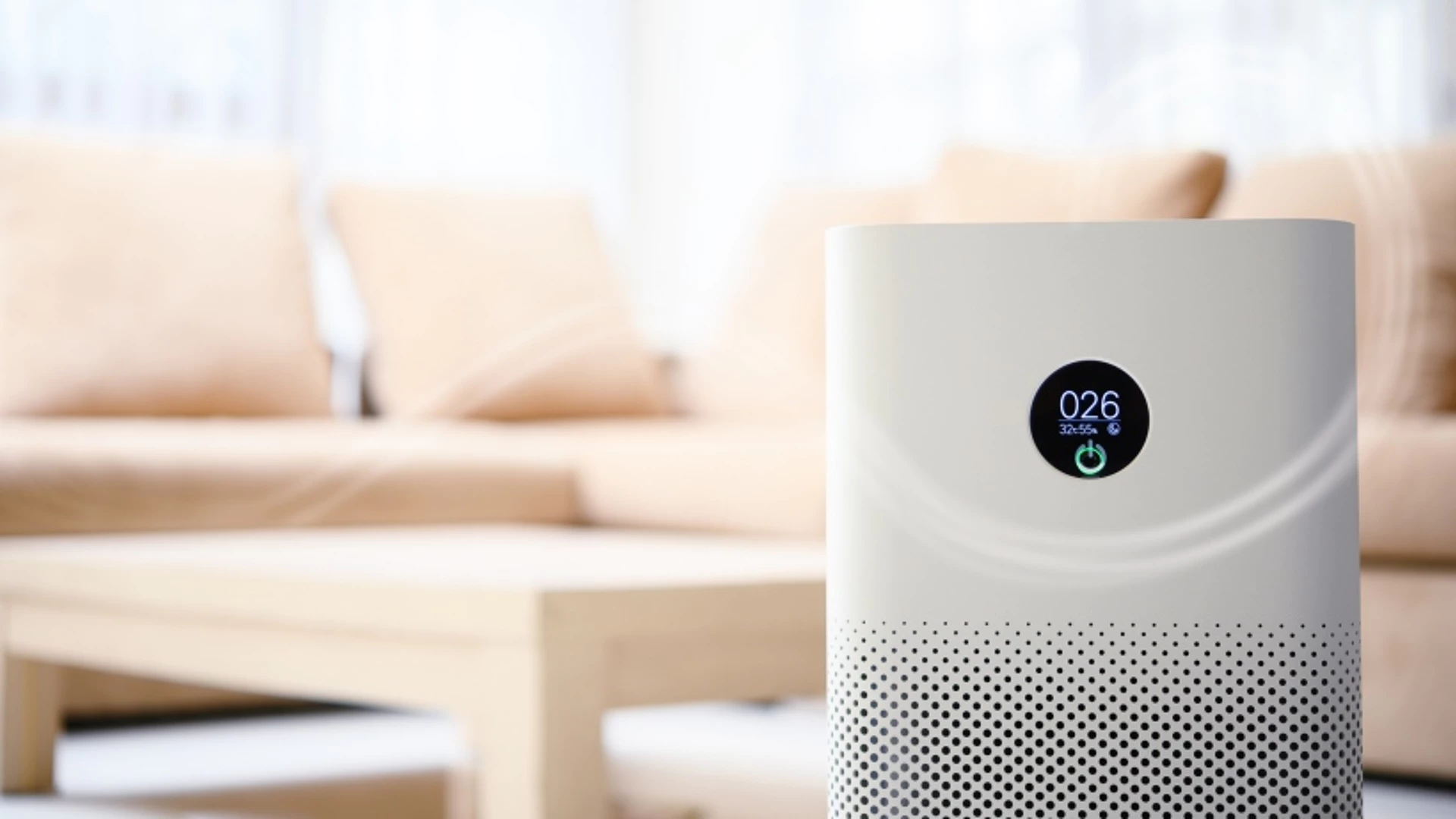
So, how does a machine in the corner of your room fight this invisible enemy? An air purifier acts like a trap. It pulls in the surrounding air, forces it through a series of filters, and releases clean, purified air back into the room.
For mold, the goal is two-fold:
- Capture the Spores: Physically remove the mold spores from the air before you can inhale them and before they can land on another surface to grow.
- Neutralize the Odor: Eliminate the musty smell, which is caused by gases called Microbial Volatile Organic Compounds (MVOCs) that mold releases as it grows.
It’s crucial to understand that an air purifier is part of a larger strategy. It won’t kill mold growing on your walls. You still need to find and fix the source of the moisture and clean the existing mold. But it is an essential tool for managing the airborne threat and keeping the problem from spreading.
Key Technologies for Fighting Mold: What to Look For
Not all air purifiers are created equal, especially when you’re dealing with something as specific as mold. Here are the core technologies you absolutely need to look for when choosing the best air purifier for mold.
True HEPA Filtration: The Non-Negotiable
If you remember one thing from this guide, let it be this: your air purifier must have a True HEPA filter.
A HEPA filter (High-Efficiency Particulate Air) is a super-fine, pleated filter that acts like an incredibly sophisticated net. To earn the “True HEPA” designation in the United States, it must be certified to capture at least 99.97% of airborne particles down to 0.3 microns in size.
How big is a micron? To put it in perspective, a human hair is about 50-70 microns wide. Most mold spores are between 3 and 40 microns. This means a True HEPA filter is more than capable of trapping them with ease.
Beware of terms like “HEPA-type” or “HEPA-like.” These are marketing phrases for filters that don’t meet the strict standards of a True HEPA filter. They might be cheaper, but they won’t provide the level of protection you need against microscopic mold spores.
Activated Carbon: Tackling Musty Odors (MVOCs)
Remember that musty smell we talked about? That’s caused by MVOCs. A HEPA filter is fantastic for capturing solid particles like spores, but it can’t do anything about gases and odors.
This is where an activated carbon filter comes in. Think of activated carbon as a molecular sponge. It’s treated with oxygen to open up millions of tiny pores between its carbon atoms. These pores create a massive surface area that traps gas molecules, including the MVOCs responsible for that moldy smell.
For a purifier to be effective against mold odors, it needs a substantial carbon filter. A thin, flimsy carbon pre-filter won’t cut it. Look for purifiers that boast several pounds of activated carbon for the best odor and gas removal.
UV-C Light: A Controversial Ally
Some air purifiers include a UV-C light lamp with the claim that it “kills” or “sterilizes” mold spores, bacteria, and viruses. The science is sound—UV-C light can inactivate microorganisms by damaging their DNA.
However, its effectiveness inside an air purifier is debatable. For UV-C to work, the mold spore needs to be exposed to the light for a sufficient amount of time. In a fast-moving airstream inside a purifier, the exposure time can be too short to be effective. Furthermore, some UV-C lamps can produce ozone as a byproduct, which is a known lung irritant.
My take: A powerful HEPA and carbon filter combination is your primary defense. UV-C can be a nice bonus if implemented correctly in a high-quality unit, but don’t choose a purifier just for its UV-C light. The filtration system is far more important.
Choosing the Best Air Purifier for Mold: The Numbers Game
Okay, you know what technology to look for. Now, let’s talk about performance. How do you know if a purifier is powerful enough for your space? You need to understand three key metrics.
What is CADR and Why Does It Matter for Mold?
CADR stands for Clean Air Delivery Rate. It’s a standard developed by the Association of Home Appliance Manufacturers (AHAM) that measures how much clean air a purifier delivers, and how fast. It’s measured in cubic feet per minute (CFM). You’ll typically see three CADR numbers: one for smoke, one for dust, and one for pollen.
A higher CADR number means the purifier can clean the air in a room more quickly. For mold, which falls into a similar particle size range as pollen and dust, look at the dust and pollen CADR ratings. As a general rule, you want the CADR to be at least two-thirds of your room’s square footage. For example, for a 300 sq. ft. room, you’d want a purifier with a CADR of at least 200.
Air Changes per Hour (ACH): Keeping Mold Spores Down
ACH tells you how many times the air purifier can clean the entire volume of air in a designated room in one hour. For general air quality, 2-3 ACH is fine. But for dealing with a persistent issue like mold, you want to be more aggressive.
Look for a purifier that can achieve 4-5 air changes per hour in your room. This constant circulation and filtration ensure that mold spores are captured quickly after they become airborne, minimizing your exposure and preventing them from settling.
Sizing it Right: Don’t Underestimate Your Room Size
Manufacturers list a maximum room size coverage for their purifiers. This number is often based on achieving a lower ACH (like 1 or 2). To effectively manage mold, you should use a purifier rated for a larger space than the room you’re putting it in.
For example, if you have a 400 sq. ft. living room, buying a purifier rated for 600-800 sq. ft. will ensure it can achieve the high ACH needed to keep mold spores under control without constantly running on its highest, loudest setting.
Smart Features vs. Essentials: What Do You Really Need?
Modern air purifiers come with a host of bells and whistles. Here’s a quick rundown of what’s worth considering:
- Smart Sensors & Auto Mode: An air quality sensor (usually for PM2.5 particles) can detect when spore counts or other pollutants increase and automatically adjust the fan speed. This is incredibly useful for “set it and forget it” operation.
- Noise Levels: Check the decibel (dB) rating, especially for bedrooms. A good purifier should be whisper-quiet on its lowest setting (around 25-30 dB) and no louder than a normal conversation on its highest (50-60 dB).
- Filter Life Indicator: This is a must-have. It takes the guesswork out of knowing when to replace your filters, ensuring your unit is always running at peak performance.
- Wi-Fi & App Control: This is a convenience feature. It’s nice to be able to control your purifier remotely, but it doesn’t impact its core mold-fighting ability.
Beyond the Machine: A Holistic Approach to Mold Control
I can’t stress this enough: the best air purifier for mold is a powerful tool, but it’s not a silver bullet. It’s one part of a comprehensive strategy. To truly defeat mold, you must also:
- Find the Source: Identify and repair the source of the moisture. This could be a leaky pipe, a cracked foundation, or poor ventilation in a bathroom.
- Control Humidity: Keep your home’s humidity level below 50%, ideally between 30-40%. Use a dehumidifier in damp areas like basements and bathrooms.
- Clean Up Existing Mold: For small areas, you can clean mold with a solution of water and detergent. For large-scale infestations (more than 10 square feet), it’s best to call in a professional mold remediation service.
- Increase Ventilation: Improve airflow by using exhaust fans in kitchens and bathrooms and opening windows when possible.
Maintenance: Keeping Your Mold-Fighting Machine in Top Shape
Your air purifier is only as good as its filters. A clogged filter can’t capture particles effectively and restricts airflow, making the unit useless.
- HEPA Filter: These are not washable. They typically need to be replaced every 12-24 months, depending on usage and your home’s air quality.
- Carbon Filter: These also need to be replaced, usually every 6-12 months. Some high-end units have carbon filters that last longer.
- Pre-filter: Most purifiers have a washable pre-filter that captures larger debris like hair and dust. Clean it every 2-4 weeks to prolong the life of your more expensive HEPA and carbon filters.
Always follow the manufacturer’s recommendations and use genuine replacement filters. Off-brand filters may not fit properly or meet the same performance standards.
Frequently Asked Questions (FAQ)
Q1: Can an air purifier get rid of a mold smell completely?
An air purifier with a substantial activated carbon filter can be extremely effective at removing the musty smell (MVOCs) caused by mold. However, if the source of the mold is not removed, the smell will eventually return. The purifier manages the symptom (the smell), but you still need to cure the disease (the mold).
Q2: Will an air purifier prevent mold from growing?
No, an air purifier cannot prevent mold from growing. Mold growth is caused by excess moisture. An air purifier’s job is to capture the airborne spores that an existing mold colony releases, which helps prevent it from spreading to other areas of your home.
Q3: Where is the best place to put an air purifier for mold?
Place the air purifier in the room where the mold issue is most prominent or where you spend the most time, such as the bedroom or living room. Ensure there is plenty of space around the unit (at least a foot on all sides) for optimal air circulation.
Q4: How long should I run my air purifier for mold?
For best results, you should run your air purifier 24/7. Airborne mold spores are a constant presence when there’s an issue. Continuous filtration is the best way to keep spore counts low. Modern purifiers are energy-efficient, so the running cost is typically minimal.
Q5: Are ozone generators good for mold?
Absolutely not. While ozone can kill mold, it is also a powerful lung irritant that is dangerous for humans and pets to breathe. The EPA strongly advises against using ozone generators in occupied spaces. A HEPA and carbon-based air purifier is a much safer and more effective solution.
Take a Deep Breath of Fresh Air
Navigating the world of air purifiers can feel overwhelming, but it doesn’t have to be. By focusing on the core principles—a True HEPA filter to capture spores, a robust activated carbon filter for odors, and the right size and power for your space—you can confidently choose a machine that will make a real difference.
Remember, tackling mold is a proactive step towards a healthier home. By combining a top-tier air purifier with good humidity control and moisture management, you’re not just cleaning the air; you’re investing in your family’s well-being. Now you’re equipped with the knowledge to find the best air purifier for mold for your needs and start your journey to cleaner, healthier air today.