Hey there, I’m the Air Purifier Guy. For years, my own battle with seasonal allergies sent me down a rabbit hole of air quality tech. I’ve tested, dismantled, and lived with more air purifiers than I can count. One of the most common—and confusing—features people ask me about is the ionizer. So, if you’ve ever wondered, “What Is An Ionizer In An Air Purifier?”, you’ve come to the right place. We’re going to demystify this technology, cut through the marketing jargon, and figure out if it’s a feature you actually need for your home.
Let’s be honest, the air inside our homes isn’t always the sanctuary we think it is. The EPA famously stated that indoor air can be two to five times more polluted than the air outside. That’s a sobering thought, isn’t it? From pet dander and pollen to invisible VOCs from new furniture, our homes are sealed-up containers of airborne irritants. This is where air purifiers step in as our personal bodyguards for clean air. While most of us are familiar with the trusty HEPA filter, this other piece of tech—the ionizer—often shows up as an extra button on the control panel, leaving many to wonder what it even does.
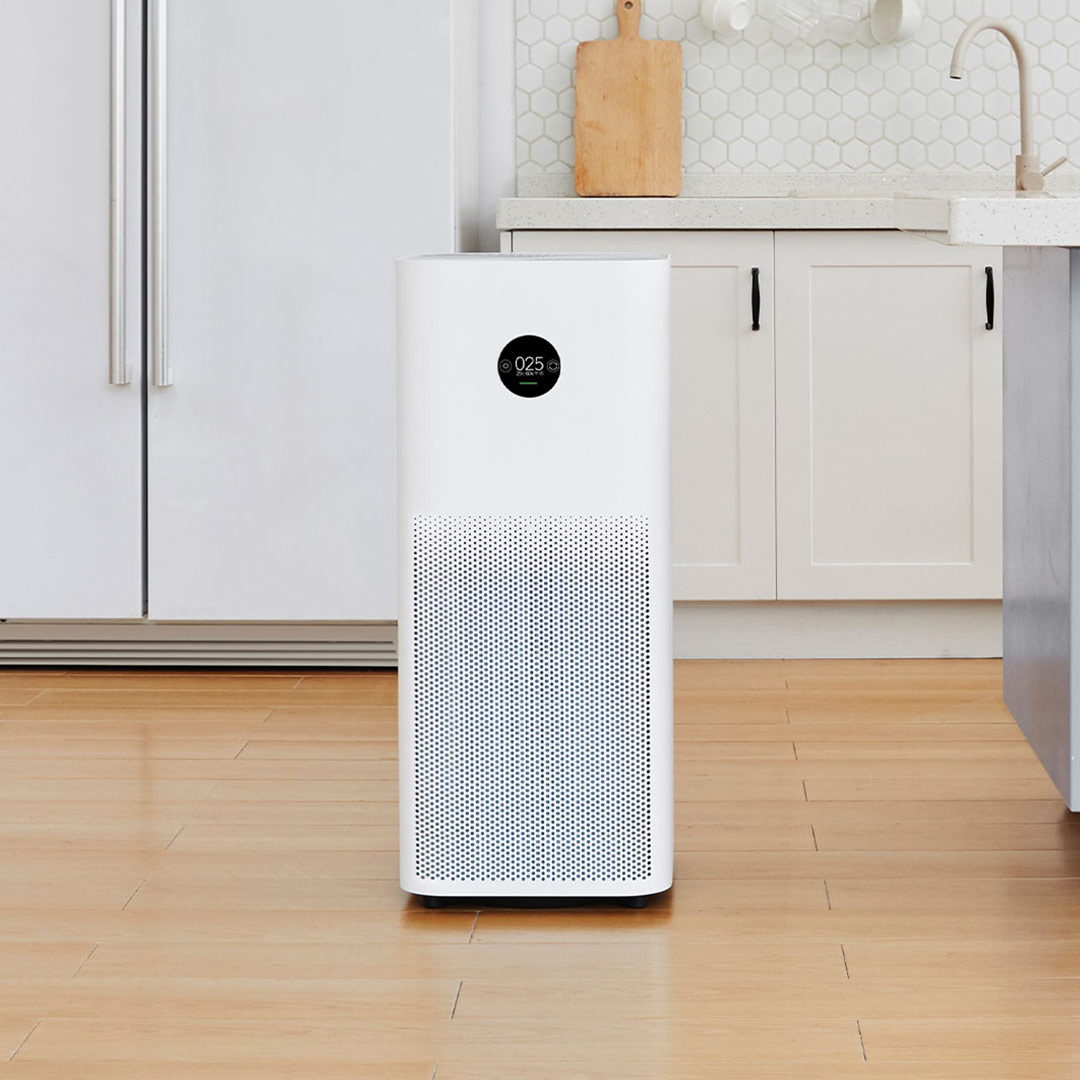
How Do Air Purifiers Work? Core Technologies Explained
Before we zero in on ionizers, let’s get a quick lay of the land. Think of an air purifier as a team of specialists, each with a different job. A great purifier rarely relies on just one technology.
The Gold Standard: HEPA Filters
The heart of most top-tier air purifiers is the True HEPA filter. HEPA stands for High-Efficiency Particulate Air. It’s a mechanical filter, essentially a super-fine net made of glass fibers. It’s not just a simple sieve, though. It uses a combination of impaction, interception, and diffusion to physically trap particles.
A certified True HEPA filter is engineered to capture 99.97% of airborne particles as small as 0.3 microns. To put that in perspective, a human hair is about 50-70 microns thick. We’re talking about capturing things like:
- Dust mites
- Pet dander
- Pollen
- Mold spores
- Some bacteria
If you’re dealing with allergies or asthma, a HEPA filter is non-negotiable. It is your first and most powerful line of defense. You can learn more about how they work in our [complete guide to HEPA filtration technology].
The Odor Specialist: Activated Carbon Filters
Ever cooked fish and had the smell linger for days? Or maybe you’ve got that “new paint” smell that gives you a headache? That’s where activated carbon comes in. This is a form of carbon that has been “activated” to have millions of tiny, adsorbent pores. These pores act like a sponge for gases, odors, and Volatile Organic Compounds (VOCs).
While a HEPA filter is a master of particles, it does nothing for gases and smells. An activated carbon filter is what tackles:
- Cooking odors
- Pet smells
- Smoke
- Chemicals and VOCs (from paint, cleaning supplies, new furniture)
A good purifier will almost always pair a HEPA filter with a substantial activated carbon filter.
And Now, the Main Event: What Is an Ionizer in an Air Purifier?
Alright, let’s bring the star of the show onto the stage. Unlike HEPA and carbon filters, which are passive (they wait for air to be pulled through them), an ionizer is an active technology. It sends something out into your room to do its job.
So, what is an ionizer in an air purifier?
In simple terms, an ionizer uses high voltage to create and release negatively charged ions (or anions) into the air. Think of these ions as tiny magnets. Most of the pesky airborne pollutants—like dust, pollen, and smoke particles—are naturally positively charged. As the saying goes, opposites attract. The negative ions released by the purifier latch onto these positive pollutants.
This does two things:
- Neutralizes them: The charge is balanced, which can deactivate some airborne viruses and bacteria.
- Makes them heavy: As multiple ions clump onto a particle, it becomes too heavy to remain floating in the air.
The result? These newly formed clumps of pollutants fall out of the air and onto the nearest surfaces—your floors, walls, and furniture.
Dr. Eleanor Vance, an Indoor Air Quality (IAQ) specialist, often explains it this way: “An ionizer doesn’t remove particles from the room in the same way a HEPA filter does. It performs an aerial takedown, forcing contaminants out of your breathing zone and onto surfaces where they can be wiped or vacuumed away.”
Some air purifiers with ionizers also include a positively charged collector plate inside the unit. In this setup, the negatively charged particles are drawn back to the machine and stick to the plate, which can then be wiped clean. This is a feature more common in a related technology called an electrostatic precipitator.
The Big Debate: Ionizers vs. HEPA Filters
This is a common point of confusion. People often ask me, “Should I get an ionizer or a HEPA filter?” The reality is, they’re not really competing for the same job; they’re more like colleagues with different skill sets.
Let’s break it down in a table:
| Feature | True HEPA Filter | Ionizer |
|---|---|---|
| Method | Passive Filtration: Physically traps particles in a filter. | Active Filtration: Releases ions to make particles fall from the air. |
| What it Targets | Particles down to 0.3 microns (dust, pollen, dander). | Ultra-fine particles (smaller than 0.1 microns), some viruses, bacteria. |
| Particle Removal | Yes. Particles are permanently trapped in the filter until it’s replaced. | No (usually). Particles are moved from the air to surfaces. Requires cleaning. |
| Byproducts | None. It’s a purely mechanical process. | Ozone. Can be a byproduct, which is a lung irritant. |
| Maintenance | Filter needs to be replaced every 6-12 months. | May require cleaning collector plates or wiping down room surfaces more often. |
As you can see, a HEPA filter removes contaminants, while an ionizer relocates them. This is a critical distinction. The best systems use both, employing the ionizer to clump together ultra-fine particles, making them large enough for the HEPA filter to catch more easily.
The Elephant in the Room: The Ozone Concern
We can’t have a serious discussion about what is an ionizer in an air purifier without talking about ozone. This is, by far, the biggest controversy surrounding the technology.
What is ozone?
Ozone (O3) is a molecule made of three oxygen atoms. Up high in the atmosphere, it’s great—it protects us from UV radiation. But at ground level, it’s a powerful lung irritant and a key component of smog. Even low levels can cause chest pain, coughing, shortness of breath, and throat irritation. It can worsen chronic respiratory diseases like asthma.
How do ionizers produce it?
The very electrical process (corona discharge) that creates those helpful negative ions can also split normal oxygen molecules (O2) apart. Some of these lone oxygen atoms then combine with other O2 molecules to form ozone (O3).
Because of this, the California Air Resources Board (CARB) has set a strict limit on ozone emissions for air cleaners sold in the state (0.050 parts per million). Any air purifier that is “CARB-certified” has been tested and proven to be safe. I personally would never recommend a purifier with an ionizer that isn’t CARB-certified or doesn’t have a clear “ozone-free” claim from a reputable manufacturer.
My Advice: If you see an air purifier marketed as an “ozone generator” or “activated oxygen” cleaner, run the other way. These are intentionally designed to produce large amounts of ozone, which the EPA has stated can be harmful to your health. Always look for the option to turn the ionizer function off, just in case.
Key Metrics to Understand When Buying an Air Purifier
Whether your chosen machine has an ionizer or not, there are a few key specs you absolutely must understand. Getting these right is far more important than any single feature.
What is CADR in an air purifier?
CADR stands for Clean Air Delivery Rate. It’s a standard developed by the Association of Home Appliance Manufacturers (AHAM) that tells you how quickly the purifier can clean a room of a specific size. It provides three numbers: one for smoke, one for dust, and one for pollen. The higher the numbers, the faster it cleans.
A simple rule of thumb is to match the CADR to your room’s square footage. For example, if your room is 300 square feet, you want a CADR of at least 200 (using the 2/3 rule: 300 x 2/3 = 200).
What about ACH?
ACH means Air Changes per Hour. This tells you how many times the purifier can completely filter all the air in a given room in one hour. For general air quality, 2 ACH is okay. For allergy or asthma sufferers, you should be aiming for 4-5 ACH. This ensures the air is being scrubbed clean frequently, keeping allergen levels down.
Room Size Rating
Always check the manufacturer’s recommended room size. But be careful—some brands inflate this number based on achieving only 1 or 2 ACH. I always recommend cross-referencing the CADR to make sure the unit is truly powerful enough for your space, especially if you have high ceilings.
A Quick Checklist for Your Air Purifier Hunt
Feeling a bit overwhelmed? Don’t be. Here’s a simple checklist to take with you when you’re shopping.
- [ ] Filtration System: Does it have a True HEPA filter? Is the activated carbon filter substantial (i.e., thick and heavy, not just a flimsy mesh)?
- [ ] CADR and Room Size: Is the CADR rating appropriate for my largest room? (Aim for a CADR that is at least two-thirds of your room’s square footage).
- [ ] Ionizer Safety: If it has an ionizer, is it CARB-certified? Can I turn the feature off?
- [ ] Noise Levels: Check the decibel (dB) rating on its lowest and highest settings. Anything under 30 dB is whisper-quiet for sleeping.
- [ ] Cost of Ownership: How much are replacement filters, and how often do they need to be changed? This can add up significantly over time.
- [ ] Smart Features: Do I need Wi-Fi, an app, or an Auto Mode with an air quality sensor? These are nice-to-haves but not essential for clean air.
Frequently Asked Questions (FAQ)
Do I still need a HEPA filter if my purifier has an ionizer?
Absolutely, yes. An ionizer is best seen as a supporting feature, not a primary filtration method. The HEPA filter does the critical job of physically removing pollutants from your home. An ionizer simply makes particles fall out of the air, where they can be kicked back up later.
Can an ionizer get rid of mold?
An ionizer can help capture airborne mold spores by making them fall out of the air, and the negative ions may deactivate some of them. However, it does nothing to address the source of the mold (the dampness). A HEPA filter is more effective at trapping and removing spores from circulation permanently.
Is the “black wall” effect from ionizers harmful?
The “black wall” effect is the dark staining you might see on walls and surfaces near a powerful ionizer. This is caused by the ionized particles sticking to them. While the stain itself isn’t harmful, it’s a visual reminder that the particles haven’t been removed from the room, just relocated. It means more dusting and cleaning for you.
How do I know if my ionizer is producing too much ozone?
Unfortunately, you can’t easily tell without specialized equipment. The best way to be safe is to only purchase models that are CARB-certified or explicitly state they are ozone-free. If you smell a sharp, “electrical” or “post-thunderstorm” scent, that could be ozone, and you should turn the ionizer function off.
What is the difference between an ionizer and an electrostatic precipitator?
They are very similar. Both use an electrical charge. The main difference is that an electrostatic precipitator always has collector plates inside the unit to capture the charged particles. An ionizer simply releases ions into the open room. Electrostatic precipitators are often more effective but require regular, and sometimes messy, cleaning of the plates.
The Final Verdict
So, after all this, what is an ionizer in an air purifier and should you get one?
An ionizer is a technology that sends out charged particles to knock pollutants out of the air you breathe. It can be a useful secondary feature for tackling ultra-fine particles that might otherwise evade a filter.
However, it’s not a replacement for the proven, powerful combination of a True HEPA and an activated carbon filter. And the potential for ozone production means you must choose wisely. Always prioritize safety by selecting a CARB-certified model and ensuring you have the option to switch the ionizer off.
Your journey to cleaner air starts with knowledge. Now that you understand the mechanics, the pros, and the very real cons, you’re empowered to look at any air purifier’s feature list and know exactly what you’re getting. Your lungs will thank you for it.