Hey there, I’m the Air Purifier Guy. My own battle with seasonal allergies years ago sent me down a rabbit hole of air quality tech, and I’ve been obsessed with demystifying it for people ever since. Today, we’re tackling one of the most talked-about—and often misunderstood—features in the world of clean air: UV-C light. You’ve probably seen it advertised as a germ-killing superhero, but what’s the real story behind the Air Purifier With Uv C Light Pros And Cons? Is it a must-have feature or just a marketing gimmick? Let’s clear the air, shall we?
We all want to breathe cleaner, healthier air in our homes. We’re fighting off dust, pet dander, funky cooking smells, and those invisible invaders like pollen and mold spores. The trusty duo of HEPA and activated carbon filters have long been the gold standard. But then UV-C light enters the scene, promising to add a layer of microscopic warfare to your air purifier. It sounds incredible, but as with any technology, it’s not all sunshine and sanitized air.
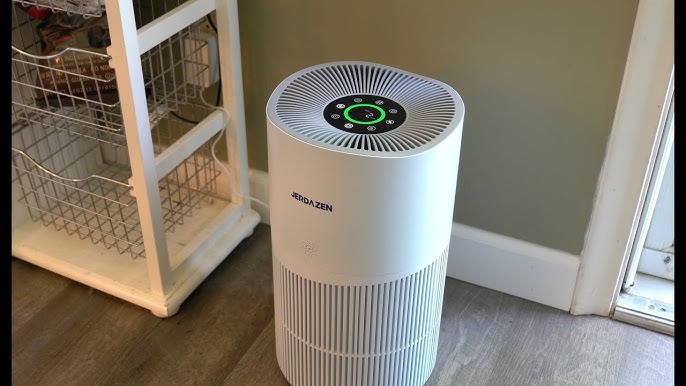
How Do Air Purifiers Work? The Core Technologies
Before we can judge UV-C, we need to understand the team it’s supposed to be playing on. Think of a standard high-quality air purifier as a three-stage security system for your air.
Stage 1: The Pre-Filter
This is the bouncer at the front door. It’s a simple mesh screen that catches the big stuff—pet hair, large dust bunnies, and lint. Its main job is to protect the more expensive, advanced filters that come after it, helping them last longer.
Stage 2: The HEPA Filter (The Star Player)
If you’ve heard of one air purifier term, it’s probably HEPA. A True HEPA filter is the undisputed champion of particulate filtration. It’s a dense, pleated filter made of fiberglass that is certified to capture 99.97% of airborne particles as small as 0.3 microns.
What does that mean in plain English? It traps the stuff that really makes you sneeze and cough:
- Pollen
- Dust mites
- Pet dander
- Mold spores
- Fine dust (PM2.5)
As Dr. Eleanor Vance, an Indoor Air Quality (IAQ) specialist, often reminds her clients, “A HEPA filter is your non-negotiable first line of defense against the microscopic particles that trigger most respiratory issues. It’s the foundation of clean indoor air.”
Stage 3: The Activated Carbon Filter (The Odor and Gas Specialist)
While HEPA filters are brilliant with particles, they can’t do a thing about gases, chemicals, and smells. That’s where activated carbon comes in. This is a highly porous material that acts like a sponge for gaseous pollutants through a process called adsorption. It’s your best defense against:
- Volatile Organic Compounds (VOCs) from paint, furniture, and cleaning products.
- Cooking smells (goodbye, lingering fish odor!).
- Pet odors.
- Smoke.
Now, where does UV-C fit into this all-star lineup?
The Promise of UV-C Light: The Germicidal Pro
UV-C stands for Ultraviolet-C, a specific wavelength of ultraviolet light. It’s also known as germicidal UV. In hospitals and water treatment plants, high-intensity UV-C light has been used for decades as a powerful disinfectant.
The primary “pro” of having a UV-C lamp in your air purifier is its ability to perform germicidal irradiation. When viruses, bacteria, or mold spores are exposed to a sufficient dose of UV-C light, it damages their DNA and RNA, rendering them unable to reproduce and effectively neutralizing them.
So, the theory is simple:
- The HEPA filter traps the microorganisms.
- The UV-C light, positioned inside the purifier, zaps the trapped germs, preventing them from multiplying on the filter itself.
This sounds like a fantastic extra layer of security, especially for those who are immunocompromised or extremely concerned about sickness spreading through the home. It’s the promise of not just trapping, but destroying biological contaminants.
The Reality Check: The Cons of UV-C in Home Air Purifiers
This is where things get a bit more complicated. While the science of UV-C is sound, its effectiveness in a typical home air purifier is a subject of major debate. Here’s a breakdown of the cons and considerations.
Con 1: The “Dwell Time” Dilemma
This is the single biggest challenge for UV-C in air purifiers. For UV-C light to effectively neutralize a microorganism, it needs a certain amount of exposure time, often called dwell time.
Think of it this way: trying to get a clear photo of a car speeding down the highway is tough. You need a fast shutter speed. Similarly, air moves incredibly quickly through an air purifier—that’s how it achieves a high CADR (Clean Air Delivery Rate). In many consumer-grade units, the air (and the germs within it) simply zips past the UV-C bulb too quickly for the light to deliver a lethal dose.
Hospitals use massive, high-intensity UV-C systems in their HVAC units where air might be exposed for longer, or they use UV robots to sterilize entire rooms when they’re empty. A small, low-wattage bulb inside a compact air purifier often can’t compete.
Con 2: The Potential for Ozone Production
This is a serious health concern. Some UV lamps, particularly those that emit light at a wavelength of around 185 nanometers, can react with oxygen in the air to create ozone (O3). While ozone is great in the upper atmosphere (the ozone layer), it’s a known lung irritant at ground level. The Environmental Protection Agency (EPA) has been very clear that ozone can worsen asthma and other respiratory conditions.
Important: Reputable manufacturers use UV-C lamps that are certified to be “ozone-free,” typically operating at a 254-nanometer wavelength which does not generate ozone. If you are considering an air purifier with UV C light, you absolutely must verify that it is certified as ozone-free by a trusted body like the California Air Resources Board (CARB).
Con 3: It Does Nothing for the Biggest Allergy Triggers
Remember our star players, HEPA and activated carbon? UV-C light is completely ineffective against the most common indoor air pollutants:
- It cannot remove dust, pollen, or pet dander. That’s the HEPA filter’s job.
- It cannot remove VOCs, smoke, or odors. That’s the activated carbon’s job.
Its only potential function is neutralizing microorganisms. If your primary concerns are allergies to dust or sensitivity to chemical fumes, a UV-C light adds no value for those specific problems.
Con 4: Maintenance and Lamp Effectiveness
Like any light bulb, a UV-C lamp degrades over time and will eventually need to be replaced, adding to the long-term cost of the unit. Furthermore, its effectiveness can be diminished if the bulb gets covered in dust, which is highly likely inside an air purifier.
So, Do You Need an Air Purifier with UV C Light?
Having weighed the air purifier with UV C light pros and cons, we can arrive at a more nuanced conclusion. It’s not a simple “yes” or “no.”
You might consider a unit with a well-implemented, ozone-free UV-C feature if:
- You or a family member is immunocompromised and requires an extra layer of protection against bacteria and viruses.
- You have a persistent mold or mildew problem in your home, and you want to ensure spores trapped on the filter are neutralized.
- You simply want the peace of mind that comes with having an additional germicidal stage, and you’ve chosen a high-quality unit from a reputable brand.
You probably don’t need to prioritize UV-C if:
- Your main concerns are common allergies to dust, pollen, and pet dander. A powerful HEPA filter is what you need.
- Your primary issue is with odors, smoke, or VOCs. A unit with a thick, substantial activated carbon filter is far more important.
- You are on a tighter budget. The money you’d spend on the UV-C feature is almost always better invested in a unit with a higher CADR, a bigger HEPA filter, or a more robust carbon filter.
Don’t Forget the Fundamentals: CADR, ACH, and Room Size
Whether a unit has UV-C or not, its core performance is measured by a few key metrics that you should never overlook.
What is CADR in an air purifier?
CADR, or Clean Air Delivery Rate, is a performance metric developed by the Association of Home Appliance Manufacturers (AHAM). It tells you how much clean air the purifier delivers, measured in cubic feet per minute (CFM). There are separate scores for dust, pollen, and smoke. The higher the CADR, the faster it cleans the air.
What is ACH?
ACH stands for Air Changes Per Hour. This tells you how many times the purifier can completely clean the air in a given room size in one hour. For allergy sufferers, an ACH of 4-5 is recommended, meaning the entire volume of air in the room is filtered every 12-15 minutes.
Always choose a purifier rated for a room size slightly larger than your own to ensure it can run effectively and quietly at a lower fan speed.
Frequently Asked Questions (FAQ)
Q: Does a UV-C light make an air purifier better?
A: Not necessarily. A well-implemented, high-intensity, ozone-free UV-C light can add a supplementary layer of germicidal protection. However, a poorly designed one with low “dwell time” may offer little to no real-world benefit. The core performance will always depend on the quality of its HEPA and activated carbon filters and its CADR.
Q: Are air purifiers with UV-C light safe?
A: They are safe if they are certified as “ozone-free.” Ozone is a lung irritant, and some UV lamps can produce it. Always check for certifications from reputable bodies like CARB before purchasing. The UV-C light itself is contained within the unit, so you are not exposed to it.
Q: How often should I change the bulb in my air purifier with UV C light?
A: This varies by manufacturer, but typically UV-C bulbs need to be replaced every 12 to 24 months to maintain their germicidal effectiveness. This is an additional long-term cost to consider, on top of regular filter replacements.
Q: Can UV-C light help with viruses like the flu?
A: In theory, yes. UV-C light is proven to neutralize viruses. However, its effectiveness in a home air purifier depends heavily on the unit’s design, the lamp’s intensity, and the airflow speed (dwell time). It may reduce the concentration of airborne viruses, but it’s not a substitute for other hygiene practices.
Q: Should I choose a model with UV-C over one with a better HEPA filter?
A: Absolutely not. The HEPA filter is the foundation of air purification for particles. Always prioritize the quality and size of the HEPA and activated carbon filters, as well as the unit’s CADR, over supplementary features like UV-C.
The Final Verdict
So, what’s the bottom line on the air purifier with UV C light pros and cons?
Think of it as an optional bonus feature, not an essential one. The true workhorses of any great air purifier are its HEPA filter for particles and its activated carbon filter for gases and odors. These are the technologies that will make the most significant difference to your daily air quality.
If you’ve found a high-performance purifier that meets all your core needs (right CADR, great filters, low noise) and it also happens to have a well-designed, ozone-free UV-C feature, then great! It can provide an extra layer of defense. But don’t ever choose a weaker base unit just because it has a UV-C light.
Your journey to cleaner air should start with a solid foundation. Focus on the fundamentals, and you’ll be breathing easier in no time.