Hey there, I’m the Air Purifier Guy. If you’ve ever walked into a freshly painted room, unboxed new furniture, or even just used a strong cleaning spray and thought, “Whew, that smell is intense,” then you’ve come to the right place. That “smell” is often a cocktail of invisible chemicals floating around, and today we’re going to talk about finding the Best Air Purifier For VOCs to tackle them head-on. It’s a journey I’ve been on myself, trying to get rid of that lingering chemical odor after a home renovation project, and I’ve learned a ton along the way. My goal here isn’t to sell you something, but to arm you with the knowledge you need to protect your home and your family’s health.
What Exactly Are VOCs and Why Should You Care?
Let’s break it down. VOC stands for Volatile Organic Compound. It sounds super technical, but the concept is pretty simple.
- Volatile: This means the compound easily evaporates or “off-gasses” into the air at room temperature. Think of the fumes you smell from nail polish remover—that’s a classic example of a volatile substance.
- Organic: In chemistry, this just means the compound contains carbon.
- Compound: It’s a substance made up of different elements.
So, VOCs are carbon-based chemicals that become gases in your home. The tricky part? They come from countless everyday items. We’re talking about:
- Paints, varnishes, and sealants
- New furniture, carpets, and mattresses (that “new” smell is often formaldehyde off-gassing)
- Cleaning supplies and air fresheners
- Printers and craft supplies
- Cosmetics and personal care products
The U.S. Environmental Protection Agency (EPA) has found that concentrations of many VOCs are consistently higher indoors (up to ten times higher) than outdoors. The health effects can range from short-term annoyances like headaches, dizziness, and eye, nose, and throat irritation to more serious long-term concerns. This is why targeting them is so crucial for creating a truly healthy indoor environment.
How Air Purifiers Tackle Invisible Threats Like VOCs
So, how do we fight an enemy we can’t see? Not all air purifiers are created equal when it comes to chemical warfare. A standard purifier might be great for dust and pollen, but it won’t touch VOCs. To win this battle, you need a machine with the right weapons.
The Unsung Hero: Activated Carbon
If there’s one thing you take away from this guide, let it be this: activated carbon is your number one weapon against VOCs. Forget the fancy marketing jargon for a moment. This is the technology that does the heavy lifting.
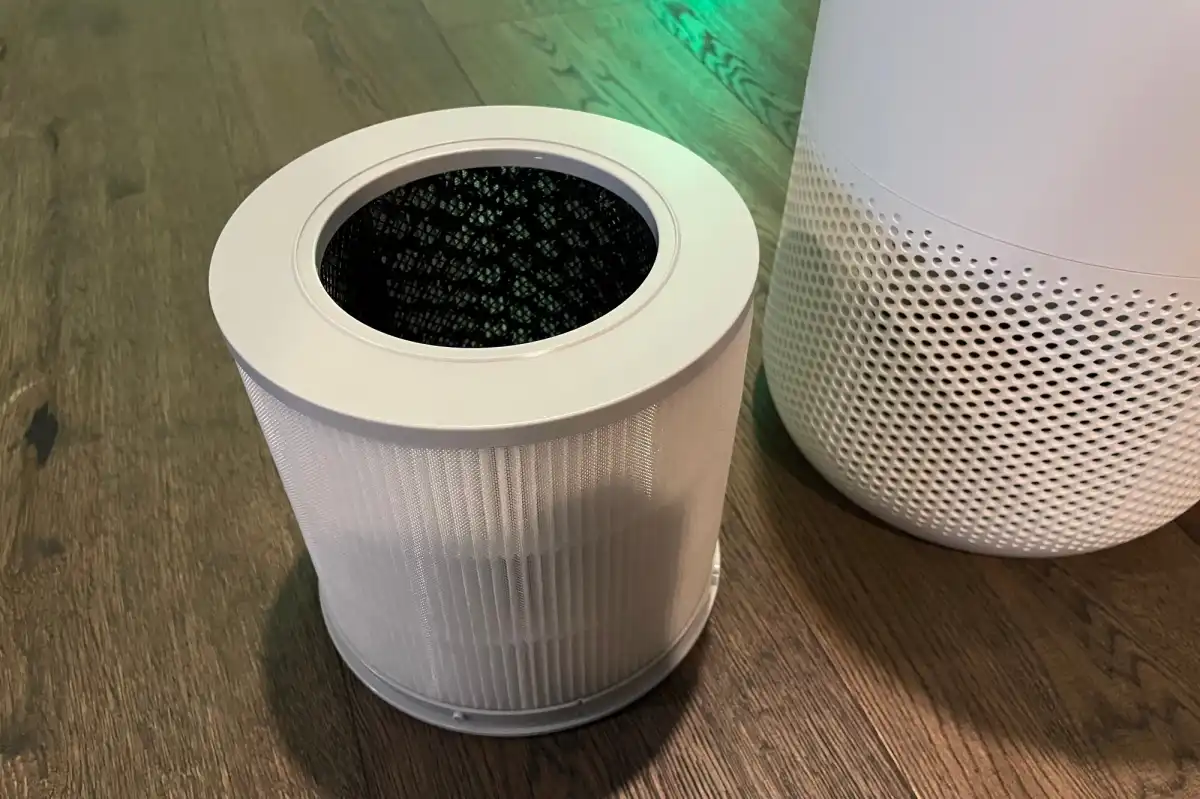
Think of an activated carbon filter like a giant sponge, but for gases. It’s not a simple piece of charcoal. It’s carbon that has been treated to be incredibly porous. This process creates millions of tiny pores and a massive internal surface area. When VOCs, odors, and chemical fumes pass through the filter, they get trapped in these pores through a process called adsorption (not absorption). The gas molecules literally stick to the surface of the carbon.
As Dr. Miles Bennett, an environmental toxicologist, often explains, “A HEPA filter is your net for catching particles, but an activated carbon filter is your trap for catching gases. You absolutely need both for comprehensive air purification, especially in modern, well-sealed homes where chemicals can accumulate.”
The amount of carbon is king. A flimsy, carbon-dusted sheet won’t do much. For serious VOC removal, you need a filter with several pounds of high-quality activated carbon. More carbon means more surface area and a longer time before the filter becomes saturated and needs replacing.
The Particle Catcher: Why HEPA Still Matters
You might be wondering, “If carbon handles the gases, do I still need a HEPA filter?” The answer is a resounding yes. A True HEPA filter is designed to capture 99.97% of airborne particles down to 0.3 microns in size. This includes dust, pollen, pet dander, and mold spores.
While HEPA filters don’t capture gaseous VOCs on their own, they play a vital supporting role. Firstly, some VOCs can attach themselves to airborne particles, which the HEPA filter can then trap. Secondly, you’re not just dealing with VOCs; you’re dealing with overall air quality. A great air purifier is a two-pronged system: HEPA for particles, and activated carbon for gases and odors. You need both working in tandem.
Other Technologies: A Word of Caution
You’ll see other technologies marketed for VOCs, like UV-C lights and ionizers. I urge caution here. Some of these technologies, particularly certain types of ionizers and PCO (photocatalytic oxidation) systems, can produce ozone as a byproduct. Ozone is a lung irritant and is itself an indoor air pollutant. When you’re specifically trying to improve your air quality due to chemical sensitivity, introducing another potential irritant is counterproductive. Stick to the proven combination of substantial activated carbon and True HEPA filtration.
Decoding the Specs: Key Metrics for the Best Air Purifier for VOCs
Alright, let’s get into the nitty-gritty. When you’re comparing models, the spec sheet can be overwhelming. Here’s what you really need to focus on when looking for the best air purifier for VOCs.
What is CADR in an air purifier?
CADR, or Clean Air Delivery Rate, is a standard metric that tells you how quickly a purifier can clean a room of specific particle types: dust, pollen, and smoke. A higher CADR number means faster purification. It’s a great, standardized measure certified by the Association of Home Appliance Manufacturers (AHAM).
However, here’s a crucial expert tip: There is no industry-standard CADR for VOCs. Why? Because there are thousands of different VOCs, and a purifier’s effectiveness can vary wildly between them. So, while a high smoke CADR is a good indicator of powerful airflow, it doesn’t tell you the whole story about chemical removal.
What is ACH and why does it matter?
ACH, or Air Changes per Hour, tells you how many times the purifier can clean the entire volume of air in a specified room size in one hour. For general air quality, 2-3 ACH is decent. But for people with allergies, asthma, or a serious need to remove VOCs, I strongly recommend looking for a unit that can achieve 4-5 ACH. This ensures the air is being turned over and scrubbed of contaminants much more frequently.
The Carbon Factor: Quantity and Quality Are Everything
This is the most important metric for VOCs, even though it’s not always advertised as prominently as CADR.
- Quantity: Don’t settle for a “carbon-infused” pre-filter. Look for the actual weight of the activated carbon. A good unit for VOCs will have at least 3-5 pounds (or about 1.5 to 2.5 kg) of carbon. The top-tier models designed specifically for heavy chemical removal can have 15 pounds or more. The more carbon, the more VOCs it can adsorb and the longer it will last.
- Quality & Type: Not all carbon is the same. Coconut shell carbon is highly regarded for its microporous structure, which is excellent for trapping the smaller molecules of common VOCs. Some high-end purifiers also use treated carbon, sometimes called enhanced or impregnated carbon (e.g., with potassium permanganate), which is specifically engineered to be more effective against certain chemicals like formaldehyde.
[amz id="airpurifier"]
Beyond the Filter: Features That Make a Difference
The filter system is the heart of the purifier, but other features can impact your daily experience.
Smart Sensors and Auto Mode: A Double-Edged Sword for VOCs
Many modern purifiers come with an “Auto Mode” linked to a particle sensor (PM2.5) and sometimes a VOC sensor. While the particle sensors are generally reliable, consumer-grade VOC sensors can be a bit hit-or-miss. They often detect a broad range of compounds and can be triggered by harmless things like cooking odors or perfumes, but they might miss a low, steady off-gassing from a new piece of furniture.
My advice? For general use, Auto Mode is fine. But if you have a known VOC source (like a new rug or a freshly painted wall), don’t rely on the sensor. Run the purifier manually at a medium-to-high speed for the first few weeks to ensure constant, aggressive filtration.
Noise Levels: Finding Your Silent Guardian
An air purifier is only effective if you use it. If it sounds like a jet engine, you’re going to turn it off. Look for the noise level, measured in decibels (dB).
- Under 30 dB: Whisper-quiet, perfect for bedrooms.
- 30-50 dB: Like a quiet library or refrigerator hum. Great for daytime use.
- Above 50-55 dB: Becomes noticeable, like a normal conversation. This is usually the level on the highest fan settings.
Check the noise level on the lower fan speeds, as that’s likely where it will run most of the time.
Certifications to Look For
- AHAM Verifide: This seal confirms that the purifier’s CADR ratings for room size, dust, pollen, and smoke have been independently tested and verified. It’s a stamp of legitimacy.
- Energy Star: This means the unit is energy-efficient, which is important for a device that should be running 24/7. It will save you money on your electricity bill in the long run.
- CARB Certified: The California Air Resources Board certifies that the air purifier meets strict ozone emission limits. This is a non-negotiable safety check.
Maintenance and Filter Replacement Tips
Buying a great purifier is step one. Maintaining it is step two. A clogged filter can’t do its job.
- Check the Pre-Filter: Most units have a washable or vacuum-able pre-filter that catches large particles like hair and lint. Clean this every 2-4 weeks to improve performance and extend the life of your main filters.
- Know Your Carbon Filter’s Lifespan: Unlike a HEPA filter that clogs with particles, a carbon filter becomes saturated with pollutants. Once all its pores are full, it stops working and can even release pollutants back into the air. Follow the manufacturer’s replacement schedule, which for a heavy-duty carbon filter is typically every 1-2 years, depending on usage and contaminant levels.
- Replace the HEPA Filter: The HEPA filter will also need replacing as it gets clogged. This is often done at the same time as the carbon filter, but check your manual. A filter-change indicator light is a very helpful feature.
Frequently Asked Questions (FAQ)
Do HEPA filters remove VOCs?
No, a HEPA filter on its own cannot remove VOCs. HEPA filters are designed to capture solid particles like dust and pollen. To remove gaseous VOCs, you need a substantial activated carbon filter working alongside the HEPA filter.
How long does it take for the best air purifier for VOCs to work?
This depends on the room size, the purifier’s power (ACH), and the concentration of VOCs. You may notice a reduction in strong odors within a few hours. However, for continuous off-gassing from new furniture or paint, you should run the purifier 24/7 for several weeks to significantly lower the ambient concentration.
Can an air purifier get rid of that new furniture smell?
Yes, absolutely! That “new furniture smell” is primarily formaldehyde and other VOCs off-gassing. An air purifier with a large amount of high-quality activated carbon is the most effective tool for capturing these chemicals and eliminating the odor.
How much activated carbon do I need for effective VOC removal?
For light odors or general chemical concerns, a filter with 1-2 pounds of carbon might suffice. For moderate to heavy VOC issues, such as after painting or with new furniture, look for a unit with at least 3-5 pounds of carbon. For severe chemical sensitivities, models with 10+ pounds are recommended.
Are air purifiers that produce ozone safe?
No. Air purifiers that intentionally produce ozone are not recommended by the EPA or health experts. Ozone is a known lung irritant that can worsen asthma and other respiratory conditions. Always choose a purifier that uses mechanical filtration (HEPA) and adsorption (activated carbon) and is certified as low- or no-ozone.
Your Journey to Cleaner, Healthier Air
Choosing the right air purifier can feel like a daunting task, but it doesn’t have to be. By focusing on the core principles—a robust activated carbon filter for gases and a True HEPA filter for particles—you’re already halfway there. Remember to match the machine’s power to your room size and prioritize the amount of carbon over flashy but less effective features.
Fighting invisible threats like VOCs is one of the most proactive steps you can take for your home’s health. I hope this guide has demystified the process and empowers you to find the best air purifier for VOCs for your specific needs. Start your journey to cleaner air today; your lungs will thank you for it.