Ever wake up feeling like you wrestled a dust bunny all night? You know the feeling—stuffy nose, scratchy throat, and a general sense of meh. You’ve invested in an air purifier, a shiny new soldier in your war against airborne nasties. But if you just unboxed it and plopped it in the nearest corner, you might be losing the battle. The secret weapon isn’t just having a purifier; it’s mastering the Best Placement For Air Purifier In Bedroom to truly transform your sleep sanctuary.
My name is the Air Purifier Guy, and I’ve spent years demystifying these amazing machines. I’ve seen it all—from purifiers suffocating behind curtains to ones humming away uselessly in the wrong spot. Your bedroom is arguably the most important room to get right. You spend a third of your life there, breathing that air deeply while your body rests and repairs. Getting the placement right isn’t just a small tweak; it’s the difference between mediocre results and waking up feeling refreshed, clear, and ready to take on the day. So, let’s roll up our sleeves and figure out exactly where your air purifier needs to live to do its best work.
Why Bedroom Air Purifier Placement is So Crucial
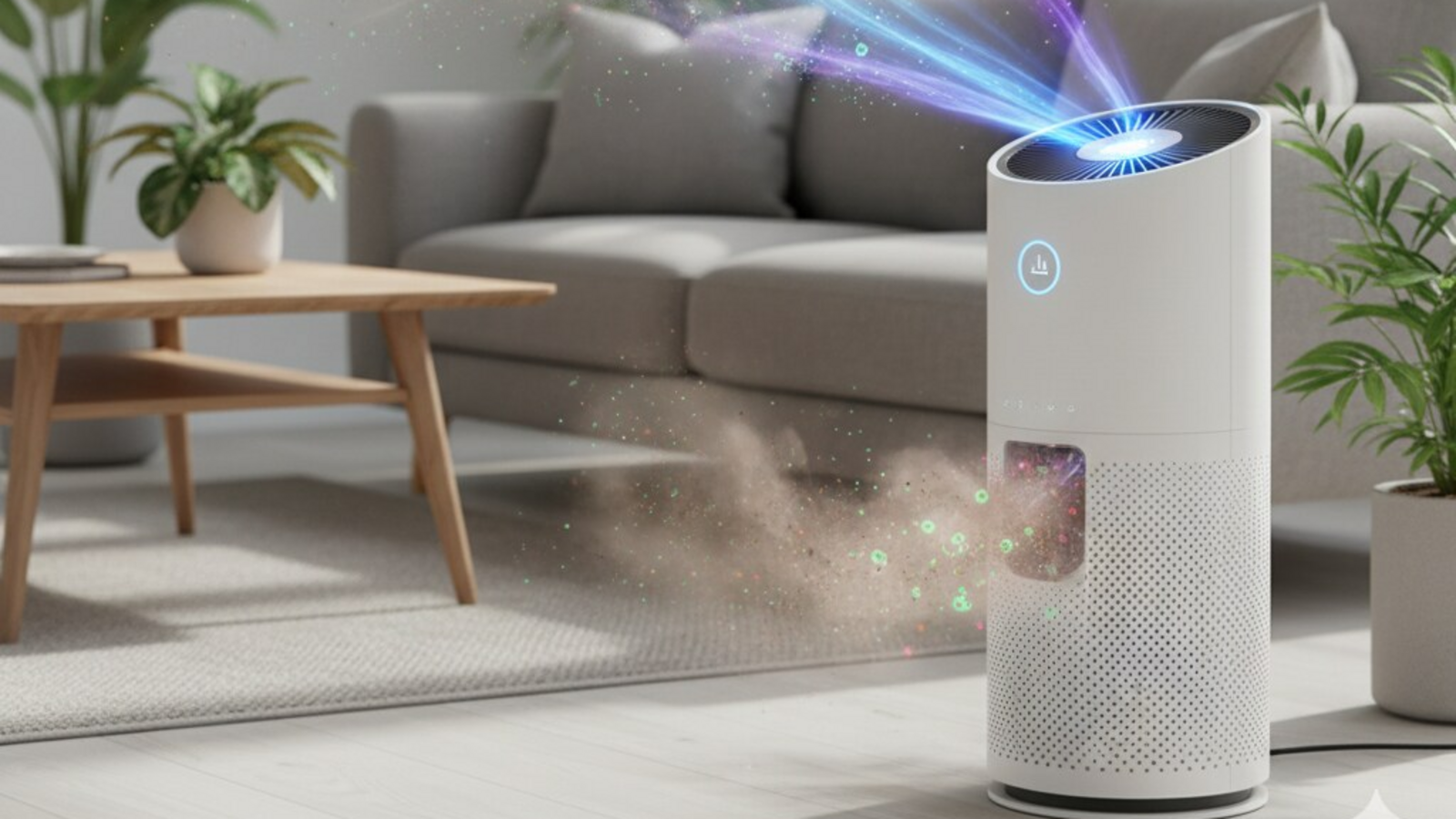
Think of your air purifier as a vortex. Its job is to pull in the “dirty” air from your room, scrub it clean through a series of filters, and then push out fresh, purified air. For this process to be effective, it needs to create a continuous circulation pattern, a gentle current of air that covers the entire room.
If you block its path, you’re essentially kneecapping its ability to do its job. It’s like trying to cool a whole house with a fan pointed directly at a wall. You’ll just get a very cool wall, and the rest of the house will stay hot. The same principle applies here. Poor placement creates “dead zones” where pollutants like dust mites, pet dander, pollen, and even nasty VOCs (Volatile Organic Compounds) can linger and accumulate. The goal is to position your unit to maximize airflow and capture contaminants before they reach your breathing zone while you sleep.
According to indoor air quality specialists, proper air circulation can increase a purifier’s efficiency by up to 40%. It’s not just about the machine’s power; it’s about the physics of the room.
The Golden Rules: The Best Placement for Air Purifier in Bedroom
Alright, let’s get down to brass tacks. There isn’t one single “magic spot” that works for every single bedroom layout, but there are core principles that will guide you to the optimal location.
Rule #1: Give It Some Breathing Room
This is the most common mistake I see. Air purifiers, especially models with 360-degree intakes, need space. They are constantly inhaling your room’s air. If you shove it into a corner, against a wall, or behind a bulky piece of furniture, you’re literally suffocating it.
- The Guideline: Aim for at least 1 to 2 feet of open space on all sides of the air purifier. This includes the top, where the clean air is usually expelled. Avoid placing it directly under a low shelf or table.
- Why it Matters: Unobstructed airflow allows the unit to draw in air from all directions, creating a powerful and efficient cleaning cycle. Blocking it on one or more sides means it will just keep re-filtering the same pocket of air, while pollutants across the room continue their party.
Rule #2: Get Close to Where You Breathe
Where do you spend eight hours every night? In your bed. It makes sense to place the air purifier where it can do the most good for you personally. The air you inhale while sleeping is the most critical.
- The Guideline: Position the air purifier 3 to 5 feet away from your head while you sleep. This is often on a nightstand (for smaller models) or on the floor near your side of the bed.
- Why it Matters: This creates a clean air “bubble” around you. The purifier will pull in contaminants from the room and expel a stream of clean air that you breathe in directly. For my fellow allergy sufferers, this simple move can be a game-changer during high-pollen seasons.
Rule #3: Target the Source of Pollutants
Think like a general mapping out a battlefield. Where are the enemy troops (pollutants) entering your territory? Identify the primary sources of airborne contaminants in your bedroom and place your purifier there to act as a sentry.
- Common Sources:
- Windows: A major entry point for pollen, outdoor dust, and pollution.
- Doors: Captures dust and allergens kicked up from other parts of the house.
- Pet Beds: If your furry friend sleeps in your room, their bed is a hotspot for dander.
- “High-Traffic” Areas: The path from the door to the closet can stir up a lot of settled dust.
- The Guideline: Place the unit near one of these sources. A spot between the door and your bed is often an excellent compromise, as it intercepts pollutants entering the room and also protects your breathing zone.
Common Placement Mistakes to Absolutely Avoid
Knowing where to put it is half the battle. Knowing where not to put it is the other half. Avoid these common pitfalls:
- The Tight Corner: As we discussed, this is the number one offender. It severely restricts airflow and renders your purifier largely ineffective.
- Behind the Couch or Under a Table: Hiding your purifier might seem aesthetically pleasing, but it’s like buying a sports car and only driving it in a parking garage. You’re completely wasting its potential.
- In a Humid Area (Like Near a Bathroom): Most air purifiers, especially those with HEPA filters, don’t play well with high humidity. Moisture can lead to mold growth on the filter itself, which is the last thing you want. Keep it away from en-suite bathrooms or humidifiers.
- Right Next to Electronics: Some purifiers can create a bit of a draft. Placing it right next to your TV or computer might kick up dust that then settles on your sensitive electronics.
Does the Type of Air Purifier Affect Placement?
Absolutely. The technology inside your machine influences how it interacts with the room, and understanding this can help you fine-tune the best placement for air purifier in bedroom.
Understanding the Tech: HEPA, Activated Carbon, and Airflow
Let’s quickly break down the core components you’ll find in most quality air purifiers.
- True HEPA Filter: This is the gold standard for capturing physical particles. Think of it as an incredibly fine net that traps 99.97% of particles down to 0.3 microns in size. This includes dust, pollen, pet dander, mold spores, and some bacteria.
- Activated Carbon Filter: This isn’t a net; it’s a sponge. The carbon is treated to have millions of tiny pores that absorb gases, odors, and VOCs. This is what tackles cooking smells, pet odors, and chemical fumes from paint or new furniture.
For both of these technologies to work, air must pass through them. This reinforces the primary rule: placement must prioritize airflow above all else. A clogged or blocked filter system is just a fancy box.
What is CADR and Why It Matters for Your Bedroom?
CADR stands for Clean Air Delivery Rate. In simple terms, it’s a measure of how much clean air the purifier can produce in a given amount of time. It’s measured in Cubic Feet per Minute (CFM) for three common pollutants: dust, pollen, and smoke.
A higher CADR means the machine can clean the air in your room faster and more effectively. This is where it connects to placement. If you have a large bedroom, you need a unit with a CADR that matches your room size. According to the Association of Home Appliance Manufacturers (AHAM), you should look for a CADR rating that is at least two-thirds of your room’s square footage.
How does this impact placement? A purifier with a high CADR for its room size is more forgiving of slightly sub-optimal placement because its raw power can help overcome some circulation issues. However, even the most powerful unit will struggle if it’s completely blocked. The best strategy is to match the CADR to your room size and follow the placement rules for maximum efficiency.
Bảng trống.Beyond Placement: Optimizing Your Bedroom’s Air Quality
Perfect placement is your foundation, but you can build on it with a few extra habits to ensure you’re breathing the purest air possible.
Set the Right Fan Speed
Many people run their purifiers on the lowest, quietest setting 24/7. While that’s fine for maintaining already-clean air, it’s not ideal for a deep clean.
- Pro Tip: Run your purifier on a higher setting for 30-60 minutes before you go to bed. This will perform a rapid air exchange, clearing out the pollutants that have built up during the day. Then, you can switch it to a quieter, lower “sleep mode” for the night.
Keep Doors and Windows Closed
An air purifier is designed to clean the air in a contained space. If you leave the bedroom door or windows wide open, you’re constantly introducing new pollutants. It’s like trying to bail out a boat with a hole in it. While the purifier is running, especially at night, keep the room sealed for the best results.
Regular Filter Maintenance is Non-Negotiable
This cannot be overstated. A clogged filter is a useless filter. Worse, a dirty filter can actually become a source of pollution itself.
- Check Your Pre-filter: Many units have a washable pre-filter that catches larger particles like hair and dust bunnies. Check and clean this every 2-4 weeks.
- Know Your Main Filter’s Lifespan: Your HEPA and Activated Carbon filters will need to be replaced. This can range from every 6 months to every few years, depending on the model and your home’s air quality. Mark it on your calendar!
- Listen to the Indicator: Most modern purifiers have a filter replacement indicator light. Don’t ignore it!
David Chen, an experienced HVAC engineer, puts it perfectly: “Treating your air purifier’s filter like an engine’s oil filter is the best analogy. You wouldn’t run your car for 20,000 miles without an oil change. Don’t ask your purifier to clean your air for two years with a filter that was designed to last six months.”
Frequently Asked Questions about Air Purifier Placement
Let’s tackle some of the most common questions I get about finding the perfect spot.
Should an air purifier be on the floor or a table?
For larger, console-style units, the floor is the only option and where they are designed to be. For smaller, more compact units, placing them on a nightstand or dresser can be more effective as it raises the “clean air” output closer to your breathing level. Just ensure the surface is stable and the unit has ample space around it.
Is it okay to run an air purifier all night?
Yes, absolutely! In fact, it’s recommended. Air quality fluctuates constantly, and running the purifier all night ensures you are breathing clean air during your body’s critical restorative period. Modern units are very energy-efficient, often using less power than a standard light bulb on their low settings.
How far away should an air purifier be from a wall?
A good rule of thumb is to keep it at least one foot (12 inches) away from the nearest wall or large piece of furniture. If the unit has a 360-degree air intake, providing two feet of clearance is even better to maximize its performance.
Can I put my air purifier behind the TV?
It’s best to avoid this. The space behind a TV is often enclosed, dusty, and has poor airflow. The television also generates heat, which isn’t ideal for the purifier’s motor. Find a more open location.
What is the best placement for an air purifier in a bedroom with a ceiling fan?
This can be a great combination! The ceiling fan can help circulate the air in the room, moving stagnant air towards the purifier’s intake. Place the purifier in a spot where it won’t be in a direct, powerful downdraft from the fan, and set the fan to a low or medium speed to assist, rather than disrupt, the purifier’s airflow pattern.
Your Journey to a Breath of Fresh Air
So, there you have it. It turns out that where you place your air purifier is just as important as which one you buy. By following these simple rules—giving it space, placing it near your bed, and targeting pollutant sources—you unlock the full potential of your machine.
You’re no longer just passively filtering the air; you’re actively directing a strategy for a cleaner, healthier sleep environment. This isn’t about complicated technical maneuvers; it’s about making small, smart adjustments that yield huge rewards for your health and well-being. Take a look around your room, find that optimal spot, and start your journey to waking up truly refreshed. Finding the best placement for an air purifier in bedroom is your first and most important step.