Hey there, I’m the Air Purifier Guy. My own battle with seasonal allergies used to feel like a losing fight. You know the drill: the sneezing, the itchy eyes, the constant feeling of being stuffy, even indoors. It was this frustration that kickstarted my journey into the world of air purification. I was on a mission to find a machine that didn’t just move air around but actually cleaned it. That’s what brings us here today for this in-depth Honeywell Hpa300 Review. This model is a heavyweight in the air purifier world, often recommended for its raw power. But is it the right choice for you?
Let’s cut through the marketing noise and the confusing spec sheets. We’re going to break down exactly what this machine does, how well it does it, and who it’s truly built for. By the end of this, you’ll know if the HPA300 is the key to fresher, cleaner air in your home.
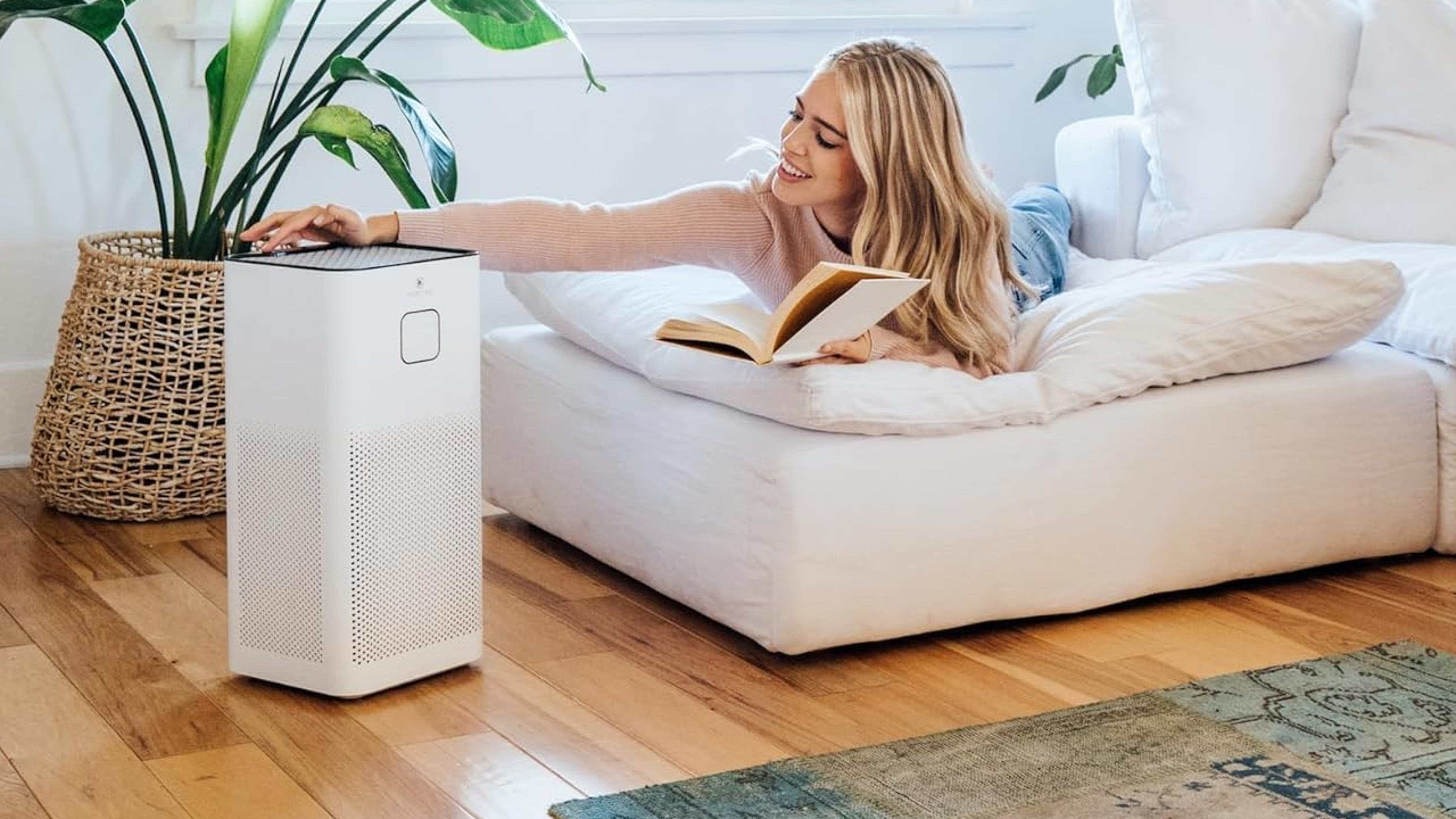
First Impressions: What to Expect from the Honeywell HPA300
Right out of the box, the Honeywell HPA300 makes one thing clear: it means business. This isn’t a sleek, minimalist gadget designed to blend into the background. It’s a robust, fairly large unit (about 22 inches tall and 21 inches wide) with a classic, functional design. It’s built like a tank, which speaks to its durability, but you’ll want to make sure you have a dedicated spot for it.
Setting it up is a breeze. The front panel pops off easily, giving you access to the filters. You just need to remove the plastic wrap from the three HEPA filters and the single carbon pre-filter, slot them in, and you’re good to go. It’s a straightforward process that takes less than five minutes.
The Core Technology: How Does the HPA300 Actually Clean Your Air?
This is where things get interesting. An air purifier is only as good as its filters, and Honeywell has equipped the HPA300 with a two-stage filtration system that’s both powerful and proven. Think of it as a one-two punch against airborne contaminants.
The Activated Carbon Pre-Filter: Your First Line of Defense
Before air even reaches the main filters, it passes through a black, mesh-like pre-filter. This isn’t just a simple screen; it’s an activated carbon pre-filter.
- Its First Job: Capture large particles. This includes things you can often see, like pet hair, lint, and larger dust bunnies. By trapping these first, it extends the life of the more expensive HEPA filters behind it.
- Its Second, Crucial Job: Absorb odors and VOCs. Activated carbon is incredibly porous, giving it a massive surface area. This structure is perfect for trapping smelly gas molecules and Volatile Organic Compounds (VOCs) from things like cooking fumes, pet odors, smoke, and chemicals from cleaning products or new furniture.
True HEPA Filtration: The Microscopic Particle Killer
Once the air has passed the pre-filter, it hits the main event: three genuine True HEPA filters. This is a critical distinction. Many brands use terms like “HEPA-type” or “HEPA-like,” which don’t meet the same rigorous standard.
According to the U.S. Environmental Protection Agency (EPA), a True HEPA filter must be capable of capturing 99.97% of airborne particles as small as 0.3 microns.
How small is 0.3 microns? Think of a single human hair—it’s about 50-70 microns wide. A HEPA filter is designed to trap particles over 150 times smaller than that. This includes the most common triggers for allergies and asthma:
- Pollen
- Mold spores
- Dust mites
- Pet dander
- Bacteria and some viruses
- Fine smoke particles
The combination of a robust carbon pre-filter and a massive surface area of True HEPA filtration is what gives the Honeywell HPA300 its cleaning power.
Key Metrics to Understand When Choosing a Honeywell HPA300
Now, let’s talk numbers. Spec sheets can be intimidating, but there are a few key metrics that tell you the real story of an air purifier’s performance.
Bảng trống.What is CADR and Why Should You Care?
CADR, which stands for Clean Air Delivery Rate, is the single most important metric for an air purifier’s performance. It’s an independent standard, verified by the Association of Home Appliance Manufacturers (AHAM), that measures how much clean air the purifier delivers and how fast. The higher the numbers, the better.
The Honeywell HPA300 has impressive CADR ratings:
- Smoke: 300
- Dust: 320
- Pollen: 300
A 300 rating for smoke means that in one minute, it delivers enough clean air to fill a 300 cubic foot space. This high rating is a clear indicator of its raw power and ability to clean a room quickly and effectively.
ACH and Room Size Coverage
Another important concept is ACH, or Air Changes per Hour. This tells you how many times the purifier can completely cycle and clean the entire volume of air in a specific room within one hour. For allergy sufferers, experts recommend at least 4-5 ACH.
The Honeywell HPA300 is officially rated for rooms up to 465 square feet. In a room this size, it will achieve approximately 5 air changes per hour, making it an excellent choice for large living rooms, master bedrooms, or open-concept spaces. You can certainly use it in a smaller room, where it will clean the air even more frequently, providing an extra layer of protection.
Living with the HPA300: Day-to-Day User Experience
Performance numbers are great, but what’s it like to actually live with this machine?
The Control Panel: Simple, But Effective
The HPA300 features a straightforward electronic touch control panel on the top. There are no confusing apps or Wi-Fi connectivity here—it’s all about function. You get:
- Four Cleaning Levels: Germ, General Clean, Allergen, and Turbo. The Allergen and Turbo modes are noticeably powerful.
- Timer: You can set it to turn off after 2, 4, or 8 hours.
- Control Panel Dimmer: This is a fantastic feature for bedrooms. You can dim the bright blue lights so they don’t disturb your sleep.
- Filter Check/Reset Lights: These lights will illuminate when it’s time to check or replace your filters, taking the guesswork out of maintenance.
How Loud is the Honeywell HPA300?
Let’s be blunt: on its highest settings, this machine is loud. The Turbo setting moves a serious amount of air, and it sounds like it. It’s comparable to a loud box fan. This is great for a quick clean when you’re leaving the house, but not for watching a movie.
However, on the lower settings like Germ or General Clean, the noise is much more manageable. It produces a consistent, low hum that easily fades into the background, functioning as a form of white noise for many people, which can be great for sleeping.
Energy Consumption
Despite its power, the Honeywell HPA300 is Energy Star certified. This means it meets strict energy efficiency guidelines set by the EPA. While running it on Turbo 24/7 will have a noticeable impact on your electricity bill, using it on the lower, more common settings is quite efficient. For most users, the cost to run it is very reasonable.
The Long-Term Commitment: Filter Replacement and Maintenance
This is a crucial part of any Honeywell HPA300 review. The ongoing cost of filters is something every buyer needs to consider.
- Activated Carbon Pre-Filter (Model HRF-AP1): Honeywell recommends replacing this every 3 months. This filter does the heavy lifting for odors and large particles, so replacing it regularly is key to the machine’s overall performance and longevity of the HEPA filters.
- True HEPA Filters (Model HRF-R1): The HPA300 requires three of these filters. They should be replaced every 12 months.
The filter indicator lights will remind you, so you don’t need to mark your calendar. Annually, you can expect the filter costs to be a significant portion of the initial purchase price, but this is standard for any high-performance air purifier. The cost is the price you pay for consistently clean air.
A Pro Tip from the Air Purifier Guy: You can often extend the life of your pre-filter slightly by vacuuming it gently with a brush attachment once a month. This removes the surface layer of dust and hair, helping it breathe a little easier.
The Pros and Cons: A Balanced View
No product is perfect. Here’s my honest breakdown of the Honeywell HPA300.
What I Love (Pros):
- Exceptional Raw Power: The high CADR ratings aren’t just for show. This unit is a beast at removing allergens, dust, and smoke from large spaces.
- True HEPA Filtration: You get certified, medical-grade filtration that you can trust to capture microscopic irritants.
- Trusted Brand: Honeywell has been a leader in home air quality for decades. The HPA300 comes with a 5-year limited warranty, which is excellent.
- Simple and Intuitive: No complicated apps or finicky sensors. The controls are easy to understand and use right out of the box.
- Effective Odor Reduction: The substantial carbon pre-filter does a great job at tackling common household odors.
What Could Be Better (Cons):
- Loud on High Settings: The Turbo mode is very loud. It’s a trade-off for its power.
- No Auto Mode: The HPA300 lacks a smart sensor that can detect air quality and adjust fan speed automatically. You have to manage the settings manually.
- Bulky and Utilitarian Design: It’s built for function, not form. It won’t win any design awards and can be difficult to place discreetly.
- Ongoing Filter Costs: The annual cost of replacing all four filters is a significant investment you need to budget for.
Who is the Honeywell HPA300 Best For?
After extensive use and analysis, I can confidently say this air purifier is a perfect match for specific types of users:
- The Serious Allergy Sufferer: If you need maximum particle removal in a large bedroom or living area to combat pollen, dander, and dust, this is your workhorse.
- Pet Owners: The combination of the carbon pre-filter for odors and the powerful HEPA filters for dander makes it a top contender for homes with furry friends.
- Those with Large, Open Spaces: Its 465 sq. ft. coverage is legitimate. It’s one of the best consumer-grade options for truly cleaning the air in a large room.
- Users Who Value Power Over Perks: If you don’t care about Wi-Fi, smart sensors, or a sleek design and just want a machine that cleans the air exceptionally well, the HPA300 is hard to beat.
However, if you need a whisper-quiet machine for a small office, have a very modern aesthetic, or love the idea of an “set it and forget it” auto mode, you might want to explore other options.
Frequently Asked Questions (FAQ)
How often should I change the filters in my Honeywell HPA300?
You should replace the activated carbon pre-filter every 3 months and the three True HEPA filters once every 12 months. The unit has indicator lights to remind you.
Does the Honeywell HPA300 remove pet and cooking odors?
Yes. The activated carbon pre-filter is specifically designed to absorb odors and VOCs, making it very effective against common household smells like those from pets, cooking, or smoke.
Is the Honeywell HPA300 loud enough to disturb sleep?
On its lowest settings (Germ or General Clean), the noise is a soft hum that many people find soothing, similar to white noise. However, the Allergen and especially the Turbo settings are too loud for most people to sleep through.
Does the Honeywell HPA300 produce ozone?
No. This unit relies on mechanical filtration (pre-filter and HEPA filters) and does not use an ionizer or UV-C light, so it is 100% ozone-free.
Can I wash the HEPA filters to save money?
Absolutely not. The HEPA filters are made of a dense web of delicate fibers. Washing them will destroy their effectiveness and can lead to mold growth. They must be replaced.
The Final Verdict on the Honeywell HPA300
So, what’s the bottom line in this Honeywell HPA300 review?
The Honeywell HPA300 is not the fanciest, the quietest, or the “smartest” air purifier on the market. Instead, it’s an unapologetic powerhouse. It’s a reliable, incredibly effective workhorse designed to do one job—clean the air in a large room—and it does that job exceptionally well.
If you are struggling with allergies, asthma, or simply want to create a healthier breathing environment in a large space, and you prioritize raw performance over modern bells and whistles, the HPA300 remains one of the best values available. It’s an investment in your health that delivers tangible, breathable results. It’s time to stop just living in your home and start truly enjoying the air you breathe.