Ever bought an air purifier, plugged it in, and felt that satisfying sense of accomplishment? You’re officially breathing cleaner, healthier air. High-five! But then, months go by. Life gets busy. That little “change filter” light starts blinking, but you ignore it. A week turns into a month. What’s the worst that can happen, right?
Not changing your air purifier filter can lead to reduced efficiency, turn the unit into a source of pollution, strain the motor, cause bad odors, and potentially void your warranty. Neglecting this simple maintenance task undermines the very purpose of the air purifier, making it less effective and potentially harmful to your indoor air quality.
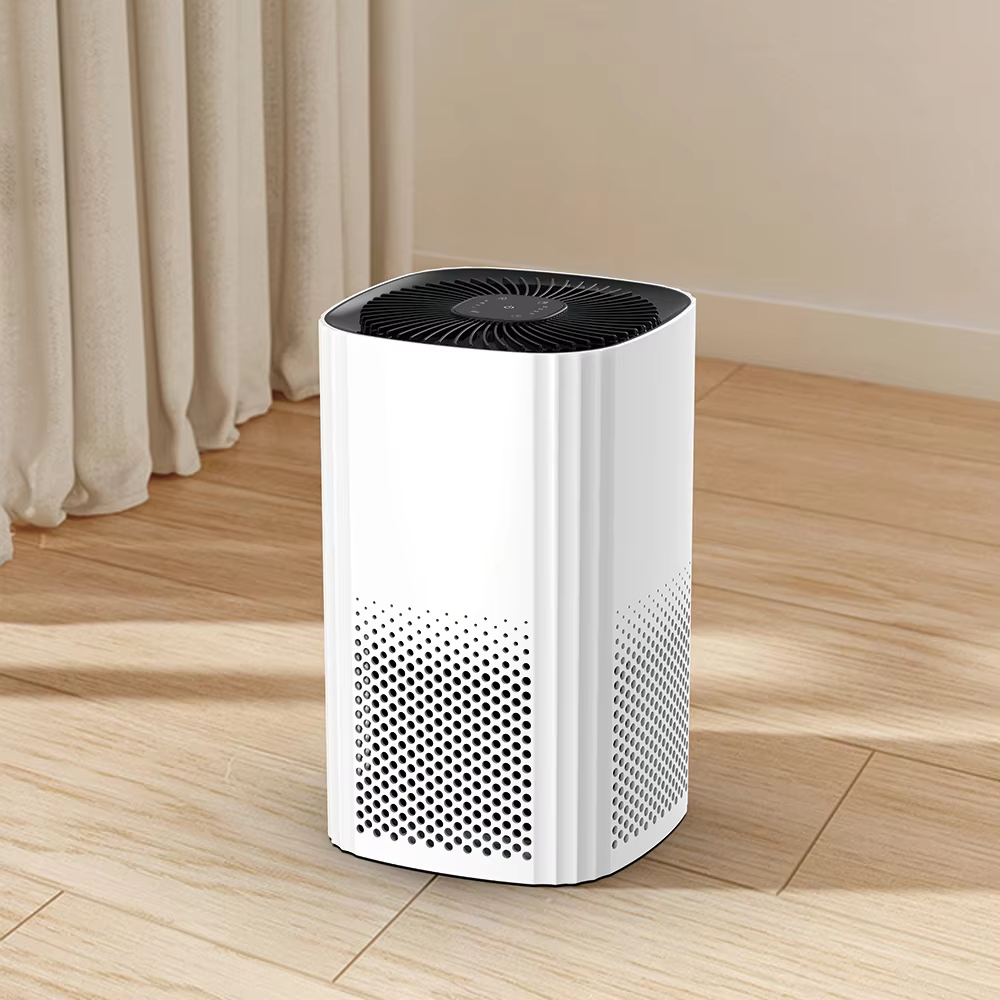
The Five Stages of a Neglected Air Purifier Filter
Think of your air purifier’s filter as the goalie on a soccer team. Its job is to stop everything from getting into the net—in this case, your lungs. When the goalie is fresh and alert, nothing gets by. But when it’s old, clogged, and tired… well, you’re in for a rough game.
Here’s a breakdown of the downward spiral your air purifier goes on when its filter is neglected.
Stage 1: The Great Slowdown (Reduced Efficiency)
The first and most immediate consequence is a drastic drop in performance. An air purifier’s effectiveness is measured by its CADR (Clean Air Delivery Rate). This number tells you how much clean air the unit can produce at its highest setting.
A brand-new, clean HEPA filter is a marvel of engineering, with a complex web of fibers designed to trap particles as small as 0.3 microns. But as it captures dust, pollen, pet dander, and mold spores, these pathways get blocked.
Imagine trying to drink a thick milkshake through a coffee stirrer. That’s your purifier’s fan trying to pull air through a clogged filter. The airflow plummets, and so does the CADR. Your purifier might be running, but it’s cleaning a fraction of the air it was designed to. It’s essentially becoming expensive, noisy furniture.
Stage 2: The Enemy Within (It Becomes a Source of Pollution)
This is where things get truly nasty. A filter overloaded with organic matter like mold spores, bacteria, and pet dander can become a breeding ground. Add a little humidity to the mix, and you’ve created the perfect petri dish.
“A saturated filter doesn’t just stop working; it can become an active source of contamination,” warns Dr. Eleanor Vance, an Indoor Air Quality (IAQ) specialist. “Moisture trapped in the filter can promote mold growth, which the purifier can then circulate back into your room. You’re inadvertently making your air quality worse.”
The same goes for the activated carbon layer, which is responsible for adsorbing odors and Volatile Organic Compounds (VOCs). Once it’s saturated, it can’t hold onto any more molecules. In some cases, a change in temperature or humidity can cause it to release the trapped pollutants back into your air, a phenomenon known as “off-gassing.” That mystery smell you can’t place? It might be your purifier giving back all the nasty stuff it collected.
Stage 3: The Energy Vampire (Strained Motor and Higher Bills)
Remember that fan working overtime to pull air through the clogged filter? That extra effort doesn’t come for free. The motor has to spin harder and longer to achieve any meaningful airflow, leading to two major problems:
- Increased Energy Consumption: Your purifier will start drawing more power, leading to a noticeable bump in your electricity bill. That “Energy Star” rating it came with goes right out the window.
- Motor Burnout: Constant strain puts immense wear and tear on the motor. Over time, this can cause the motor to overheat and fail prematurely. A simple $50 filter replacement suddenly turns into a $300+ expense for a new machine.
Stage 4: The Unpleasant Aroma (Bad Odors)
One of the best things about a new air purifier is that fresh, clean smell—or rather, the lack of any smell at all. This is the magic of the activated carbon filter, which traps odor-causing molecules from cooking, pets, and smoke.
When that carbon filter is full, it’s like a sponge that can’t absorb any more water. Not only does it stop removing new odors, but the collection of stale, trapped particles on the HEPA filter can start to produce a musty, dirty-sock smell of its own. If you walk into a room and notice a funky odor coming from your purifier, you’re long overdue for a filter change.
Stage 5: The Contract Killer (Voided Warranty)
Manufacturers provide specific guidelines for filter replacement for a reason. They’ve tested their machines and know that running them with a clogged filter causes undue stress on the components. If your purifier’s motor burns out and the company discovers you haven’t changed the filter in two years, they are well within their rights to void your warranty. Neglecting basic maintenance is often explicitly listed as a condition that nullifies their guarantee.
So, How Do I Know When to Change the Filter?
Okay, I might have scared you a bit. But knowledge is power! The good news is, avoiding this grim scenario is easy. Here are the clear signs that your filter is crying out for help.
- The Filter Indicator Light: The most obvious sign. While not always perfectly accurate (most are simple timers), it’s a fantastic reminder. When it turns on, don’t ignore it. Order a new filter right away.
- Reduced Airflow: Put your hand over the air outlet. Do you remember it being much stronger when it was new? If the flow feels weak even on high settings, the filter is likely the culprit.
- Funky Smells: As mentioned, if the air coming out of the purifier smells musty, dusty, or just plain weird, the filter is past its prime.
- Increased Noise: A motor working harder is often a motor that’s making more noise. If your once-whisper-quiet unit now has a noticeable whine or strain, check the filter.
- Your Allergies are Back: As someone who’s had a lifelong battle with seasonal allergies, this is the most personal indicator for me. If you find yourself sneezing, sniffling, or getting itchy eyes again after weeks of relief, it’s a huge red flag that your purifier is no longer pulling its weight.
A Quick Guide: How to Change Your Air Purifier Filter
The process is incredibly simple for most models. While you should always consult your user manual, here’s the general, four-step process.
- Power Down and Unplug: Safety first! Always unplug the unit from the wall before opening it up.
- Open the Housing: There’s usually a back or front panel that clicks or slides off. This will expose the filter compartment.
- Remove the Old, Insert the New: Take out the old, dirty filter. It might be a single cartridge or multiple layers. Take a moment to see just how much gunk it’s collected—it’s both disgusting and satisfying! Before inserting the new filter, many come wrapped in plastic. Remember to remove the plastic! It’s a surprisingly common mistake. Slide the new filter in, ensuring it’s facing the right direction (there’s usually an arrow indicating airflow).
- Close Up and Reset: Put the cover back on, plug the unit in, and turn it on. Most purifiers require you to reset the filter indicator light by holding down a button for a few seconds.
And that’s it! You’re back to breathing clean air.
Frequently Asked Questions (FAQ)
Let’s tackle some of the most common questions I get about this topic.
How often should I really change my air purifier filter?
This depends on your specific environment and usage. The manufacturer’s recommendation (typically 6-12 months for a HEPA filter and 3-6 months for a carbon pre-filter) is a great baseline. However, you should change it more frequently if you have pets, live in a high-pollution area, are a smoker, or run the unit 24/7.
Can I just wash my HEPA filter instead of replacing it?
Absolutely not! A true HEPA filter should never be washed unless it is explicitly labeled as “washable” or “permanent,” which is very rare. Washing a standard HEPA filter will destroy the delicate web of fibers that allows it to capture microscopic particles. You’ll ruin the filter and it will no longer be effective.
What about vacuuming the filter?
You can gently vacuum the surface of a pre-filter to extend its life a bit, but you should never vacuum the main HEPA filter. Doing so can damage the fibers and may even push smaller particles deeper into the filter medium, making the clog worse.
Is a dirty filter really going to damage my air purifier?
Yes, it can. As we covered, the constant strain on the fan motor from trying to pull air through a clogged filter can cause it to overheat and burn out, significantly shortening the lifespan of your appliance.
Why are replacement filters so expensive?
Quality filtration media is complex to manufacture. A true HEPA filter is an intricate mat of glass fibers that must meet strict government standards (trapping 99.97% of particles at 0.3 microns). An activated carbon filter contains specially treated carbon with a massive surface area for adsorption. You’re paying for the technology that keeps you healthy. Be wary of cheap, third-party knock-offs, as they often don’t meet the same performance standards.
The Bottom Line: Your Health is Worth a Clean Filter
Your air purifier is a powerful tool in your arsenal for a healthier home. But it’s a tool that requires maintenance. Ignoring the filter is like putting cheap, old fuel in a high-performance car—you’re just not going to get the results you paid for, and you’re likely to cause expensive damage down the line.
So, the next time that little light starts blinking, don’t ignore it. Think of it as a friendly reminder that you’re investing in every breath you and your family take. Understanding what happens if you don’t change air purifier filter is the first step. Taking two minutes to swap it out is the action that truly makes a difference. Go on, check your filter today. Your lungs will thank you.
How to Change Your Air Purifier Filter
Changing your air purifier filter is a simple process that ensures your unit continues to provide clean air efficiently. Follow these four general steps for most models.
Prioritize safety by always unplugging your air purifier from the wall outlet before attempting to open its housing. This prevents any electrical hazards during the filter replacement process.
Locate and open the air purifier's housing, which is typically a back or front panel designed to click or slide off. This action will expose the compartment where the old filter is housed.
Carefully remove the old, dirty filter from its compartment. Before inserting the new filter, ensure you remove any plastic wrapping, a common oversight. Slide the new filter into place, paying attention to any arrows indicating the correct airflow direction.
Once the new filter is securely in place, close the housing panel. Plug the unit back into the wall and turn it on. Most air purifiers require you to reset the filter indicator light by holding down a specific button for a few seconds.
Get our weekly buyer guide
Practical specs, not advice. Unsubscribe anytime.
I appreciate the reminder about the motor strain. I’ve always focused on the air quality aspect, but never really considered the long-term damage to the unit itself. I have a Coway Airmega, and those filters aren’t cheap, so I definitely want to extend the life of the purifier as much as possible. Good to know it’s not just about clean air, but also protecting my investment.
This is so true! I used to be terrible about changing my filter, thinking it was just a suggestion. My old unit started smelling musty, and I couldn’t figure out why. Turns out, it was literally blowing dirty air back into my room. Now I set reminders and always keep a spare on hand. My allergies have been so much better since I started being diligent.
This really hit home. I had no idea that not changing the filter could actually turn the unit into a source of pollution! That’s completely counterproductive to why I bought it in the first place. I’m going to double-check my warranty info too, just in case. Thanks for the wake-up call; I’m ordering new filters today.
I get that changing the filter is important, but sometimes it feels like the ‘change filter’ light comes on way too soon. I live in a pretty clean apartment, no pets or anything, and it still seems to blink every few months. It’s a bit of a hassle to keep buying new ones, even if I know it’s for efficiency. Wish they lasted a little longer.