Knowing where to place an air purifier in a room is crucial for its effectiveness, as strategic positioning can significantly improve indoor air quality. The optimal placement involves giving the unit at least 2-3 feet of clear space, positioning it in high-traffic areas, and considering natural airflow patterns to maximize its ability to capture pollutants and distribute clean air. This approach ensures your air purifier works efficiently to remove allergens, pet dander, and odors, making a noticeable difference in your home’s air quality.
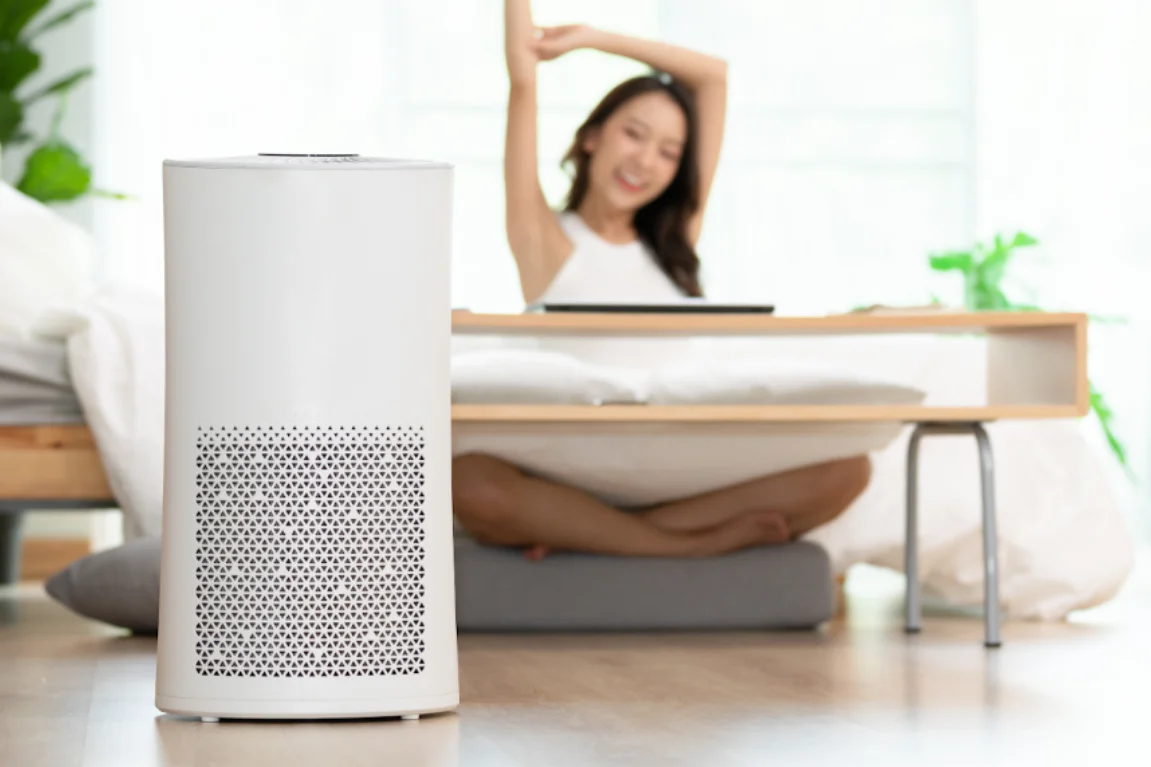
The Golden Rules: Where to Place an Air Purifier in a Room
Think of your air purifier as a tireless guardian for your lungs. To do its job effectively, it needs a strategic position on the battlefield of your home. Forget just shoving it in a corner; let’s get tactical.
Give It Space to Breathe
This is the number one rule. Air purifiers work by pulling in polluted air, filtering it, and pushing out clean air. If you suffocate it, you cripple its performance.
The 3-Foot Rule: As a general guideline, try to keep at least 2-3 feet (about 1 meter) of clear space around all sides of your air purifier. This means not pushing it right up against a wall, behind a sofa, or tucking it under a table.
Imagine trying to drink a thick milkshake through a pinched straw. That’s what you’re doing to your purifier when you block its airflow. It has to work harder, makes more noise, and cleans less air. Give it the open space it needs to inhale and exhale freely.
Place It Where the Action Is
Where do you and your family spend the most time? Where do your pets love to nap? Where do people walk in and out, tracking in outdoor pollutants? These high-traffic, high-activity zones are prime real estate for your air purifier.
Placing the unit in the center of the living room or near the main seating area ensures it’s tackling contaminants right where they are generated and where you’re breathing them in most.
Think About Natural Airflow
Your home already has its own air currents. You can use these to your advantage. Placing your purifier near a doorway or an interior window (not one that’s wide open to outdoor pollution) can help it capture incoming particles and distribute clean air more effectively throughout the space.
Be careful, though. Don’t place it directly in a heavy draft, like right next to an open window or an HVAC vent. This can interfere with the unit’s own fan and sensors, confusing its ability to detect local air quality accurately.
Raise It Up (If Possible)
Bảng trống.Hot air rises, and so do some lighter airborne particles like smoke and VOCs. While many larger particles like pet dander and dust tend to settle lower, elevating your air purifier 3-5 feet off the ground can often give it a better shot at capturing a wider range of pollutants. A sturdy end table or a low shelf is a great spot. This also helps keep it away from the “dust-bunny zone” right on the floor.
Target the Source of Pollution
The most effective strategy is often to place the purifier closest to the source of the problem.
- Allergies/Pets: Place it near your pet’s favorite sleeping spot or in the bedroom where you sleep to combat dust mites and dander.
- Smokers: If there’s a smoker in the house (or you live next to one), place the unit in the area where the smoke is most concentrated.
- Kitchen Odors: A purifier near the entrance to your kitchen can help trap cooking smells and grease particles before they permeate the rest of your home.
Common Placement Mistakes to Absolutely Avoid
I see these all the time, and they drastically reduce a purifier’s effectiveness.
- The Lonely Corner: This is the most common mistake. Corners create an “air-lock” and severely restrict the unit’s ability to create the room-wide air circulation it needs.
- Behind the Couch or Curtains: Out of sight, out of mind… and out of commission. Hiding your purifier behind furniture or heavy drapes blocks its intake and outlet vents completely.
- In a Tight, Confined Space: Placing a large unit in a small, cluttered utility room or a cramped hallway is a waste of its power.
- Very Humid Areas: Avoid placing standard HEPA purifiers right next to a humidifier or in a steamy bathroom. Excessive moisture can clog the filters and potentially lead to mold growth on the filter media itself.
Why Does Placement Even Matter? A Quick Dive into How Air Purifiers Work
Understanding the “why” behind these rules makes them easier to remember. It all comes down to two things: how the air gets in and how it gets out.
The Heart of the Machine: The Fan and Air Vents
Every air purifier is essentially a fan and a filter in a box. The fan is the engine that creates suction, pulling air in through an intake vent. This air is then forced through a series of filters. Finally, the now-clean air is expelled back into the room through an outlet vent.
The goal is to create a continuous cycle of air circulation, where dirty air is constantly being drawn in and clean air is distributed to every corner of the room. Poor placement breaks this cycle.
The Unsung Heroes: Filters Explained
What happens inside that box is where the magic lies. Most quality purifiers use a multi-stage filtration system.
- Pre-Filter: This is the first line of defense, catching large particles like hair, pet fur, and large dust bunnies. It protects the more delicate filters inside.
- True HEPA Filter: This is the star of the show. A High-Efficiency Particulate Air filter is a medical-grade filter designed to capture 99.97% of airborne particles as small as 0.3 microns. To put that in perspective, a human hair is about 50-70 microns thick. A HEPA filter nabs:
- Dust mites
- Pollen
- Pet dander
- Mold spores
- Bacteria and some viruses
- Activated Carbon Filter: While HEPA filters are brilliant for particles, they do nothing for gases, odors, and chemicals. That’s where activated carbon comes in. It has millions of tiny, porous holes that trap gas molecules, neutralizing odors from cooking, pets, smoke, and harmful VOCs (Volatile Organic Compounds) released from paints, cleaning supplies, and new furniture.
Knowing this, you can see why placing your unit near the kitchen helps the carbon filter, while placing it in the bedroom helps the HEPA filter tackle allergens while you sleep.
Key Metrics That Influence Placement and Performance
When you’re looking at specs, two acronyms matter more than anything else. Understanding them will solidify why you need to master where to place an air purifier in a room.
What is CADR in an air purifier?
CADR stands for Clean Air Delivery Rate. It’s a performance metric that measures the volume of clean air an air purifier can produce on its highest setting. It’s measured in cubic feet per minute (CFM) for three common pollutants: dust, pollen, and smoke. A higher CADR means the unit can clean a room’s air faster.
This directly relates to placement. A unit with a high CADR rating is like a powerful engine—it needs an open road to perform. If you put a high-CADR purifier in a corner, you’re essentially putting a Ferrari in a school zone. You’re paying for performance you’re not using. Give it the space to achieve its full cleaning potential.
Understanding ACH (Air Changes Per Hour)
ACH tells you how many times a purifier can completely filter the entire volume of air in a specific room in one hour. For allergy or asthma sufferers, the recommendation is 4-5 ACH. This means the air is getting a complete “scrub-down” every 12-15 minutes.
To achieve the manufacturer’s stated ACH, you need two things: the right size purifier for your room and optimal placement. Bad placement creates “dead zones” in the room where the air barely moves, drastically reducing your effective ACH.
Room-by-Room Placement Guide
Let’s get practical. Here’s my cheat sheet for the most common rooms in the house.
The Bedroom: Your Nighttime Guardian
This is arguably the most important room for an air purifier. You spend a third of your life here, and clean air is crucial for restorative sleep.
- Best Spot: Place it 6-10 feet away from your headboard. This is close enough to create a clean air “bubble” around you as you sleep but far enough that the noise (even on low) won’t disturb you.
- Pro Tip: Point the clean air outlet towards your bed to ensure a gentle, continuous flow of filtered air in your breathing zone all night long.
The Living Room: The Social Hub
This room is a challenge due to its size and high traffic.
- Best Spot: Near the area where people congregate most, like next to the sofa or a central armchair. Another great spot is near the main entryway to the room to catch pollutants as they enter.
- Pro Tip: If you have an open-plan living space, you may need a more powerful unit or even two smaller ones to achieve adequate coverage.
The Kitchen: The Odor & VOC Battleground
Kitchens are a source of smoke, odors, and VOCs from cooking and cleaning.
- Best Spot: On a countertop (away from water!) or on a small stand near the entrance to the kitchen. You want to capture pollutants before they escape and travel through your home.
- Pro Tip: Never place it right next to the stove or oven. The heat, steam, and grease can damage the unit and its filters.
Don’t Forget Maintenance: The Key to Long-Term Effectiveness
Even the best-placed air purifier is useless with a clogged filter.
Dr. Eleanor Vance, an Indoor Air Quality (IAQ) specialist, often reminds her clients, “An air purifier is not a ‘set it and forget it’ appliance. A dirty filter doesn’t just stop working; it can become a source of pollution itself. Regular maintenance is non-negotiable for healthy air.”
Follow these simple steps:
- Check your Pre-Filter: Every 2-4 weeks, check the washable pre-filter. A quick vacuum or rinse is usually all it needs to remove large debris like pet hair. Let it dry completely before reinstalling.
- Monitor your HEPA/Carbon Filters: These are not washable. Most units have a filter-change indicator light. Pay attention to it. Depending on your usage and air quality, they typically last anywhere from 6 months to 2 years.
- Wipe Down the Unit: Dust the exterior and the vents of the purifier regularly to ensure airflow isn’t being blocked by surface grime.
Frequently Asked Questions (FAQ)
Where is the best place for an air purifier for allergies?
For allergies, the best place is the bedroom. Running it overnight ensures you are breathing clean air for a long, uninterrupted period, which can significantly reduce morning symptoms like congestion and sneezing. Place it a few feet from your bed, aimed to create gentle circulation around your sleeping area.
Should I put my air purifier on the floor or a table?
If possible, placing it on a table or stand 3-5 feet off the floor is often ideal. This helps it capture both particles that settle lower and those that float higher, like smoke. However, if your unit is large, the floor is perfectly fine as long as it has ample clear space around it.
Can I place an air purifier next to a wall?
You should avoid placing it directly against a wall. Always follow the “3-Foot Rule” and allow at least a couple of feet of clearance to prevent blocking the air intake and restricting circulation.
Does it matter where to place an air purifier in a room if the door is closed?
Yes, it matters even more! A closed door creates a sealed environment, making the purifier’s job easier. Optimal placement in a closed room ensures that every cubic foot of air is efficiently and repeatedly cycled through the filters, maximizing the ACH.
How close should an air purifier be to me?
A good distance is 6-10 feet. You want to be within the main circulation zone of clean air without being in a direct, uncomfortable draft. This is especially true for placement in the bedroom.
Your Journey to Cleaner Air Starts Now
You now have the knowledge to go beyond simply owning an air purifier and start truly maximizing its potential. It’s not about having the most expensive machine; it’s about using it intelligently. By understanding airflow and being strategic about where to place an air purifier in a room, you are taking a powerful, proactive step towards a healthier home. You’re not just filtering air; you’re creating a sanctuary for you and your loved ones. Now, go find that perfect spot and take a deep, clean breath. You’ve earned it.
How to Optimize Air Purifier Placement
Follow these steps to strategically place your air purifier for maximum effectiveness in cleaning indoor air.
Ensure at least 2-3 feet of clear space around all sides of your air purifier. Avoid placing it directly against walls, behind furniture, or under tables to prevent restricting airflow and reducing performance.
Position your air purifier in high-traffic, high-activity zones where you and your family spend the most time. This includes living rooms, main seating areas, or near pet sleeping spots to tackle contaminants at their source.
Elevate your air purifier 3-5 feet off the ground on a sturdy end table or low shelf. This helps it capture a wider range of pollutants, including lighter airborne particles like smoke and VOCs, and keeps it away from floor-level dust.
Place the purifier closest to the specific source of the problem, such as near a pet's favorite spot for dander, in the kitchen entrance for odors, or in the bedroom for allergens. This direct approach maximizes its cleaning efficiency.
Do not place the unit in lonely corners, behind couches or curtains, in tight confined spaces, or in very humid areas. These locations severely restrict airflow, block vents, or can damage filters, drastically reducing effectiveness.
Get our weekly buyer guide
Practical specs, not advice. Unsubscribe anytime.
I always wondered if placing my air purifier in a high-traffic area was the right move, and it turns out it is! I have one in my living room where everyone hangs out, and it does a great job with odors. It’s good to know I was on the right track with that strategy.
I tried moving my air purifier to account for natural airflow patterns, but I haven’t seen a huge improvement. Maybe my room layout just isn’t ideal for it. It still helps with general dust, but I was hoping for a bit more impact on allergens.
This advice about strategic positioning is spot on. I used to just have my unit tucked away, but moving it to a more central location has really boosted its effectiveness. I can actually feel the difference in the air quality, especially with reducing cooking smells.
I used to just put my air purifier wherever it fit, but after reading about giving it 2-3 feet of clear space, I moved mine. What a difference! It really seems to be working much better at capturing pet dander now. My allergies have been noticeably better since I made the change.