Air purifier filter replacement costs typically range from $30 to $150 annually, depending on the unit’s tier, filter type, and usage. While budget-friendly purifiers may have filters costing $20-$50 every 6-8 months, premium units with filters costing $100-$300+ can last 2-5 years, often resulting in similar annual expenses. Understanding these ongoing costs is crucial for long-term ownership.
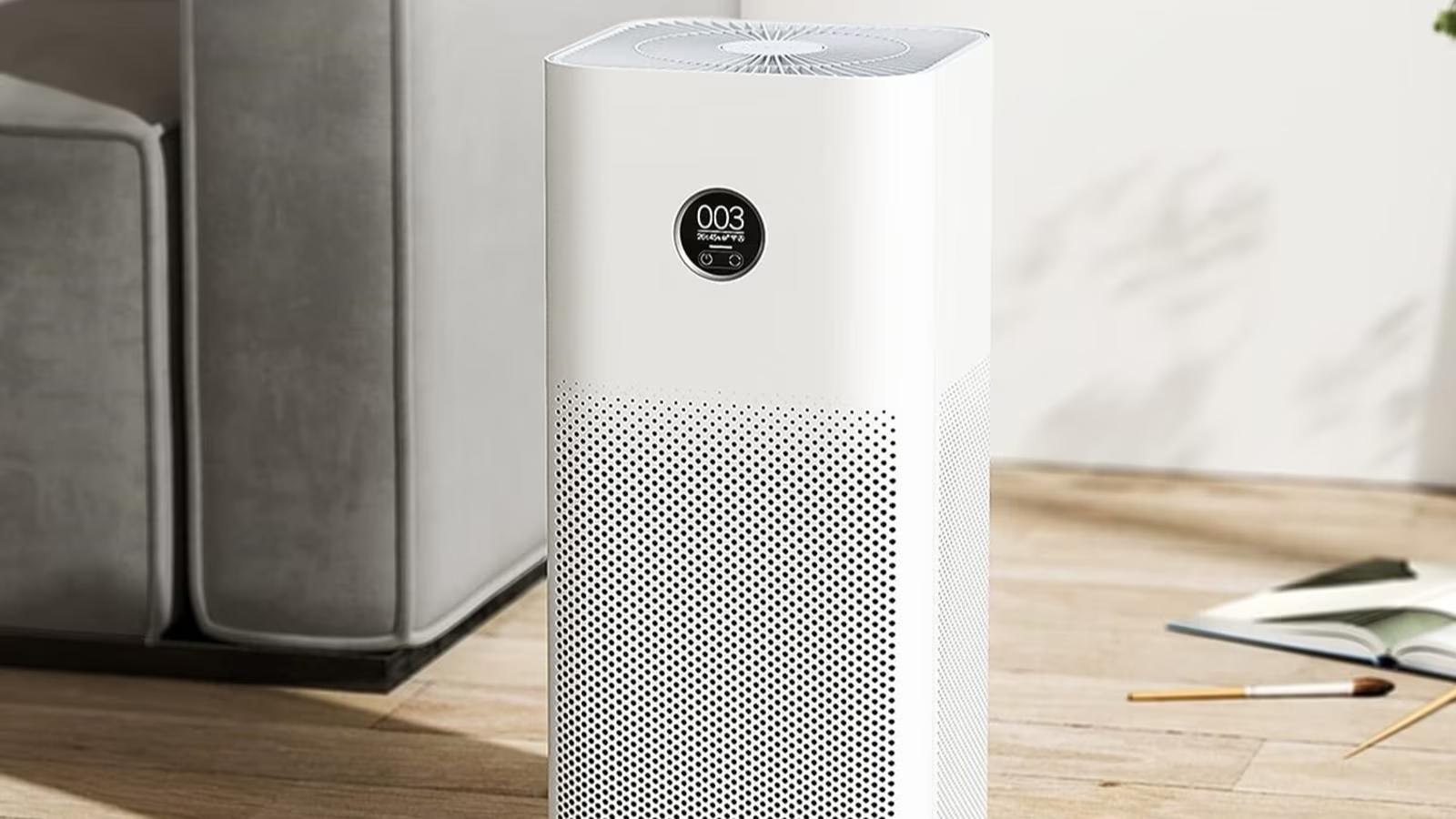
Why Filter Costs Aren’t Just a Simple Price Tag
Before discussing numbers, it’s crucial to understand what you’re actually paying for. An air purifier is essentially just a fan in a box. The real magic, the part that does all the heavy lifting, is the filter. The cost of that filter is directly tied to the technology and quality packed inside it. It’s the difference between using a simple window screen to stop leaves and using a high-tech net to capture microscopic particles. For shop curated air purifiers on this site.
The HEPA Heartbeat: Your Main Expense
At the core of almost every great air purifier is the HEPA filter. HEPA stands for High-Efficiency Particulate Air. A True HEPA filter is certified to capture 99.97% of airborne particles down to 0.3 microns in size.
What does that even mean in the real world?
- Dust Mites: Gone.
- Pet Dander: Captured.
- Pollen: Trapped.
- Mold Spores: Neutralized.
- Some Bacteria and Viruses: Filtered out.
Think of the HEPA filter as the engine of your purifier. A cheap, poorly made engine won’t perform well or last long. Similarly, a high-quality, densely packed HEPA filter made of fine glass fibers will cost more than a flimsy, paper-like one, but its ability to protect your health is worlds apart. This is typically the most significant part of your air purifier filter replacement costs.
The Carbon Shield: Tackling Odors and VOCs
While HEPA filters are champions against particles, they’re useless against gases, chemicals, and odors. That’s where the activated carbon filter comes in. It works through a process called adsorption, where gaseous pollutants chemically stick to the surface of the carbon.
This layer is your best defense against:
- Volatile Organic Compounds (VOCs): Nasty chemicals released from paint, furniture, cleaning supplies, and aerosols.
- Smoke: Whether from cooking, wildfires, or tobacco.
- Pet Odors: The unmistakable scent of a furry friend.
- General Household Smells: That lingering smell from last night’s fish dinner.
The cost and effectiveness of a carbon filter depend on the amount and quality of the carbon. A thin, carbon-dusted mesh is cheap but gets saturated quickly. A filter with several pounds of solid carbon pellets will cost more upfront but will last much longer and be far more effective.
The Pre-Filter: Your First (and Cheapest) Line of Defense
The unsung hero of the filter world is the pre-filter. This is a simple mesh screen that acts as the first line of defense, capturing large particles like:
- Pet hair
- Human hair
- Large dust bunnies
- Lint
Its main job is to protect the more expensive HEPA and carbon filters behind it, dramatically extending their lifespan. The best part? Most pre-filters are washable or vacuumable. By cleaning your pre-filter every 2-4 weeks, you can significantly delay the need to spend money on a full replacement, directly lowering your long-term costs.
What Factors Drive Air Purifier Filter Replacement Costs?
Okay, so we know what we’re paying for. But why does a replacement filter for one brand cost $20 while another costs $200? The air purifier filter replacement costs aren’t arbitrary; they are influenced by a predictable set of factors.
1. Brand and Model: The Razor and Blades Model
Some manufacturers sell their air purifiers at a very reasonable price, knowing they will make their profit on proprietary filter replacements over the life of the unit. It’s the classic “razor and blades” business model. More established, premium brands like IQAir or Austin Air might have very expensive purifiers, but their filters can last for years, sometimes making the annual cost more manageable. In contrast, a budget-friendly unit from a brand like Levoit or Coway will have more affordable filters, but you may need to replace them more frequently, every 6 to 12 months.
2. Filter Type and Complexity
Is it a simple 3-in-1 combination filter, where the pre-filter, HEPA, and carbon layers are all fused together? Or is it a multi-stage system where each filter can be replaced individually?
- All-in-One Filters: These are convenient, but if your carbon layer gets saturated with odors long before your HEPA filter is clogged with particles, you have to replace the entire expensive unit anyway.
- Separate Filters: These systems offer more flexibility. You might replace the carbon filter every 6 months but the HEPA filter only every 2-3 years, potentially saving money in the long run.
3. Your Home’s Air Quality (This is a big one!)
The manufacturer’s recommended filter lifespan (e.g., “replace every 12 months”) is just an estimate based on average use in a relatively clean environment. The reality in your home could be very different.
As Dr. Eleanor Vance, an Indoor Air Quality (IAQ) specialist, often explains, “A filter’s lifespan is a direct reflection of the work it has to do. A home with smokers, multiple pets, or located near a busy highway will exhaust a filter exponentially faster than one in a clean, rural setting.”
Factors that will shorten your filter’s life include:
- Pets: Dander and hair are major filter-cloggers.
- Smoking: Tobacco smoke contains both particles and a huge volume of gases that will quickly saturate a carbon filter.
- Cooking: Frying and searing can release oil particles and smoke into the air.
- High-Pollution Areas: Living in a city or an area prone to wildfires means your purifier is constantly fighting a battle against external pollutants.
- New Furniture or Renovations: These can off-gas VOCs for months, putting a heavy load on your carbon filter.
4. Machine Runtime and Fan Speed
This is simple physics. The more air you pull through a filter, the faster it will clog. If you run your air purifier 24/7 on the highest fan speed, you should expect to replace the filter more often than someone who only runs it on low for 8 hours at night. This is why “Auto Mode,” which adjusts fan speed based on real-time air quality readings, can be a great money-saver.
The Real Cost: A Breakdown of Annual Expenses
Let’s get down to brass tacks. What can you actually expect to pay per year? We can group purifiers and their associated filter costs into three general tiers.
| Tier | Filter Price Range | Replacement Frequency | Estimated Annual Cost | Typical Brands |
|---|---|---|---|---|
| Budget-Friendly | $20 – $50 | Every 6-8 months | $30 – $100 | Levoit, Medify, Blueair (Blue Pure) |
| Mid-Range Workhorse | $50 – $100 | Every 12-18 months | $50 – $100 | Coway, Winix, Rabbit Air |
| Premium / Specialty | $100 – $300+ | Every 2-5 years | $40 – $150 (averaged) | IQAir, Austin Air, Alen |
As you can see, the annual cost can sometimes be surprisingly similar across tiers. The premium unit with a $300 filter that lasts 5 years has an annual cost of just $60, which is often cheaper than replacing the filters on a budget unit twice a year. This is why it is so critical to research the air purifier filter replacement costs before you buy the machine.
A Word of Caution: Should You Buy Third-Party Generic Filters?
When you search for your model’s replacement filter, you’ll inevitably see cheaper, third-party “compatible” options. It’s tempting to save $20, I get it. I’ve been there. But as the Air Purifier Guy, I have to advise caution.
Here’s the deal: an air purifier’s performance metrics, like its CADR (Clean Air Delivery Rate), are tested and certified with its official, OEM (Original Equipment Manufacturer) filter. When you swap in a generic one, you’re rolling the dice.
- Poor Fit: A filter that doesn’t seal perfectly inside the unit will allow air to bypass the filter, rendering the purifier ineffective.
- Lower Quality Media: The filter material may be less dense or of a lower grade, capturing fewer particles and reducing performance.
- Reduced Airflow: A poorly designed generic filter can restrict airflow, straining the purifier’s motor and lowering its CADR.
- Voided Warranty: Many manufacturers will void your warranty if you use non-OEM filters.
My advice? For your health and the longevity of your machine, stick with the filters made by the manufacturer. The peace of mind is worth the extra cost.
Top Tips to Maximize Filter Life and Save Money
You’re not powerless in this equation! You can take active steps to extend the life of your filters and reduce your long-term air purifier filter replacement costs.
- Clean That Pre-Filter Religiously! This is the single most effective thing you can do. Set a reminder to vacuum or rinse your pre-filter every 2-4 weeks. It takes five minutes and can add months to the life of your main HEPA filter.
- Use “Auto Mode” If You Have It. Let the machine’s smart sensors do the work. The fan will only ramp up when it detects poor air quality, saving wear and tear on your filter during times when the air is already clean.
- Help Your Purifier Out. Reduce the pollution load in your home. Use the exhaust fan when cooking, vacuum regularly with a HEPA-filtered vacuum, and try to keep windows closed on days with high pollen or air pollution.
- Place it Properly. Don’t shove your air purifier in a corner behind the sofa. It needs about a foot of clear space on all sides to circulate air effectively, allowing it to clean the room’s air more efficiently and with less effort.
- Buy Filters in Bulk. Some companies offer a discount if you buy a one-year or two-year supply of filters at once. If you know you’re committed to the machine, this can be an easy way to save 10-15%.
Frequently Asked Questions (FAQ)
How do I know when to change my air purifier filter?
Most modern air purifiers have a filter replacement indicator light, often based on a timer (e.g., after 2,000 hours of use). However, you should also trust your senses: a decrease in airflow, a musty smell, or increased allergy symptoms indicate it’s likely time for a change, even if the light isn’t on yet.
Can I wash or vacuum my HEPA filter to save money?
No, you should never wash or vacuum a True HEPA filter. The delicate fibers that capture microscopic particles are fragile; washing or vacuuming will ruin the material and destroy its filtering ability. Only designated pre-filters should be cleaned.
Is it cheaper to buy an air purifier with a washable filter?
Some units offer “permanent” or “washable” main filters, which can reduce air purifier filter replacement costs. However, their performance often degrades over time with each wash, and they tend to have lower initial efficiency compared to disposable True HEPA filters. While suitable for general dust removal, high-quality disposable HEPA filters are usually better for serious allergy or asthma sufferers.
How much do energy costs add to the total cost of ownership?
Most modern air purifiers, especially Energy Star-rated models, are very energy-efficient. Running a typical mid-sized purifier 24/7 on a low to medium setting will likely add only a few dollars to your monthly electricity bill, which is significantly less than the cost of the filters themselves.
Your Journey to Cleaner Air
Navigating the world of air purifier filter replacement costs can feel a bit daunting at first, but it doesn’t have to be. By understanding what you’re paying for—the advanced technology that protects your family’s health—and by knowing the factors that influence cost, you are now empowered to make a truly informed decision.
The cost of a filter isn’t just an expense; it’s an ongoing investment in a healthier home environment. It’s the price of fewer allergy attacks, better sleep, and the simple peace of mind that comes from knowing you’re breathing the cleanest possible air. So, before you buy your next air purifier, look beyond the initial price tag. Investigate the filter costs, consider your specific needs, and start your journey to cleaner air today with confidence. You and your lungs will be glad you did.
Get our weekly buyer guide
Practical specs, not advice. Unsubscribe anytime.
I appreciate the detailed explanation about why filter costs aren’t just a simple price tag. It makes sense that the technology inside the filter is what you’re really paying for. I’ve been using a unit with HEPA filters for a while now, and the air quality in my home has definitely improved. It’s good to know that even though those filters can be pricier, they’re doing the heavy lifting.
I’m so glad I read this before buying my new air purifier. I was only looking at the initial price, but the breakdown of annual filter replacement costs really opened my eyes. I ended up going with a mid-tier unit that has filters in the $50-$75 range, and knowing that upfront made me feel much better about the purchase. My allergies have been so much better since I started using it!
This information is gold! I always wondered why some filters were so much more expensive than others. Understanding that premium units can have filters lasting 2-5 years, even if they cost more initially, really changes the value proposition. I’m definitely going to factor in the long-term filter lifespan when I upgrade my current setup.
This guide was helpful for understanding the different filter types. I bought a budget-friendly purifier last year, and while it works okay, I’m a bit annoyed that I have to replace the filters every 6 months. It adds up faster than I expected, even with the $20-$50 price point. Next time, I might invest in a premium unit with longer-lasting filters.