When choosing an air purifier, a True HEPA filter is significantly more effective than a “HEPA-type” filter because it is certified to capture 99.97% of airborne particles as small as 0.3 microns, a standard regulated by the U.S. Department of Energy (DOE). In contrast, “HEPA-type” filters are unregulated marketing terms that do not guarantee this level of filtration, often missing crucial fine particles like allergens, smoke, and mold spores.
As someone who’s waged a personal war against seasonal allergies and city dust for years, I’ve learned that not all filters are created equal. Marketing can be misleading, and a simple hyphen can be the difference between a home that feels like a sanctuary and one that still leaves you sniffling. So grab a cup of tea, and let’s pull back the curtain on what these terms really mean for your health.
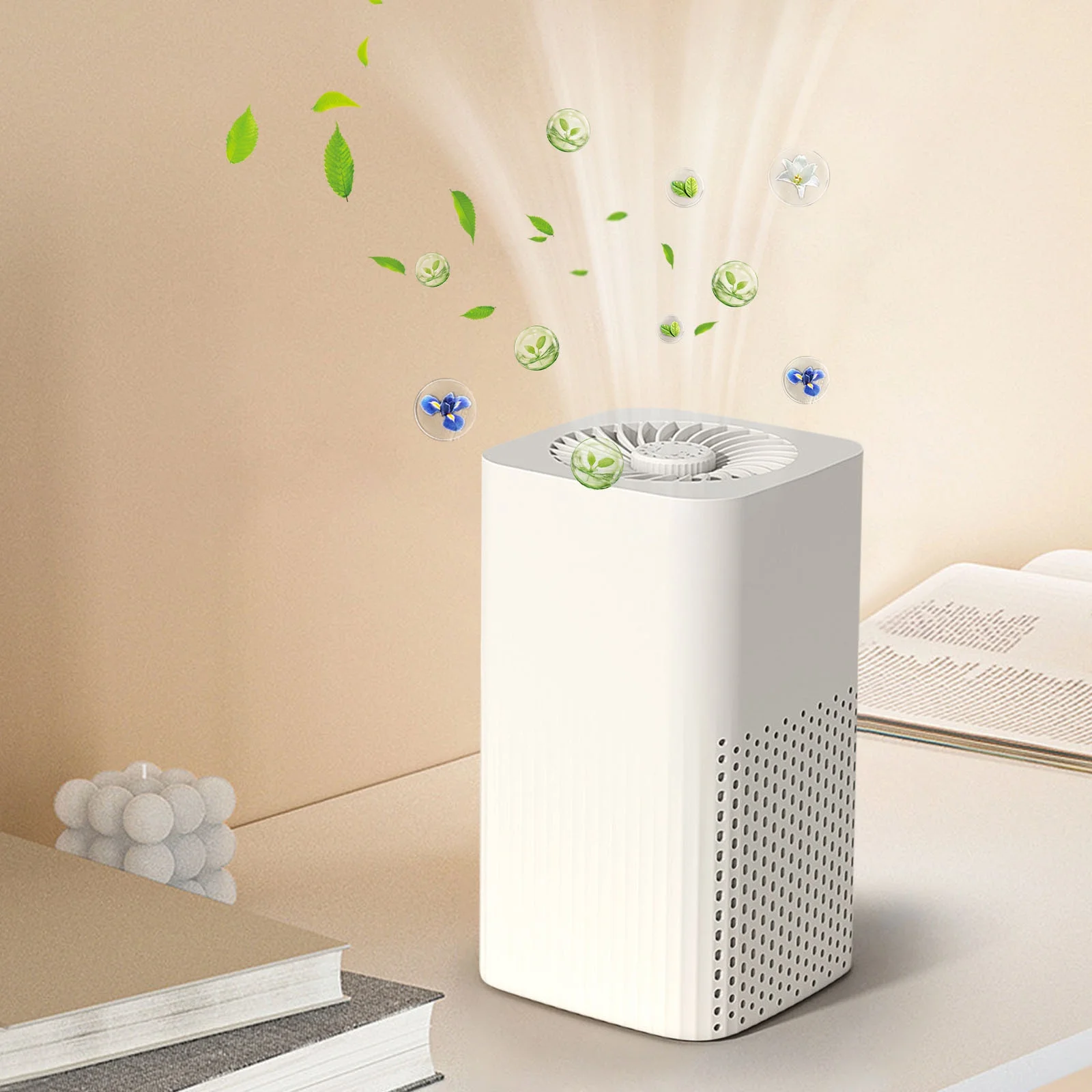
The Showdown: True HEPA vs HEPA-Type Filter Explained
Let’s cut right to the chase. This isn’t just about branding; it’s about a legally defined, government-regulated standard of performance. Understanding this distinction is the key to getting your money’s worth and actually improving your home’s air quality.
What is a True HEPA Filter? The Gold Standard
When you see the term True HEPA, it’s not just a fancy name. It’s a promise. A True HEPA filter is certified to meet a stringent standard set by the U.S. Department of Energy (DOE).
A True HEPA filter must capture 99.97% of airborne particles as small as 0.3 microns.
That’s the magic number. So, how small is 0.3 microns? Think of it this way: the average human hair is about 50-70 microns thick. We’re talking about particles so tiny you could fit over 150 of them across the width of a single strand of hair. These are the troublemakers that can get deep into your lungs.
What do True HEPA filters capture?
- Allergens: Pollen, pet dander, dust mite feces (gross, I know).
- Mold and Mildew Spores: The invisible culprits behind that musty smell and potential health issues.
- Bacteria and some Viruses: While not a guaranteed solution for getting sick, they can capture the airborne particles that viruses and bacteria travel on.
- PM2.5: Fine particulate matter from smoke, pollution, and industrial emissions, which are a major health concern.
Think of a True HEPA filter as a maximum-security prison for microscopic particles. Once they check in, they don’t check out. This is the technology you want if you’re serious about tackling allergies, asthma, or simply want the cleanest possible air.
What is a “HEPA-Type” or “HEPA-Like” Filter? The Imposter
Bảng trống.Now, let’s talk about the other guys: “HEPA-type,” “HEPA-like,” “HEPA-style,” or “99% HEPA.” These terms are primarily marketing buzzwords. Unlike True HEPA, there is no industry standard or government regulation for what constitutes a “HEPA-type” filter.
It sounds similar, and that’s the point. It’s designed to make you think you’re getting HEPA-level performance without the manufacturer having to meet the rigorous 99.97% at 0.3 microns standard.
A HEPA-type filter might capture 99% of particles, but at a much larger size, like 2 or 5 microns. This is a critical difference. It’s like having a security fence that stops cars but lets people walk right through. It catches the big, obvious stuff like visible dust and pet hair, but it allows the most harmful, invisible particles—the pollen, the smoke, the mold spores—to pass right through and back into your air.
As Dr. Eleanor Vance, an Indoor Air Quality (IAQ) specialist, often says, “The marketing distinction between a True HEPA vs HEPA-type filter can have a real-world impact on health. For an individual with asthma, capturing those sub-micron particles is not a luxury; it’s a necessity.”
Here’s a simple breakdown:
| Feature | True HEPA Filter | HEPA-Type Filter |
|---|---|---|
| Performance Standard | Captures 99.97% of particles at 0.3 microns | No official standard. Performance varies wildly. |
| Regulation | Meets U.S. DOE standard | Unregulated marketing term |
| Effectiveness | Highly effective against allergens, smoke, mold, bacteria | Effective against larger dust and hair, but not fine particles |
| Best For | Allergies, asthma, smoke, and general health concerns | Very light-duty use where only visible dust is a concern |
| Cost | Generally higher initial and replacement cost | Typically cheaper |
Beyond HEPA: Understanding the Whole Air Purifier System
Okay, so we’ve established that True HEPA is king. But a great air purifier is more than just its main filter. It’s a multi-stage system where each part plays a crucial role. Think of it like a football team—the HEPA filter is your star quarterback, but it needs a solid offensive line to do its job effectively.
The Unsung Hero: The Activated Carbon Filter
Ever wonder what tackles smells and gases? That’s the job of the activated carbon filter. While a True HEPA filter is a master of capturing solid particles, it can’t do anything about odors, chemicals, or gases.
Activated carbon is treated with oxygen to open up millions of tiny pores between its carbon atoms. This creates a massive surface area that traps gas and odor molecules through a process called adsorption.
What do activated carbon filters remove?
- Odors: Pet smells, cooking fumes (goodbye, lingering fish smell!), and general mustiness.
- Smoke: Including tobacco and wildfire smoke.
- Volatile Organic Compounds (VOCs): These are harmful gases off-gassed from things like new furniture, paint, cleaning products, and air fresheners.
If you live in an apartment, have pets, or are sensitive to chemical smells, a unit with a substantial activated carbon filter is non-negotiable. It’s the perfect partner to a True HEPA filter.
The First Line of Defense: The Pre-Filter
The pre-filter is a simple mesh screen that acts as the bouncer for your air purifier. Its only job is to catch the big stuff before it gets to the more delicate and expensive filters inside.
- Pet hair
- Large dust bunnies
- Lint
- Human hair
Most pre-filters are washable and reusable. By cleaning yours regularly (usually every 2-4 weeks), you dramatically extend the life of your True HEPA and activated carbon filters, saving you money in the long run. Don’t underestimate this simple component!
Key Air Purifier Metrics You Absolutely Must Know
Now that we understand the filter technology, let’s talk about performance. How do you know if a purifier is powerful enough for your room? This is where a few key acronyms come into play. Don’t worry, they’re not as scary as they look.
What is CADR and Why Should I Care?
CADR stands for Clean Air Delivery Rate. It’s the single most important metric for measuring an air purifier’s performance. In simple terms, CADR tells you how much clean air the purifier produces in a given amount of time.
The rating is certified by an independent body, the Association of Home Appliance Manufacturers (AHAM), and it’s measured in cubic feet per minute (CFM). You’ll typically see three CADR numbers on a certified purifier:
- Smoke: Measures the removal of the smallest particles. This is the most important number to look at.
- Dust: Measures the removal of mid-sized particles.
- Pollen: Measures the removal of the largest particles.
A higher CADR number means the purifier can clean a larger room faster. It’s like horsepower for your air purifier. A unit with a low CADR in a large living room is like trying to cool a mansion with a tiny window AC unit—it’s just not going to work.
How Do I Match an Air Purifier to My Room Size?
This is where CADR becomes incredibly practical. There’s a simple rule of thumb, often called the 2/3 Rule.
Your air purifier’s Smoke CADR rating should be at least two-thirds of your room’s square footage. For example, for a 300-square-foot room, you need a purifier with a Smoke CADR of at least 200 (300 x 2/3 = 200).
This rule ensures your purifier can provide about 5 Air Changes per Hour (ACH). ACH tells you how many times the purifier can clean the entire volume of air in your room in one hour. For allergy or asthma sufferers, 5 ACH is the recommended target to keep particle levels consistently low.
Your Smart Buyer’s Checklist: Other Features to Consider
You’ve nailed the core specs: True HEPA and the right CADR. Now let’s look at the quality-of-life features that separate a good air purifier from a great one.
- Auto Mode & Air Quality Sensors: A unit with an infrared particle sensor can detect the level of pollution in your air in real-time and automatically adjust its fan speed. This is brilliant—it runs quietly on low when the air is clean and ramps up to high when you start cooking or the dog runs through, saving energy and providing protection exactly when you need it.
- Noise Levels: Look for the decibel (dB) rating. A purifier is only useful if you can live with it. A good model will be whisper-quiet on its lowest setting (around 25-30 dB, like a soft whisper) and sound like a fan or white noise machine on its highest setting (around 50-55 dB).
- Filter Life and Cost: This is the total cost of ownership. Before you buy, check the price of replacement filters and how often they need to be changed (typically 6-12 months for HEPA/carbon filters). A cheap purifier with expensive, short-lived filters can be a money pit.
- Certifications: Look for the AHAM Verifide seal to ensure the CADR ratings are accurate. An Energy Star certification means it’s energy-efficient and won’t drive up your electricity bill.
The Final Verdict: Your Path to Breathing Easier
So, when it comes to the true hepa vs hepa type filter debate, the conclusion is clear and simple: always choose True HEPA.
A HEPA-type filter might be cheaper upfront, but it’s a compromise on the very reason you’re buying an air purifier in the first place. You wouldn’t use a leaky umbrella in a rainstorm, so why use a filter that lets the most harmful pollutants slip through?
Investing in an air purifier with a True HEPA filter, a robust activated carbon filter, and a CADR rating appropriate for your room size is one of the most effective steps you can take to improve your health and well-being at home. It’s an investment in every single breath you and your family take. Now you’re equipped with the knowledge to cut through the marketing noise and make a choice that truly counts.
Start your journey to cleaner air today. Your lungs will thank you.
Frequently Asked Questions (FAQ)
1. Is there a big price difference between a True HEPA vs a HEPA-type air purifier?
Generally, yes. Units with certified True HEPA filters tend to be more expensive because the filter media is denser and meets higher manufacturing standards. However, the health benefits and superior particle capture often justify the higher cost, especially for those with respiratory issues.
2. Can I wash and reuse a True HEPA filter?
No! Absolutely not. Washing a True HEPA filter will destroy the intricate web of fibers that allows it to capture microscopic particles, rendering it useless. The only filter you can typically wash is the pre-filter. Always replace True HEPA filters according to the manufacturer’s instructions.
3. How often do I need to replace my True HEPA filter?
This depends on the model and your home’s air quality. On average, a True HEPA filter lasts between 6 to 12 months. Many modern purifiers have a filter replacement indicator light to take the guesswork out of it. If you have pets, smokers, or live in a high-pollution area, you may need to replace it more frequently.
4. Is a HEPA-type filter better than nothing?
While it’s technically better than no filter at all, its effectiveness is very limited. It might catch some visible dust and pet hair, but it fails to capture the most dangerous airborne particles like smoke, allergens, and mold spores. For meaningful health benefits, a True HEPA filter is the only reliable choice.
5. Do True HEPA filters remove odors?
No, this is a common misconception. True HEPA filters are designed to capture solid particles, not gases or odors. To remove smells, you need an air purifier that also includes a separate activated carbon (or activated charcoal) filter, which is designed specifically to adsorb odor molecules and VOCs.
Frequently Asked Questions
What is the main difference between a True HEPA and a HEPA-type filter?
The main difference is certification and performance. A True HEPA filter is certified to capture 99.97% of particles as small as 0.3 microns, meeting a U.S. Department of Energy standard. HEPA-type filters are unregulated marketing terms with no guaranteed performance standard, often capturing only larger particles.
Can True HEPA filters be washed and reused to save money?
No, True HEPA filters cannot be washed and reused. Washing them destroys the delicate fiber structure essential for capturing microscopic particles, rendering the filter ineffective. Only pre-filters are typically washable; True HEPA filters must be replaced according to manufacturer guidelines, usually every 6-12 months.
How often should I replace my True HEPA filter for optimal air quality?
You should replace your True HEPA filter every 6 to 12 months on average, depending on the specific model and your home's air quality. Factors like pets, smoking, or high pollution levels may necessitate more frequent replacements. Many modern air purifiers include a filter replacement indicator light to signal when a change is needed.
Do True HEPA filters effectively remove odors and gases from the air?
No, True HEPA filters are designed to capture solid airborne particles like dust, pollen, and pet dander, not gases or odors. To remove smells, volatile organic compounds (VOCs), and chemical fumes, an air purifier needs a separate activated carbon filter, which adsorbs these molecules.
What is CADR and how does it help choose the right air purifier?
CADR stands for Clean Air Delivery Rate, a metric certified by AHAM that indicates how much clean air an air purifier produces per minute. A higher CADR means the purifier can clean a larger room faster. To match a purifier to your room, ensure its Smoke CADR rating is at least two-thirds of your room's square footage to achieve approximately 5 Air Changes per Hour (ACH).
Get our weekly buyer guide
Practical specs, not advice. Unsubscribe anytime.
I used to think all HEPA filters were the same until I read about the DOE certification. My old purifier had a ‘HEPA-type’ filter, and I was still waking up with stuffy noses. Since switching to a model with a True HEPA filter, the difference in my allergy symptoms is night and day. It really does capture those tiny particles like pollen and dust.
I’ve been a long-time advocate for good indoor air quality, especially living in a city with a lot of pollution. The explanation of how ‘HEPA-type’ filters are unregulated marketing terms really hit home. It’s so important to understand these distinctions when you’re trying to filter out things like smoke and fine particulate matter. Always go for True HEPA!
I appreciate the breakdown on True HEPA vs. HEPA-type. I bought a purifier thinking I was getting the best, but it turns out it was just a ‘HEPA-type’ filter. It helps a bit with general dust, but I still notice some pet dander floating around. Next time, I’ll definitely invest in a certified True HEPA filter, even if it’s a bit more expensive.
This information about 0.3 microns and the 99.97% capture rate is super helpful. I’ve been trying to reduce mold spores in my basement, and I was worried my current purifier wasn’t cutting it. Now I know to look for that specific True HEPA standard. It’s good to understand why some filters are more effective than others for specific issues.