The Honeywell HPA300 is the best Honeywell air purifier for medium rooms, offering robust filtration and a high CADR of 300 for effective air cleaning in spaces up to 465 square feet. Selecting the right air purifier for a medium-sized room involves balancing filtration efficiency, noise levels, and overall value. Honeywell provides several reliable options designed to capture allergens, dust, pet dander, and odors, ensuring a healthier indoor environment. This guide will help you navigate the features and benefits of Honeywell’s top models to find the perfect fit for your space.
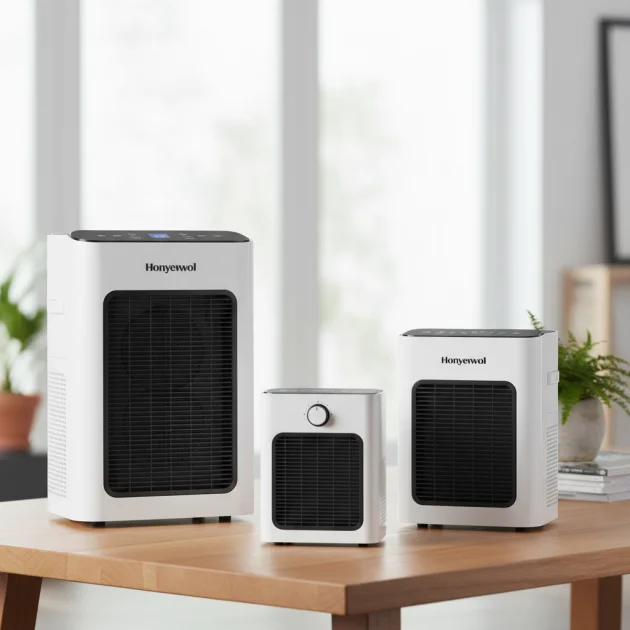
Quick comparison
| Model | CADR (Smoke) | Room Size (sq ft) | Filter Type | Key Feature |
|---|---|---|---|---|
| Honeywell HPA300 | 300 | 465 | HEPA, Activated Carbon | Powerful filtration for large medium rooms |
| Honeywell HPA200 | 200 | 310 | HEPA, Activated Carbon | Ideal for standard medium rooms |
| Honeywell HPA100 | 100 | 155 | HEPA, Activated Carbon | Compact for smaller medium rooms |
What Medium Rooms Need from an Air Purifier
Medium rooms, typically ranging from 150 to 400 square feet, require an air purifier with sufficient Clean Air Delivery Rate (CADR) to effectively clean the air multiple times per hour. A CADR of at least 150 for smoke is generally recommended for a 200-square-foot room, scaling up proportionally for larger spaces. The air purifier should feature a true HEPA filter to capture 99.97% of airborne particles as small as 0.3 microns, including dust, pollen, pet dander, and mold spores. An activated carbon pre-filter is also crucial for removing common household odors from cooking, pets, and smoke. Noise level is another significant consideration; look for models that operate quietly, especially if the room is a bedroom or living area. Energy efficiency, indicated by an Energy Star certification, helps keep operating costs down. Finally, features like multiple fan speeds, a filter change indicator, and a timer enhance user convenience and ensure consistent performance. Honeywell models often integrate these essential features, making them suitable for various medium room applications.
Detailed Reviews
Honeywell HPA300
The Honeywell HPA300 is an excellent choice for larger medium rooms, capable of purifying spaces up to 465 square feet. It boasts a high CADR of 300 for smoke, dust, and pollen, ensuring rapid air cleaning. This model utilizes a true HEPA filter to capture 99.97% of microscopic allergens and an activated carbon pre-filter to reduce odors and larger particles. The HPA300 features three cleaning levels plus a Turbo setting for maximum air purification. Its filter change indicator takes the guesswork out of maintenance, signaling when it’s time to replace the filters. Despite its powerful performance, the HPA300 operates at a reasonable noise level on lower settings, making it suitable for living rooms or open-plan areas. Its robust construction and reliable filtration system make it a top contender for comprehensive air purification in medium to large rooms.
Honeywell HPA200
For standard medium rooms up to 310 square feet, the Honeywell HPA200 offers a balanced combination of performance and value. With a CADR of 200 for smoke, it effectively removes airborne pollutants, allergens, and odors. Like its larger counterpart, the HPA200 incorporates a true HEPA filter and an activated carbon pre-filter, providing thorough two-stage filtration. It includes three cleaning levels, allowing users to adjust the fan speed based on air quality needs or desired noise output. The electronic filter replacement reminders ensure optimal performance by prompting timely filter changes. Its compact design makes it easy to place in bedrooms, home offices, or smaller living areas without being obtrusive. The Honeywell HPA200 is a reliable and efficient option for maintaining clean air in typical medium-sized spaces.
Honeywell HPA100
The Honeywell HPA100 is ideal for smaller medium rooms, covering areas up to 155 square feet with a CADR of 100 for smoke. This compact air purifier delivers effective filtration using a true HEPA filter to capture fine particles and an activated carbon pre-filter for odor reduction. It features three cleaning levels, including a quiet setting suitable for bedrooms or nurseries. The HPA100 is Energy Star certified, indicating its energy-efficient operation, which helps save on electricity costs. Its small footprint allows for versatile placement on a nightstand, desk, or shelf. While it may not be suitable for larger open spaces, the Honeywell HPA100 provides excellent air purification for personal spaces or smaller enclosed medium rooms, ensuring a consistent supply of cleaner air.
Routine Fit
Integrating a Honeywell air purifier into your daily routine for a medium room is straightforward and beneficial. For bedrooms, placing a Honeywell HPA100 or HPA200 ensures cleaner air while you sleep, reducing allergens and improving sleep quality. In living rooms or family rooms, the Honeywell HPA300 can handle the larger space, effectively removing pet dander, dust, and cooking odors that accumulate throughout the day. Running the purifier on a lower setting during quiet times and increasing the speed during peak activity or when odors are present optimizes its performance. Regular filter checks, guided by the filter change indicator, are crucial for maintaining efficiency. Consistent use of a Honeywell air purifier helps create a continuously healthier and more comfortable indoor environment, making it a seamless addition to any medium room.
FAQs
What CADR rating is best for a 250 sq ft medium room?
For a 250 square foot medium room, a Clean Air Delivery Rate (CADR) of at least 160-180 for smoke is recommended. This ensures the air purifier can effectively clean the air in the room approximately five times per hour. The Honeywell HPA200, with its CADR of 200, would be an excellent choice for a room of this size, providing ample air changes and efficient particle removal. Always check the manufacturer’s stated room coverage to match it with your specific room dimensions for optimal performance.
How often should Honeywell air purifier filters be replaced?
Honeywell air purifier filters typically need to be replaced at different intervals. The activated carbon pre-filter, which captures larger particles and odors, usually requires replacement every three months. The true HEPA filters, responsible for capturing fine airborne particles, generally last about 12 months. These are general guidelines, and actual replacement frequency can vary based on usage, air quality, and the specific model. Most Honeywell purifiers include electronic filter change indicators to alert you when it’s time for a replacement.
Do Honeywell air purifiers remove pet odors?
Yes, Honeywell air purifiers are effective at removing pet odors. They achieve this primarily through their activated carbon pre-filters. Activated carbon is highly porous and designed to absorb gases and volatile organic compounds (VOCs), which are often the source of pet odors. While the HEPA filter captures pet dander, the carbon filter specifically targets and neutralizes the smells, leaving your medium room smelling fresher. For best results, ensure regular replacement of the carbon pre-filter.
Are Honeywell air purifiers noisy?
The noise level of Honeywell air purifiers varies depending on the model and the fan speed setting. On lower settings, such as ‘Sleep’ or ‘Germ’ mode, they are generally quiet and suitable for bedrooms. On higher settings, like ‘Turbo’ or ‘Allergen’ mode, the fan noise will be more noticeable due to the increased airflow. Honeywell designs its purifiers to balance effective air cleaning with reasonable noise levels. Checking the decibel ratings in product specifications can help you choose a model that meets your noise tolerance.
Can Honeywell air purifiers help with allergies?
Yes, Honeywell air purifiers are highly effective at helping to alleviate allergy symptoms. They utilize true HEPA filters, which are certified to capture 99.97% of airborne particles as small as 0.3 microns. This includes common allergens such as pollen, dust mites, pet dander, and mold spores. By continuously removing these irritants from the air in your medium room, a Honeywell air purifier can significantly reduce your exposure to allergens, leading to fewer allergy symptoms and improved respiratory comfort.
Verdict
For medium rooms, Honeywell offers a range of reliable air purifiers designed to enhance indoor air quality. The Honeywell HPA300 stands out as the top recommendation for larger medium spaces, providing exceptional CADR and comprehensive filtration. For standard medium rooms, the HPA200 offers an excellent balance of performance and value, while the compact HPA100 is perfect for smaller medium areas. Each model effectively removes allergens, dust, and odors using true HEPA and activated carbon filters. Choosing a Honeywell air purifier ensures a cleaner, healthier, and more comfortable living environment.
Frequently Asked Questions
What CADR rating is best for a 250 sq ft medium room?
For a 250 square foot medium room, a Clean Air Delivery Rate (CADR) of at least 160-180 for smoke is recommended. The Honeywell HPA200, with its CADR of 200, is an excellent choice for this size, providing ample air changes. Always match the manufacturer's stated room coverage to your specific room dimensions for optimal performance.
How often should Honeywell air purifier filters be replaced?
Honeywell air purifier filters typically need replacement at different intervals. Activated carbon pre-filters usually require replacement every three months, while true HEPA filters generally last about 12 months. Most Honeywell purifiers include electronic filter change indicators to alert you when it's time for a replacement.
Do Honeywell air purifiers remove pet odors?
Yes, Honeywell air purifiers are effective at removing pet odors primarily through their activated carbon pre-filters. Activated carbon is highly porous and designed to absorb gases and volatile organic compounds (VOCs), which are often the source of pet odors. Regular replacement of the carbon pre-filter ensures the best results.
Are Honeywell air purifiers noisy?
The noise level of Honeywell air purifiers varies by model and fan speed setting. On lower settings like 'Sleep' or 'Germ' mode, they are generally quiet and suitable for bedrooms. Higher settings like 'Turbo' or 'Allergen' mode will have more noticeable fan noise due to increased airflow. Check decibel ratings in product specifications to choose a model that meets your noise tolerance.
Can Honeywell air purifiers help with allergies?
Yes, Honeywell air purifiers are highly effective at helping to alleviate allergy symptoms. They utilize true HEPA filters, certified to capture 99.97% of airborne particles as small as 0.3 microns, including common allergens like pollen, dust mites, pet dander, and mold spores. This continuous removal of irritants can significantly reduce allergen exposure and improve respiratory comfort.
Get our weekly buyer guide
Practical specs, not advice. Unsubscribe anytime.
This guide was spot on! I was looking for something to tackle odors in my kitchen/dining area, and the Honeywell HPA300 has been a game-changer. The robust filtration with HEPA and activated carbon really works. No more lingering cooking smells, and the air just feels fresher overall. Highly recommend for anyone dealing with persistent odors.
I finally pulled the trigger on the Honeywell HPA300 after reading about its CADR of 300. My living room is pretty open concept, and this thing really makes a difference. I used to wake up with stuffy noses, but now the air feels so much cleaner. Definitely worth the investment for anyone with allergies.
We got the Honeywell HPA200 for our master bedroom, and it’s been great for reducing pet dander. Our dog sleeps in our room, and I’ve noticed a significant improvement in air quality. It’s a bit louder on the highest setting than I expected, but on the lower settings, it’s barely noticeable. Good value for a standard medium room.
I bought the Honeywell HPA100 for my home office, which is a smaller medium room. While it does seem to help with dust, I’m a little disappointed with how quickly the activated carbon filter seems to need replacing. It’s effective, but the ongoing cost of filters is something to consider. I wish the filter life was a bit longer.