A smart air purifier significantly improves indoor air quality by removing microscopic particles, gases, and odors, making your home a healthier environment. According to the EPA, indoor air can be two to five times more polluted than outdoor air, trapping allergens, dust, mold spores, and volatile organic compounds (VOCs). Investing in a smart air purifier, equipped with True HEPA and activated carbon filters, ensures continuous air purification and can lead to reduced allergy symptoms, better sleep, and fewer asthma triggers.
Why Do You Even Need an Air Purifier?
Before we dive into the “how,” let’s quickly cover the “why.” What’s floating around in your home’s air that you can’t see? It’s a cocktail of microscopic particles and gases, and your home is a perfect trap for them.
Think of an air purifier as a high-tech bouncer for your home’s air, kicking out the unwanted guests. These uninvited culprits include:
- Allergens: This is a big one. We’re talking about pollen that drifts in from outside, dust mites that love your bedding, and pet dander from your furry friends.
- Dust and Particulate Matter (PM2.5): These are tiny, inhalable particles from sources like cooking, burning candles, and outdoor pollution that seeps in. They’re small enough to get deep into your lungs.
- Mold Spores: If you have any damp areas in your home, mold spores can become airborne and trigger respiratory issues.
- Volatile Organic Compounds (VOCs): This sounds scary, and it can be. VOCs are gases released from everyday items like paint, new furniture, cleaning products, and air fresheners. That “new car smell”? Mostly VOCs.
- Odors: From last night’s fish dinner to the lingering smell of a wet dog, an air purifier can help neutralize unpleasant odors instead of just masking them.
An air purifier’s job is to continuously cycle the air in a room, trap these pollutants, and release clean, fresh air back out.
How Do Air Purifiers Work? Core Technologies Explained
Alright, let’s get into the guts of the machine. Most quality air purifiers use a multi-stage filtration system. It’s like a gauntlet for dirty air. Here are the three core technologies you absolutely need to know about.
The Heavy Hitter: The HEPA Filter
If you one thing, make it this: True HEPA. A High-Efficiency Particulate Air (HEPA) filter is the gold standard. Think of it as an incredibly fine, dense net made of fiberglass fibers. It’s designed to capture 99.97% of airborne particles as small as 0.3 microns.
How small is 0.3 microns? A single human hair is about 50-70 microns wide. So, a HEPA filter is catching particles you could never see, like dust, pollen, pet dander, and mold spores.
A word of caution: Be wary of terms like “HEPA-like” or “HEPA-type.” These are marketing terms for filters that do not meet the strict government standard. For true protection, always look for the label “True HEPA”.
The Odor and Gas Eater: The Activated Carbon Filter
Bảng trống.While a HEPA filter is a champion at capturing physical particles, it can’t do anything about gases, chemicals, or odors. That’s where the activated carbon filter comes in.
Imagine a sponge with millions of microscopic pores. That’s essentially what an activated carbon filter is. These pores trap gas and odor molecules through a process called adsorption. This is your best defense against:
- VOCs from furniture and paint.
- Smoke from cooking or wildfires.
- Pet odors.
- Chemical smells from cleaning supplies.
Most high-quality purifiers will have a substantial carbon filter paired with a HEPA filter for comprehensive cleaning.
The Germ Neutralizer: UV-C Light
Some purifiers include a UV-C light stage. The idea is that as air passes by the ultraviolet light, it can kill or neutralize airborne germs like bacteria, viruses, and mold spores. While it sounds great in theory, its effectiveness in a fast-moving air purifier is a topic of debate. The germs need sufficient exposure time to the light to be destroyed. It can be a nice bonus feature, but the HEPA and carbon filters are the real workhorses.
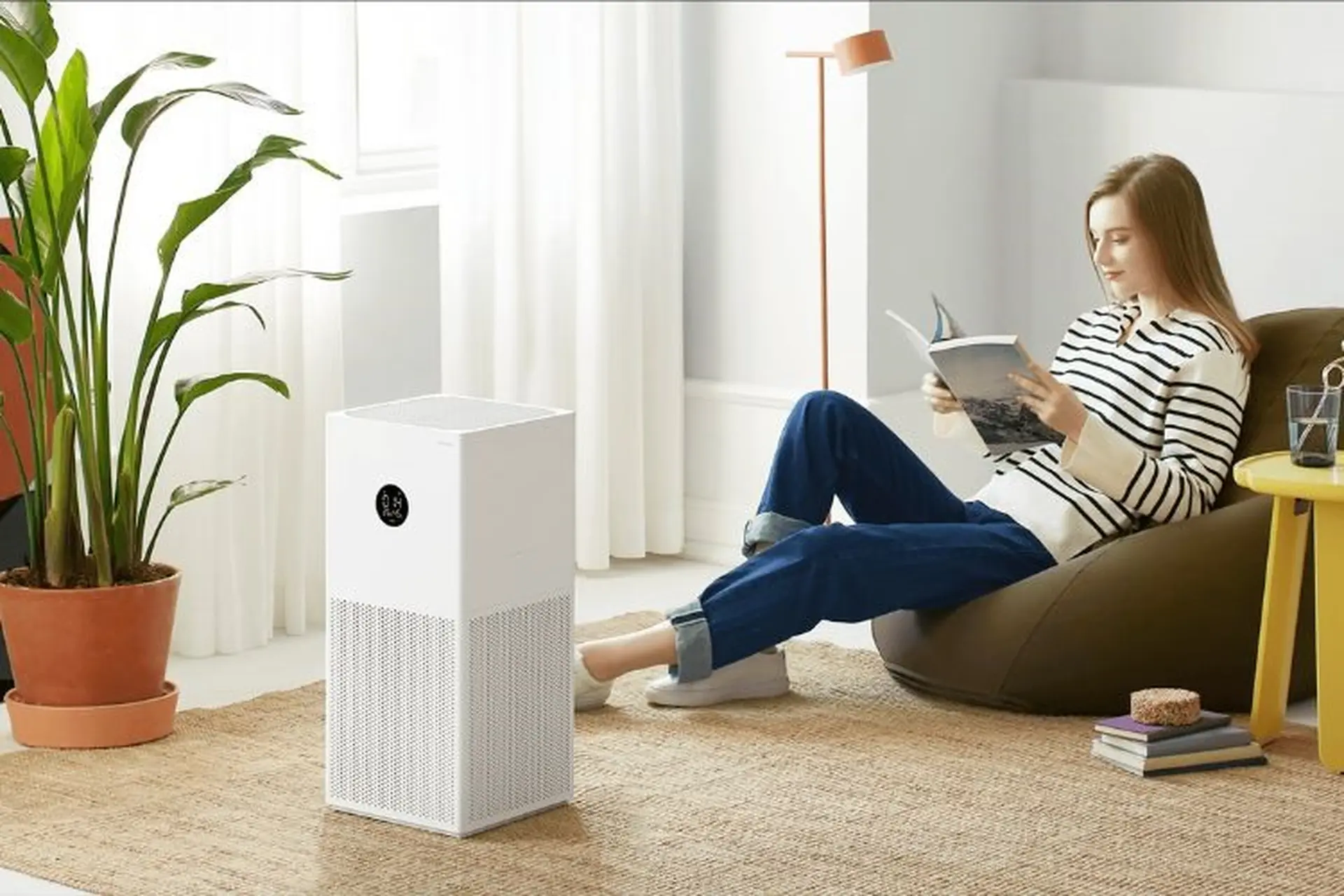
Key Metrics to Understand: The Ultimate Smart Air Purifier Buying Guide to Specs
This is where many people get overwhelmed, but don’t worry. There are really only two main ratings you need to understand to choose the right size purifier for your room. Getting this right is crucial—an undersized unit is like trying to cool a house with a window AC unit.
What is CADR in an Air Purifier?
CADR stands for Clean Air Delivery Rate. It’s a standardized rating, usually certified by the Association of Home Appliance Manufacturers (AHAM), that tells you how much clean air the purifier produces on its highest setting. Think of it as horsepower for an air purifier.
You’ll see three CADR numbers: one for smoke, one for dust, and one for pollen. The higher the numbers, the faster it cleans the air. Smoke particles are the smallest and hardest to catch, so I always recommend using the smoke CADR as your main guide.
Pro Tip (The 2/3 Rule): A great rule of thumb is to choose a purifier with a smoke CADR rating that is at least two-thirds of your room’s square footage. For example, for a 300 sq. ft. living room, you’d want a purifier with a smoke CADR of at least 200.
What about ACH (Air Changes per Hour)?
ACH tells you how many times the purifier can clean the entire volume of air in a designated room in one hour. For a general living space, 2-3 ACH is good. For someone with significant allergies or asthma, aiming for a unit that provides 4-5 ACH is the gold standard. This means the air in your bedroom is getting a complete refresh every 12-15 minutes, which can make a huge difference in symptom relief.
Features to Consider in a Smart Air Purifier
This is where the “smart” part of our smart air purifier buying guide really comes into play. These features are about convenience, efficiency, and giving you real-time feedback on your air quality.
Smart Sensors and Auto Mode
This is arguably the most important smart feature. A good smart air purifier has built-in sensors—typically a laser particle sensor for things like dust (PM2.5) and sometimes a separate sensor for VOCs.
- How it works: The sensor constantly “sniffs” the air. If you start cooking and smoke enters the room, or a gust of pollen blows in through an open window, the sensor detects the spike in pollutants.
- Why it’s great: In Auto Mode, the purifier will automatically ramp up its fan speed to quickly clear the air and then ramp back down when the air is clean. This is the “set it and forget it” dream. It saves energy, reduces noise, and ensures your air is always being managed effectively without you having to lift a finger.
Noise Levels (Decibels)
An air purifier is useless if it’s so loud you never turn it on. Noise is measured in decibels (dB). Look for a unit that is quiet on its lowest settings, ideally under 30 dB (the sound of a whisper), for use in a bedroom at night. Most brands will list the dB range from the lowest to the highest fan speed. A good “Sleep Mode” will turn off all display lights and run the fan at its quietest setting.
Wi-Fi Connectivity and App Control
This is a key convenience feature. Connecting your smart air purifier to your home’s Wi-Fi network allows you to:
- Monitor Air Quality Remotely: Check your home’s air quality from the office.
- Adjust Settings: Change fan speed or mode without getting up.
- Set Schedules: Program the purifier to run on high an hour before you get home from work.
- Track Filter Life: The app will give you a precise reading on your filter’s remaining lifespan, taking the guesswork out of maintenance.
- Voice Control: Many smart models integrate with Amazon Alexa or Google Assistant for hands-free operation.
The Real-World Health Benefits
Let’s bring it all back to what matters most: your health. This isn’t just about buying another gadget; it’s an investment in your well-being.
As Dr. Eleanor Vance, an Indoor Air Quality (IAQ) specialist, often reminds her clients, “A HEPA filter is your first line of defense against microscopic particles, but the cumulative effect of breathing cleaner air 24/7 can lead to profound health improvements. It’s about reducing the overall ‘pollutant load’ on your body.”
Users of high-quality air purifiers consistently report:
- Reduced Allergy Symptoms: Less sneezing, coughing, and congestion, especially during high-pollen seasons.
- Better Sleep: By removing airborne irritants, you’re less likely to be woken up by a stuffy nose or scratchy throat.
- Fewer Asthma Triggers: Capturing dust, dander, and other particulates can significantly reduce the risk of asthma attacks.
- A Fresher, Cleaner-Smelling Home: Effective odor removal makes your entire living space more pleasant.
Maintenance and Filter Replacement Tips
Your air purifier is only as good as its filter. A clogged filter can’t do its job properly and can even restrict airflow, making the unit less effective.
- Check the Pre-Filter: Most units have a washable mesh pre-filter that catches larger debris like hair and lint. You should clean this every 2-4 weeks. Simply rinse it under tap water, let it dry completely, and pop it back in.
- Know Your Main Filter’s Lifespan: The combination HEPA/carbon filter is the one you’ll have to replace. Depending on usage and your home’s air quality, these typically last from 6 months to 2 years. A smart purifier’s app will tell you exactly when it’s time.
- Always Use Genuine Filters: It can be tempting to buy cheaper, third-party filters, but I strongly advise against it. They often don’t have the same quality, fit, or performance, which can compromise the effectiveness of your machine and even damage the motor over time.
Frequently Asked Questions (FAQ)
How often should I change the filter in my smart air purifier?
This depends on the model and how polluted your air is, but a general range is every 6-12 months for the main HEPA/carbon filter. The best part about a smart purifier is that its app will track usage and air quality data to give you an accurate notification when it’s time to order a new one.
Should I run my air purifier 24/7?
Yes, for the best results. Air pollutants are constantly being introduced into your home. Running your purifier on a low setting or in Auto Mode continuously ensures the air stays clean. Modern units are very energy-efficient, especially on lower settings.
Where is the best place to put an air purifier?
Place it in the room where you spend the most time, like your bedroom or living room. Ensure there are at least a few inches of clear space around all sides of the unit for optimal airflow. Avoid putting it in a tight corner or tucking it behind furniture.
What is the main difference between a smart air purifier and a regular one?
The key difference is the “brain.” A smart air purifier uses sensors to detect the real-time air quality and can automatically adjust its fan speed to respond. A regular (or manual) purifier requires you to change the fan speed yourself, so you’re just guessing what setting is needed.
Do air purifiers cool the room?
No, an air purifier does not have a cooling mechanism like an air conditioner. It simply circulates the air. While the feeling of moving air from the fan might feel slightly cool, it does not lower the room’s temperature.
Your Journey to Cleaner Air Starts Now
Navigating the world of air purification can seem complex, but as you can see, it boils down to a few key principles. Understand your room size, prioritize a system with a True HEPA and activated carbon filter, and match the CADR to your space. From there, the smart features are all about making clean air an effortless part of your daily life.
By choosing the right machine, you’re not just buying an appliance; you’re taking a proactive step to create a healthier sanctuary for you and your loved ones. This smart air purifier buying guide is your roadmap. Now, you have the power to take control of your indoor environment and breathe a whole lot better.
Frequently Asked Questions
How often should I change the filter in my smart air purifier?
The main HEPA/carbon filter in a smart air purifier typically needs replacement every 6-12 months, depending on usage and air quality. The purifier's app will provide accurate notifications based on its tracking of usage and air quality data.
Should I run my air purifier 24/7 for optimal results?
Yes, for the best results, you should run your air purifier continuously. Air pollutants are constantly introduced into your home, and running the purifier on a low setting or in Auto Mode ensures consistent clean air. Modern units are energy-efficient, especially at lower speeds.
Where is the best location to place an air purifier in a room?
Place your air purifier in the room where you spend the most time, such as your bedroom or living room. Ensure there are at least a few inches of clear space around all sides of the unit to allow for optimal airflow. Avoid placing it in tight corners or behind large furniture.
What is the main difference between a smart air purifier and a regular one?
The primary difference lies in the 'brain' of the device. A smart air purifier uses built-in sensors to detect real-time air quality and automatically adjusts its fan speed in response. A regular, or manual, purifier requires you to manually change the fan speed, meaning you have to guess the appropriate setting.
Do air purifiers help cool down a room's temperature?
No, an air purifier does not have a cooling mechanism like an air conditioner. Its function is solely to circulate and clean the air. While the moving air from the fan might provide a slight sensation of coolness, it does not actually lower the room's temperature.
Maintaining Your Smart Air Purifier for Peak Performance
Follow these steps to ensure your smart air purifier continues to provide clean air efficiently and effectively.
Most air purifiers include a washable mesh pre-filter designed to capture larger debris like hair and lint. You should clean this pre-filter every 2-4 weeks. Simply rinse it under tap water, allow it to dry completely, and then reinsert it into the unit.
The combination HEPA/carbon filter is the primary filter that requires replacement. Its lifespan typically ranges from 6 months to 2 years, depending on usage and your home's air quality. A smart purifier's app will accurately track filter life and notify you when it's time for a replacement.
Always use genuine filters specifically designed for your air purifier model. While cheaper, third-party filters may seem appealing, they often lack the same quality, fit, and performance. Using non-genuine filters can compromise the effectiveness of your machine and potentially damage the motor over time.
Get our weekly buyer guide
Practical specs, not advice. Unsubscribe anytime.
As someone with asthma, I’m always looking for ways to improve my indoor environment. This smart air purifier has been a game-changer. I love that it continuously monitors the air and adjusts automatically. Since I started using it, I’ve had fewer asthma triggers and I’m sleeping much better. It’s amazing how much of a difference removing microscopic particles can make.
I’ve been using a smart air purifier for a few weeks now and I’m pretty happy with it. The activated carbon filter really helps with cooking odors, which was a big problem in my open-concept apartment. The app connectivity is super convenient for adjusting settings when I’m not home. My only minor gripe is that it’s a bit louder on the highest setting than I expected, but it’s not a dealbreaker.
I finally pulled the trigger on a smart air purifier after reading about the EPA’s findings on indoor air quality. My old purifier just wasn’t cutting it. This new one, with its True HEPA filter, has made a noticeable difference in my allergies. I’m waking up less congested and my home just feels fresher overall. Definitely worth the investment for anyone struggling with allergens.
I got a smart air purifier hoping it would help with the VOCs from my new furniture. While it does seem to clear the air a bit, I haven’t noticed a dramatic improvement in that specific issue. It’s good for general dust and pet dander, but for really strong chemical smells, it feels like it’s working overtime without fully eliminating them. Maybe I need a different type of filter for that.